
| Route | What the evidence shows | Planning use |
|---|---|---|
| Power purchase agreement | The provider owns the panels and you pay only for the electricity they generate. The owner typically claims the federal solar tax credit. | Suits a buyer who wants solar power without owning equipment. Check storage and expansion rights before signing. |
| Renewable tariff | San José Clean Energy’s TotalGreen tariff supplies 100% renewable energy to business customers. | Suits a business that wants renewable supply without installing anything, including one that cannot host equipment. |
| Demand response | Peak Rewards pays $0.50, $1.00 or $2.00 per kWh reduced, depending on the level. | Rewards a business that can cut or shift load during an event. |
| Efficiency upgrades | The Energy Efficient Business Program advertises up to 90% off qualifying upgrades. | Shrinks the load that any supply option has to cover. |
The incentive figures come from San José Clean Energy’s business programs page, and the ownership conditions from Clean Energy Pros’ PPA explainer.
Clean energy for small business works best when you pick the route first: sign a power purchase agreement, own the equipment, or buy a renewable tariff. Ownership decides who claims tax credits and who controls upgrades.
This guide compares those routes from the buyer’s side of the table, covering contract type, incentives, financing and storage. For a wider map of technologies, read 5 Types Of Renewable Energy: A Practical Guide To Choosing The Right One In 2026 – Greencrowding.
Choosing where to start
The right first move depends on whether you own your building, how much capital you can commit and whether you can use tax benefits. Technology comes second. A business that rents its space can usually do much less with a roof than a building owner can, so ask about control before you ask about kilowatts.
Match the route to your situation
- You rent your premises: start with a renewable tariff, efficiency upgrades and demand-response programs. None needs a roof or a landlord’s structural sign-off. Onsite generation needs the landlord’s agreement, and long-term property-tax financing is built for building owners.
- You own the building and have tax capacity: owning the system keeps the incentives with you. The tax credit sections below show why that matters.
- You want solar power without buying a system: a power purchase agreement moves ownership to the provider. The trade-off is that the provider, not you, typically claims the federal credit.
- Your bills are high but your equipment is old: start with efficiency. Every kilowatt-hour you stop using is one you do not have to buy, finance or offset.
Start with the load, not the panel
Commercial buildings consume about 20% of all U.S. energy, according to a US Department of Energy figure cited by the Great Plains Institute. The same piece notes that small fast food restaurants have the potential to cut energy use by up to 45 percent. That is a ceiling for one building type, not a target for every shop, but it shows why a load review belongs before any supply decision. A smaller load means a smaller system or smaller contract, and it makes every later comparison easier.
Power purchase agreements and ownership
A power purchase agreement is the main alternative to buying a system outright. It changes who carries cost, who owns the equipment and who benefits from tax incentives. The sections below separate those effects so you can judge each one on its own.
What is a power purchase agreement?
A power purchase agreement is a contract in which a solar leasing company or installer owns the system and the customer pays only for the electricity it generates. Clean Energy Pros describes a solar PPA as a contract between a homeowner and a solar leasing company or installer, and says the buyer does not own the system. That explainer is written for homeowners. Business offers follow the same logic of provider ownership and payment for output, so treat its conditions as questions to put to any commercial provider.
Public programs use the same structure. In Illinois Solar for All, participants buy electricity from a third-party-owned solar project through a PPA, according to the Illinois funding and financing directory. That programme is residential and income-eligible, so it is not a template for a business contract. It does show that the model is established.
For a fuller walk-through of how these contracts work and where they go wrong, see PPA Power Purchase Agreements Explained: How They Work, Benefits, and Risks (2026 Guide) – Greencrowding.
What a PPA changes about tax credits and storage
Two consequences deserve attention before you sign. First, tax incentives follow ownership. Clean Energy Pros says that because the provider owns the panels, the customer generally will not qualify for incentives like the federal solar tax credit. The credit is not lost; the provider claims it instead. Ask how the provider’s benefit is reflected in your per-kWh price, because that is where it should show up.
Second, control follows ownership too. The same source warns that you may not be able to add battery storage or expand the system without the provider’s approval. If you expect your load to grow, or you want a battery in a few years, negotiate those rights into the contract now. A low price is a poor trade if it locks the system at its day-one size.
When owning beats contracting
Owning generally makes sense when you can use the tax benefits yourself, plan to stay in the building and want freedom to expand. A PPA generally makes sense when you cannot use the tax benefits, prefer not to manage equipment, or want to avoid committing your own capital. Neither is universally cheaper, so compare the PPA’s price per kWh against a quote for ownership on the same system size.
If ownership is on your shortlist, the cost and incentive guides go deeper. Read how much does commercial solar cost for pricing and payback, and commercial solar tax credit for the credit’s rates, bonuses and claim process.
Can a small business run on renewable energy?
Yes, a small business can run on renewable energy, and the route does not have to involve its own equipment. A renewable tariff, a PPA or an owned system each get there differently, and each carries a different claim about where your power comes from. Choose the one that matches how your building is held and how much you want to manage.
Renewable tariffs from your supplier
The simplest route is a supply upgrade. San José Clean Energy invites business customers to upgrade to TotalGreen and power their business with 100% renewable energy. A tariff like this suits tenants and any business that wants a clear renewable-supply claim without capital spend. It does not give you equipment, a tax credit or protection from your own consumption, so it works best alongside efficiency upgrades. Availability depends on your utility or community choice program, so start by asking your supplier what it offers.
Onsite generation
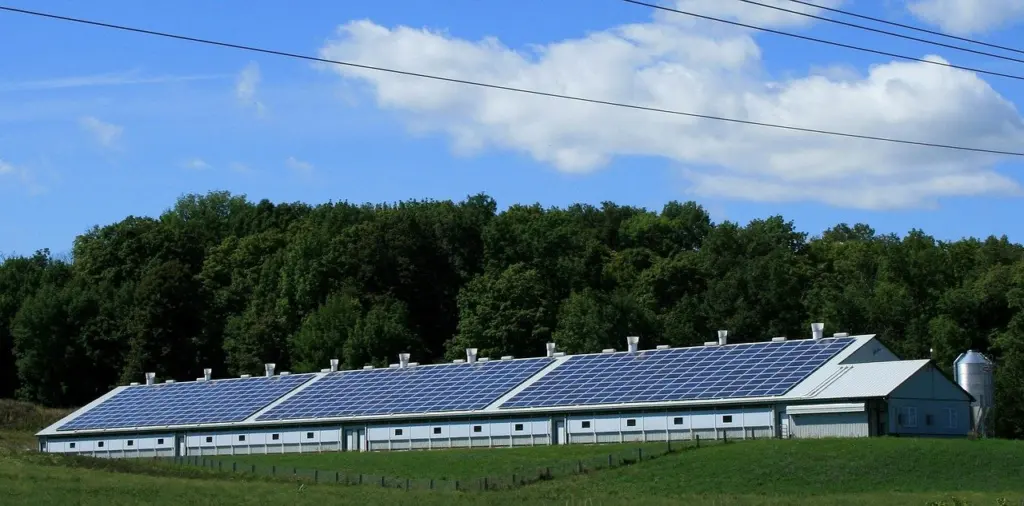
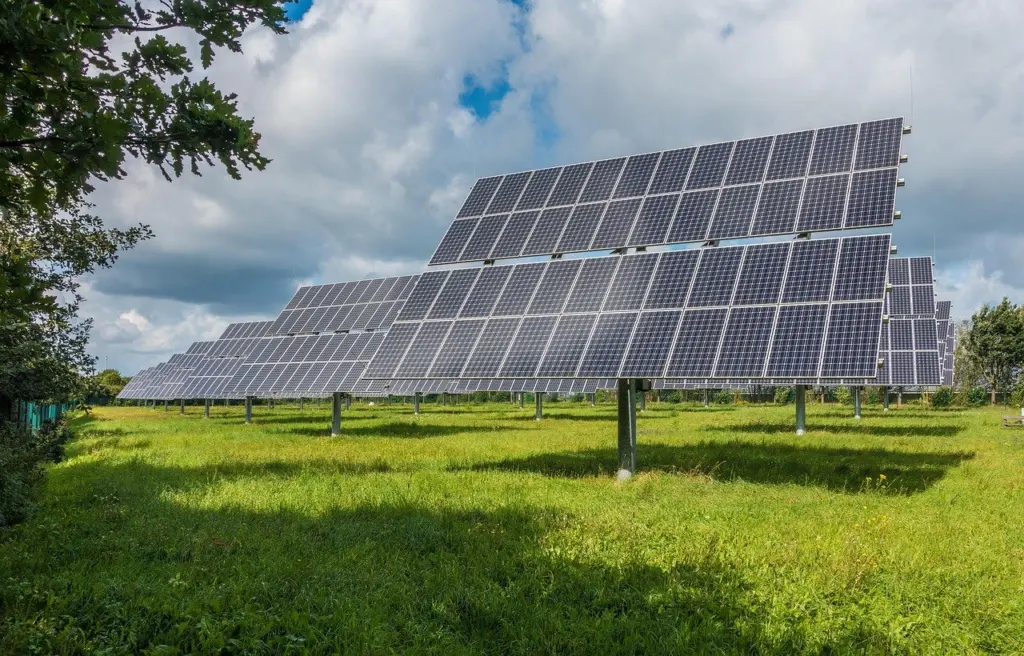
Onsite generation suits building owners, or tenants with a cooperative landlord. It reduces what you draw from the grid and can be bought outright or contracted through a PPA. The mounting question is part of the quote. A roof, a ground array and a carport structure all have different cost and permitting implications; commercial solar carport cost compares carports with ground mounts for businesses.
Wind, hydropower and geothermal
Solar is the most common first step, but it is not the only one. Wind is a site-specific decision. If you are weighing it, start with Wind Turbine Pros And Cons: A Practical Guide To Wind Power In 2026 – Greencrowding and the labelled component breakdown in Understanding Wind Turbine Diagrams: A Practical Visual Guide For 2026 – Greencrowding. For output and budget, use How Much Power Does A Wind Turbine Produce Per Day? Real Numbers, Examples, And How To Estimate Yours – Greencrowding and How Much Does a Wind Turbine Cost in 2026? Real Prices, Examples, and What Affects Your Bill – Greencrowding. Owners of a home-based business with land can also read Home Wind Turbines: The Practical Guide To Choosing, Installing, And Saving In 2026 – Greencrowding.

Hydropower and geothermal matter mainly to businesses with a specific resource or a utility that supplies from them. Hydropower Pros and Cons: A Practical Guide To Its Advantages, Risks, And When It Makes Sense (2026) – Greencrowding and Is Hydropower Renewable? A Clear 2026 Guide To Its Sustainability And Trade-Offs – Greencrowding explain the trade-offs, and Geothermal Energy Pros and Cons: Benefits, Drawbacks, and When It Makes Sense (2026 Guide) – Greencrowding covers the heat-and-power case.
A caution on community solar offers
Shared or subscription solar can be a legitimate way to buy renewable power without a roof, but it attracts aggressive sales pitches. Before signing, read Is Community Solar A Pyramid Scheme? What It Really Means, How To Tell, And How To Protect Yourself (2026) – Greencrowding. Verify the provider and the contract terms yourself, and be wary of any offer that leans on recruiting rather than on electricity.
Reducing demand first
Lowering demand is the cheapest clean energy a business can buy, because it shrinks every other decision. Two program types appear in the evidence: upgrade rebates and pay-for-reduction schemes. Both reward the same behaviour, which is using less electricity at the right time.
Efficiency upgrade programs
San José Clean Energy says its Energy Efficient Business Program could help you save up to 90% off qualifying energy efficient upgrades. Read that as a ceiling set by the programme, not an expected discount; your share depends on which upgrades qualify. Ask your own utility or community choice program whether an equivalent exists before you buy equipment, because buying first can disqualify a rebate.
Pay-for-reduction programs
Peak Rewards pays businesses for cutting electricity use during events. The payment rises with the level you commit to: Level 1 is $0.50 per kWh reduced, Level 2 is $1.00 and Level 3 is $2.00. This suits businesses with flexible loads, such as ones that can pre-cool, pause equipment or shift production. It suits poorly a business whose load is fixed during peak hours, because you cannot cut what you must run.
Tax credits, deductions and incentives
The incentive picture has several layers: federal tax benefits, deductions, loans and utility or state programs. They behave differently, so a table helps separate what you receive, when you receive it and who qualifies.
| Incentive | Value | Planning use |
|---|---|---|
| 179D commercial building deduction | $0.58 to $5.81 per square foot (a deduction, not a credit) | Fits an owner improving building efficiency; confirm eligibility with a tax adviser. |
| SBA 504 Green Loan | Up to $5.5 million per project (programme updated April 2024) | Fits larger owner projects; the energy conditions below must be met. |
| ComEd and Nicor on-bill loans | Loans up to $150,000 for energy efficiency projects | Fits efficiency upgrades for Illinois customers; repayment sits on the utility bill. |
| Peak Rewards (San José) | $0.50, $1.00 or $2.00 per kWh reduced | Ongoing income for a flexible load, not a project incentive. |
The deduction, SBA and on-bill figures come from the Illinois funding and financing directory, and the Peak Rewards levels from San José Clean Energy.
What tax credits are available for clean energy?
The headline federal benefit for solar is the Investment Tax Credit, referred to in the evidence as the federal solar tax credit. Its central rule for buyers is about ownership: the party that owns the panels typically claims it. Under a PPA that is the provider, so a PPA customer generally does not qualify. Owning the system is therefore the way to keep the credit yourself. Rates, bonus amounts and claiming steps change, so use commercial solar tax credit and your tax adviser rather than any figure in a general overview.
The Illinois directory also mentions elective pay among federal tax credits, in the context of bridge loans that cover the wait for payment. If you are a business with limited tax liability, ask your adviser whether that route applies to your project.
Deductions are not credits
The 179D benefit is a deduction, which reduces taxable income rather than the tax bill directly. It is also measured per square foot of building, so it depends on floor area and design, not on how much power you generate. Treat it as a separate line from any solar credit, and do not count one as a substitute for the other.
Renewable energy credits
Renewable energy credits, or RECs, are a payment stream rather than an up-front discount, which is why they matter to cash flow. The Illinois directory describes bridge loans as short-term financing that covers the wait until federal tax credits or RECs are received. Plan on that gap if a project depends on them. For how RECs work and why buyers purchase them, see Renewable Energy Certificates Explained: How They Work, Why They Matter (2026 Guide) – Greencrowding.
Financing the project
Financing can matter as much as the incentive, because it decides whether a project is affordable now. The evidence points to several structures, each suited to a different owner.
- SBA 504 Green Loan: a larger-project loan with energy conditions attached. It suits owners of buildings, not tenants.
- On-bill loans: repayment is added to the utility bill, which suits efficiency upgrades where the bill saving offsets the repayment.
- C-PACE: long-term, fixed-rate financing for building owners, repaid through the property tax bill. It suits owners who want a long repayment period tied to the property rather than the company.
- Bridge loans: short-term cover while you wait for tax credits or RECs. They suit projects whose economics depend on payments that arrive after installation.
The Illinois directory lists all four. Programs differ by state and utility, so the practical step is to search for your own local equivalents before assuming a structure is available.
Battery storage in a business plan
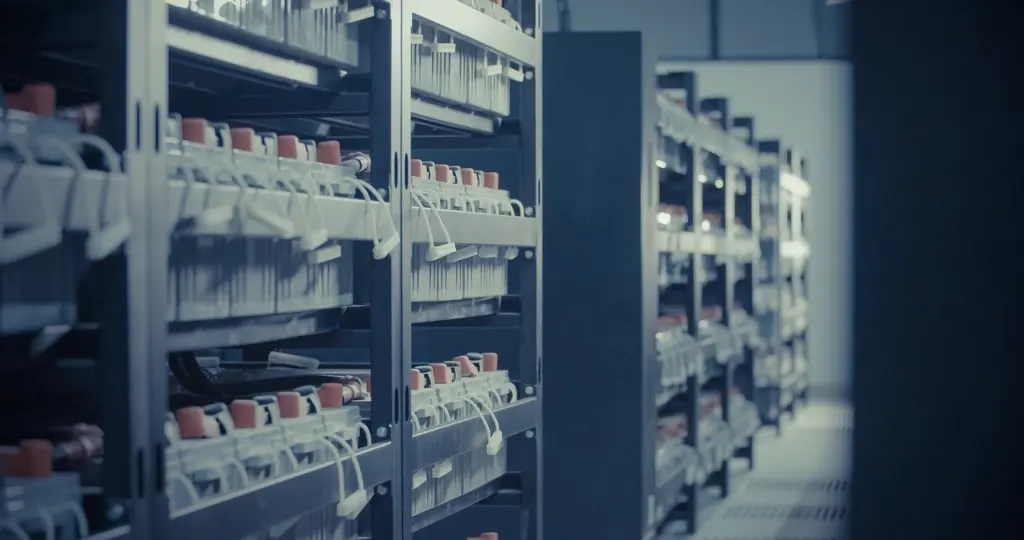
Battery storage is the add-on that most often complicates a contract. It holds electricity so you can use it later rather than when it was generated. Whether it is worth adding depends on your tariff and incentive structure, which is why it belongs in the decision early.
The contract is where storage most often goes wrong. Under a PPA or lease, you may not be able to add battery storage or expand the system without the provider’s approval, according to Clean Energy Pros. If a battery is even a possibility, ask for the right to add one, and for the process and any fees, before signing. If you own the system you decide for yourself, which is a genuine advantage of ownership.
Storage also connects to demand response. A programme that pays you for reducing consumption during an event, like Peak Rewards, rewards anything that lowers grid draw at the right time. Whether a battery qualifies depends on that programme’s rules, so confirm that before building a payback case around it.
Comparing cost, payback and contract types
Comparing routes fairly means putting them on the same basis. Payback is an ownership concept: it asks how long savings take to repay what you paid. Under a PPA you do not buy the system, so the comparison is the price per kWh you pay against what you would otherwise pay your supplier. A renewable tariff works the same way. Efficiency upgrades sit differently, because their payback depends on the rebate you receive.
- Ownership: payback depends on installed cost, incentives you can actually claim and how long you keep the building. It gives the most control, including over batteries and expansion.
- PPA: you compare a per-kWh price against your current rate. Upside is no equipment to own; the downside is that the provider typically claims the credit and may control changes to the system.
- Renewable tariff: the lowest-effort option, with no equipment and no incentive to claim. It changes your supply claim rather than your consumption.
- Efficiency and demand response: these reduce the base you need to supply, and they combine with any other route.
Be careful with headline discounts. A programme saying “up to” a figure describes its ceiling, and an earnings range such as Peak Rewards’ is a typical outcome for one business size, not a promise. Ask for a quote on your own building and compare it line by line.
A practical sequence for a first project
- Review your load. Identify your largest consumers and the hours you use them. Efficiency options and demand response depend on this.
- Confirm your control. Establish whether you own or rent, and whether a roof, ground or carport site is available.
- Check local programmes. Ask your utility or community choice program about rebates, tariffs, on-bill loans and demand-response, before purchasing equipment.
- Request comparable offers. Get an ownership quote and a PPA offer for the same system size, and compare price per kWh against ownership cost and incentives.
- Read the contract for control. Look for rights on storage, expansion, transfer and early exit before you commit.
- Line up financing and tax advice. Decide how you will bridge any wait for credits or RECs, and confirm with an adviser what you can claim.
Frequently asked questions
How much can a medium-sized business earn from Peak Rewards?
San José Clean Energy says medium-sized businesses typically earn from $200 to $1,000 or more during a single 4-hour event. Your result depends on how much load you can reduce and which level you choose.
What does a business have to do to qualify for an SBA 504 Green Loan?
According to the Illinois directory, a business must either reduce energy consumption by 10%, generate 15% renewable energy, or use sustainable design.
How long can an on-bill loan run?
The ComEd and Nicor loans in the Illinois directory can be paid over 1 to 10 years at a fixed interest rate, with no early payment penalty.
Is the 179D benefit the same as a tax credit?
No. It is a deduction, estimated at $0.58 to $5.81 per square foot, and it lowers taxable income instead of the tax bill itself.