
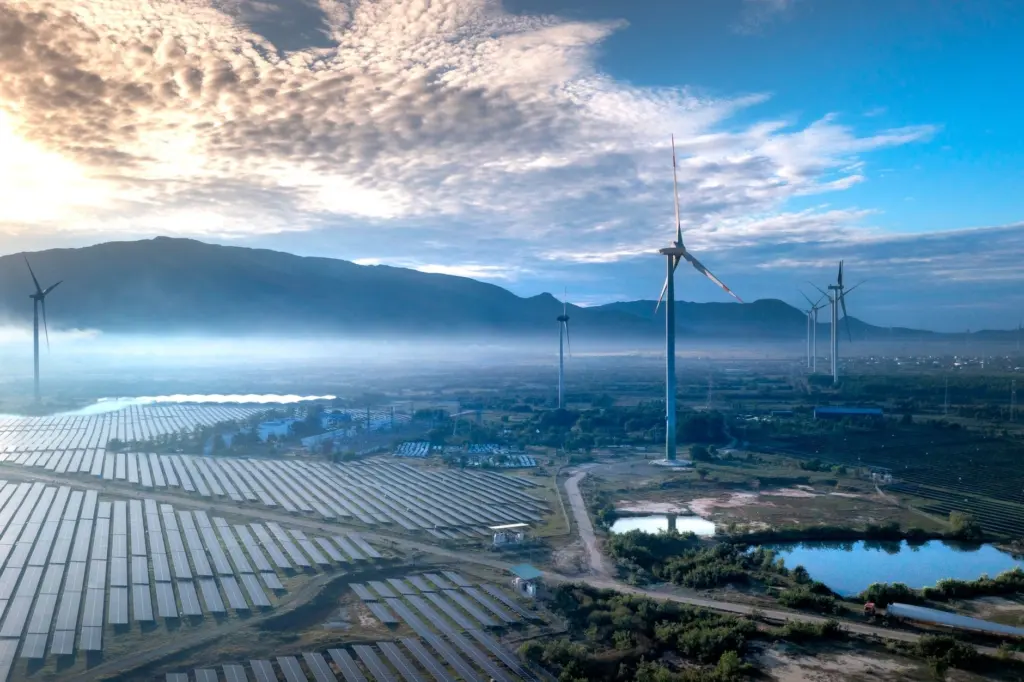
Picture a homeowner with a sunny roof, a windy hillside and a stream, unsure which of the 5 types of renewable energy to pursue. The answer: match the source to the local resource first, then to space and budget.
Solar, wind, hydropower, geothermal and biomass each suit different sites, and no single one wins everywhere. For planning beyond a single source, see our guide to clean energy for small business.
The five sources side by side
Renewable energy covers solar, wind, hydropower, geothermal and biomass. A common assumption is that the biggest source must be the best choice. Hydropower is the largest renewable electricity source, followed by wind and then solar, yet the cheapest average cost belongs to solar and wind. The table separates what a source contributes today from what it costs, because those are different questions.
| Source | Average cost ($ per MWh) | Share of 2021 global electricity | Planning use |
|---|---|---|---|
| Solar | $36 | 3.7% | Lowest average cost, so the natural first candidate wherever sun reaches a roof or field without shade. |
| Wind | $38 | 6.6% | Close to solar on cost; worth pursuing only with steady wind and room for turbines. |
| Hydropower | $64 | 15.3% | Largest contributor, but tied to sites with flowing water and elevation change. |
| Geothermal | $75 per MWh | under 1% (2021) | Mid-range cost; large plants need a hot resource, while homes use a heat pump. |
| Biomass | $114 | 2.3% | Highest average cost of the five, so justify it with a specific fuel or heating need. |
Cost figures are average levelized costs and the shares are 2021 global generation, both from this overview of the five major renewable types.
Averages describe fleets of projects, not your site. The sections below show what moves a real project away from the average.
Solar power: low average cost, site-dependent output
It is easy to assume that a low average cost means every roof performs alike. Solar output depends on the semiconductor material as well as on heat, dirt and shade. Shade is the condition a homeowner can check before spending anything.
Scale changes the price picture. Utility-scale PV systems averaged around USD 800–1,200 per kW in 2023, according to a comparison of the main renewable types. Treat that as a benchmark for large arrays rather than a household quote. Storage adds a separate line item: surplus power held in batteries can be pretty expensive, so price panels and batteries separately and decide whether you need the batteries at all.
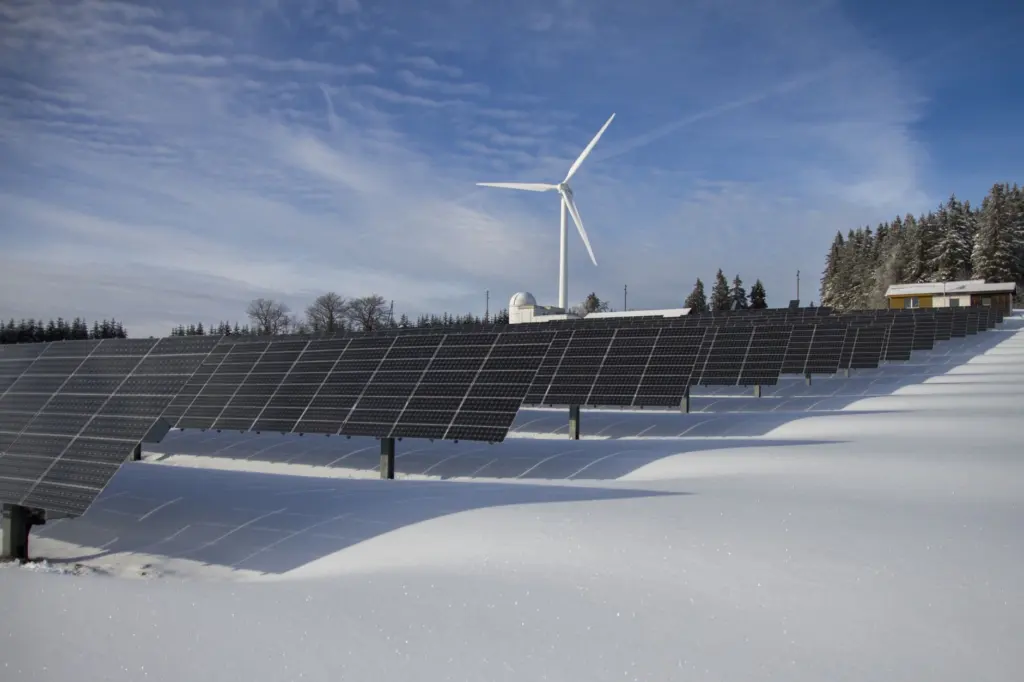
If your roof is shaded or you would rather not own equipment, a shared array is an alternative. Read Is Community Solar A Pyramid Scheme? What It Really Means, How To Tell, And How To Protect Yourself (2026) – Greencrowding before signing anything.
Wind power: scale and setting decide the result
Wind turbines use large rotor blades mounted at tall heights on both land and sea. The misunderstanding to avoid is that a small turbine in a yard behaves like a wind farm. Turbines range from about 5 kW residential units to utility-scale machines up to 5 MW, and small rooftop turbines depend on local planning policies and wind conditions.
Space is the practical filter. You need enough room to erect one or more turbines and a steady flow of wind. Neighbours matter too: the same comparison lists visual impact, disruption of bird migration and noise as concerns, so talk to your planning office early.
Hydropower: the largest source with the narrowest site list
Hydropower’s size makes it look universally available, but it is the most location-bound of the five. Generation depends on the volume and the change in elevation, or head, of the flowing water. A home installation requires a consistent and stable water source with sufficient head and flow, which rules out most properties.
Costs vary widely. Small and large projects differ greatly in cost from construction to commissioning, so only a site-specific estimate means anything. Large dams can also disrupt fish migration and submerge wetlands. In return, one industry guide says hydro is generally more reliable than both solar and wind. For the full advantages and risks, read Hydropower Pros and Cons: A Practical Guide To Its Advantages, Risks, And When It Makes Sense (2026) – Greencrowding.
Geothermal: strongest where the heat is
Geothermal plants typically use wells to pump hot water from geothermal resources. Those resources are mainly concentrated along tectonic plate boundaries, which explains its small share of world generation.
Many readers assume geothermal means a power station. At household scale it can instead mean a geothermal heat pump that heats homes directly. If you live far from a plate boundary, the heat pump is the geothermal route to ask installers about, and it addresses heating rather than electricity.
Biomass: renewable does not mean clean
Biomass burns organic materials such as wood pellets, so it is not a totally clean energy source. Emissions vary with the material combusted and are often higher than those of other clean sources. It also carries the highest average cost in the comparison above.
Those two facts make biomass a purpose-driven choice rather than a default. It makes sense when you specifically need heat and have a dependable fuel supply. If you only want low-cost electricity, the cost figures point elsewhere.
Which source suits your project
Start from the resource your site already has, then test it against space and budget. These pairings turn the earlier comparisons into decisions:
- Sunny roof or open ground: solar is the usual starting point because it has the lowest average cost; check shading before anything else.
- Open land with steady wind: wind competes with solar on average cost, provided planning rules allow it and there is room for the turbine.
- Stable stream with real elevation drop: hydropower can work, but only with enough flow and head, and permission to alter the water.
- A heating bill to cut: a geothermal heat pump targets heat directly, which suits homes better than a power plant would.
- A reliable fuel supply and a heat need: biomass fits, accepting higher cost and emissions than the other four.
Steps before committing
- Decide whether you need electricity or heat, since the five sources serve those needs differently.
- Confirm which resource your site has: sun, wind, flowing water, underground heat or fuel.
- Check local planning rules, especially for turbines and water works.
- Ask for quotes that separate generation equipment from storage, then compare them with the average costs in the table.
Each source trades something different: output certainty, local acceptance, ecology, geography or emissions. The best choice is the source whose trade-off you can live with at your site.
Frequently asked questions
| Question | Answer |
|---|---|
| How much of the world’s electricity do these sources supply? | Together, the five main sources supplied roughly 28% of global electricity generation in 2021. Within renewable electricity in 2023, hydropower made up 47%, wind 26%, solar 18%, bioenergy 8% and geothermal 1%. The two sets use different bases and years, so do not mix them. |
| How do solar and wind compare with coal on cost? | Their average levelized cost is almost one-fifth that of coal at $167 per MWh. |
| How efficient is each source at converting energy? | Modern hydropower systems reach up to 90% or more. Commercial solar panels typically achieve 18%–22%, with high-efficiency products above 25%. Wind typically ranges from 20% to 40%, and geothermal from 10% to 20% depending on temperature and technology, according to this comparison. Efficiency and cost are separate measures: solar converts less than hydropower yet has the lower average cost. |
| Is a solar panel’s efficiency the same everywhere? | No. Panel ratings are a starting point, and output also depends on heat, dirt and shade at the site. |