
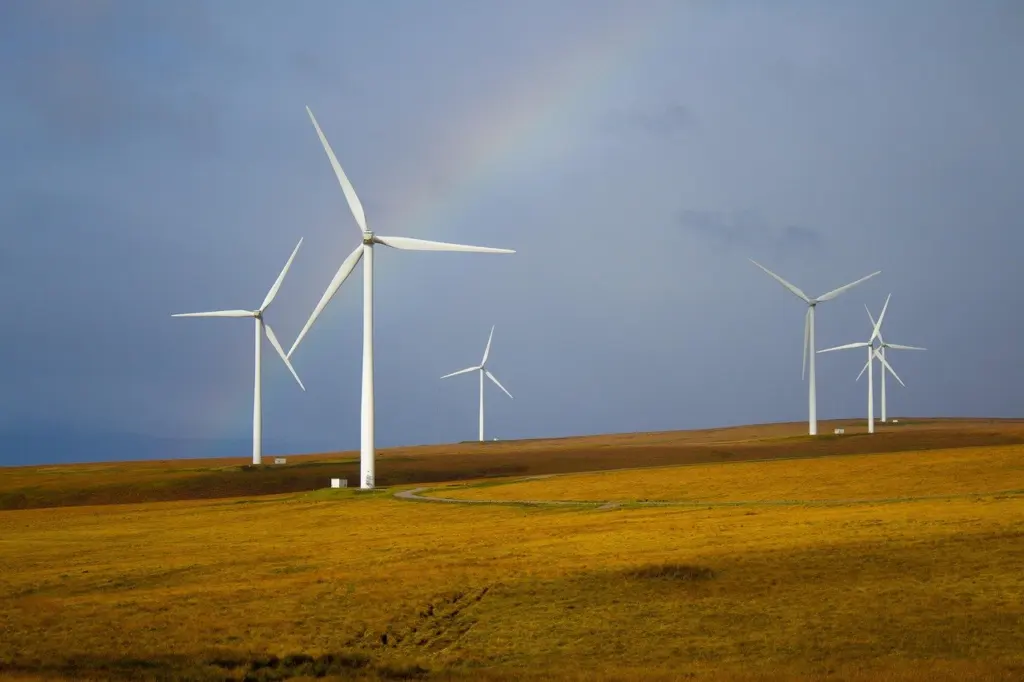
A farm owner comparing quotes sees wildly different prices, and the reason is size. How much does a wind turbine cost per kilowatt? The US Department of Energy puts land-based wind at $1,200–$1,800/kW and small distributed systems at $7,850/kW.
Anyone weighing wind against other options for a business will find the wider comparison in our guide to clean energy for small business.
Cost per kW by size class
The most useful way to compare turbine prices is installed cost per kilowatt, because a single sticker price hides the size of the machine. The Department of Energy defines installed project costs as capital expenditures, meaning one-time costs. They are the right basis for comparing a full quote, and a turbine-only price should not be set against them. DOE reports land-based turbine prices alone at about $850–$950/kW in 2022. The installed project figure for land-based wind is higher, at $1,200–$1,800/kW.
| Size class | Installed cost per kW | Levelized cost of energy (2022) | Planning use |
|---|---|---|---|
| Land-based utility-scale | $1,200–$1,800/kW | $39/MWh (range $30–$57/MWh) | Lowest-cost benchmark; use it to judge whether a larger project is priced sensibly. |
| Offshore | $3,500–$4,000/kW | $95/MWh (fixed-bottom) | Relevant to developers and utilities; not a comparison for a farm or business site. |
| Distributed, over 100 kW | $4,050/kW | $78/MWh (large distributed) | A realistic reference for a commercial or community turbine behind the meter. |
| Distributed, small systems | $7,850/kW | $235/MWh residential; $163/MWh commercial | Expect the highest cost per unit of energy; test the economics before buying. |
These figures come from the Department of Energy’s WINDExchange economics page, which reports installed costs and levelized costs of energy from NREL-affiliated researchers.
Levelized cost of energy spreads lifetime cost over lifetime output, so it shows what each unit of electricity costs to produce rather than what the machine costs to buy. A small turbine and a large one can look similar in total price terms and still be far apart on this measure. DOE’s land-based benchmark is the lowest in the table, and the residential figure is several times higher.
Common misunderstandings about turbine pricing
Three assumptions most often distort a wind budget, and each is corrected by the DOE data above.
- “A small turbine is the cheap option.” A small machine has a lower total price, but the cost per kW is higher. DOE lists small distributed systems at $7,850/kW against $4,050/kW for systems over 100 kW. Roof-mounted residential units are rated at only 0.5-2.5 kW, according to a home wind turbine cost guide, so the capacity bought for the money is modest.
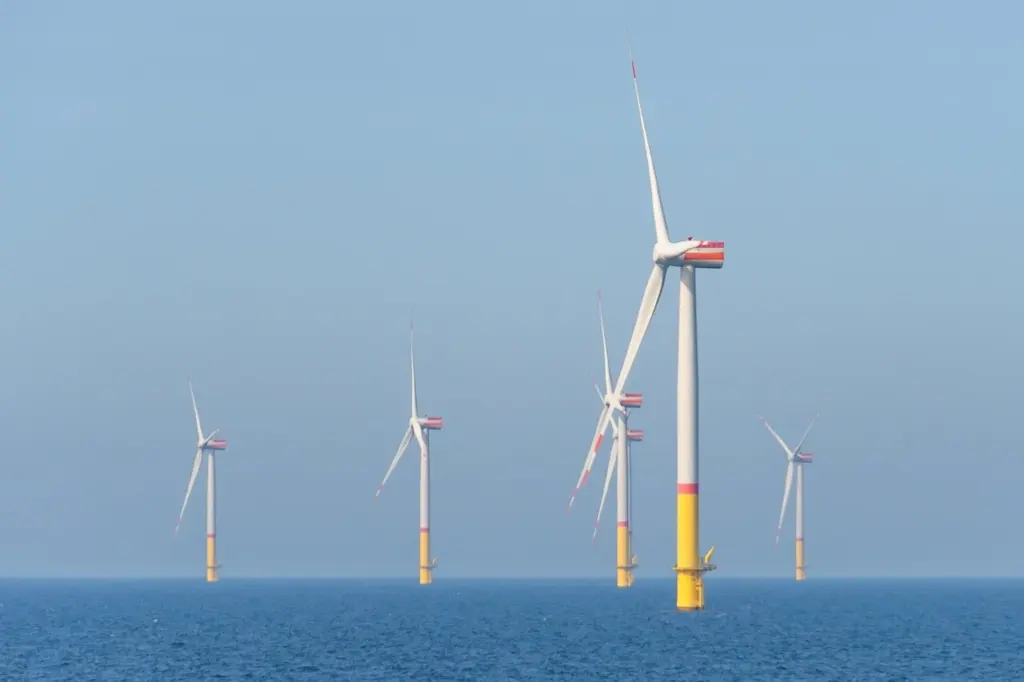
- “Bigger always means cheaper.” Scale lowers cost per kW on land, but not at sea. Offshore wind’s $3,500–$4,000/kW is well above land-based wind, so the size class matters less than the setting.
- “The price tag settles the economics.” DOE’s small-system levelized cost of $235/MWh for residential and $163/MWh for commercial use shows that purchase price alone does not. The deciding comparison is that cost against what you pay for electricity, because DOE notes that distributed turbines can directly offset customer electricity usage.
If a quote looks cheap, check which of these the number leaves out: the installed scope, the machine’s size, or the wind at the site.
Wind speed and energy yield
Site wind changes what a given price buys, because turbine power output is proportional to the cube of wind speed, as manufacturer power-curve estimates illustrate. A modest rise in average wind therefore produces a large rise in output.
- 100 kW turbine: estimated annual output is 280 MWh at 6.0 m/s, 365 MWh at 7.0 m/s and 407 MWh at 8.0 m/s.
- 4.26 MW utility turbine: estimated annual output is 10,662 MWh at 6.0 m/s, 14,030 MWh at 7.0 m/s and 16,977 MWh at 8.0 m/s.
For a buyer, the lesson is to price the same turbine at the wind speed your site is likely to see rather than at the best-case speed. A turbine at a weaker site spreads the same cost over fewer megawatt-hours, which raises the cost of each unit it produces. If a site’s wind is uncertain, wait for measured data before committing to a larger machine.
What affects the price: installation, grid connection and site
Installation is part of the capital cost. DOE describes installed project costs as one-time capital expenditures, so a quote that lists only the turbine leaves out part of the bill. Ask any installer for an itemised price that separates the turbine, the installation work and the electrical connection.
Grid connection scales with the installed capacity of the project, according to the same manufacturer-based guide, and it is estimated rather than fixed. A larger turbine therefore carries a larger connection estimate. Confirm that estimate in writing before treating a project as viable, since it is one of the few cost lines you cannot read off a brochure.
Wind resource and project size also set the price you effectively pay per unit of energy. The cubic wind-speed relationship above is why two identical turbines at different sites can have very different economics.
Ongoing costs and maintenance
Operating and maintenance cost is a yearly line that should sit beside the purchase price. In 2023, land-based wind farms cost operators more than $40/kW annually on average, according to DOE. That is a fleet average for wind farms, not a quote for one home turbine, so treat it as a planning reference rather than a promise.
DOE adds that these costs vary between projects depending on size, location, age and wind resources. Older machines should therefore carry a larger maintenance allowance than new ones, and remote or high-wind sites may cost more to service. Ask the installer what a service plan covers and whether it is priced per year, so the annual figure can be compared with the electricity the turbine is expected to produce.
Incentives and ways to offset the bill
Incentives can reduce the net price, but they depend on location and change over time, so check current federal, state and local programmes with an installer or your state energy office before relying on one. Keep them separate from the installed quote so the comparison with other options stays fair.
Beyond incentives, the main financial benefit of a distributed turbine is the power it displaces. DOE notes that distributed wind can directly offset customer electricity usage, so the sensible test is whether the turbine’s cost per unit of energy undercuts what you buy from the grid. Businesses that want to track the environmental attributes of wind generation can read Renewable Energy Certificates Explained: How They Work, Why They Matter (2026 Guide) – Greencrowding. Those that would rather buy wind power than own a turbine can compare PPA Power Purchase Agreements Explained: How They Work, Benefits, and Risks (2026 Guide) – Greencrowding.
Frequently asked questions
| Question | Answer |
|---|---|
| Have wind turbine prices fallen over time? | Yes. DOE reports that land-based turbine prices fell about 50% from 2008 to 2020, then rose slightly in 2022 (DOE WINDExchange). |
| Is offshore wind more expensive to maintain than land-based wind? | In 2013, offshore wind farms cost 22.15 cents per kWh in operations and maintenance against 8.66 cents per kWh for land-based farms, as reported by DOE via the IEA. That is an older comparison, so use it to show the direction rather than today’s level. |
| What is the cost per megawatt? | The advocacy group Wind-Watch puts construction of a wind power facility at $1 million to $2 million per megawatt of capacity, which brackets DOE’s $1,200–$1,800/kW land-based installed range. |