
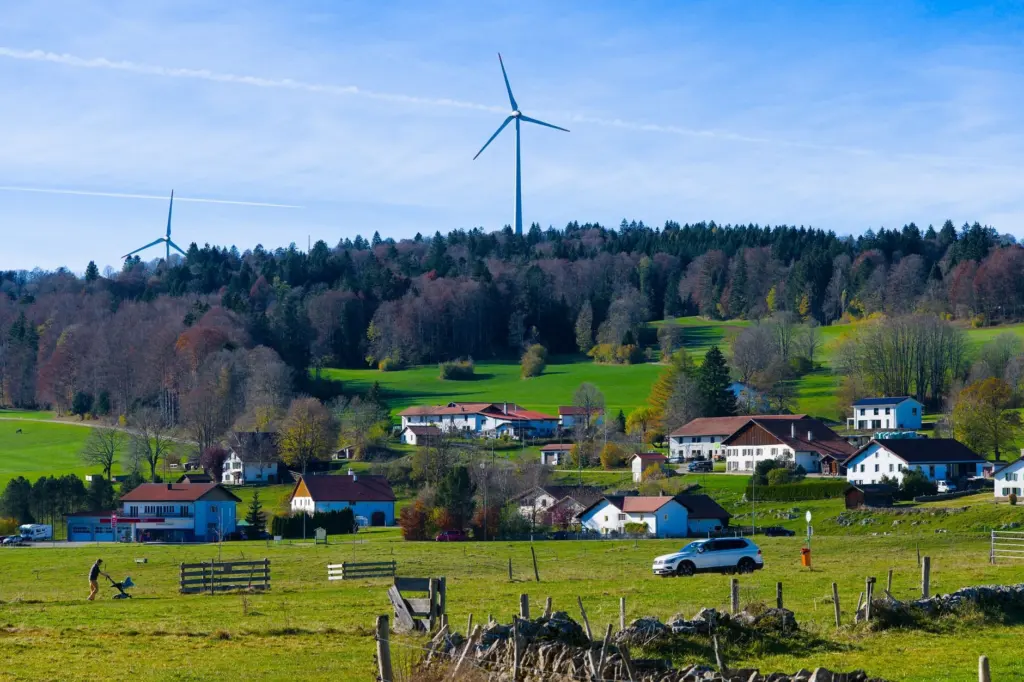
| Factor | Supported value | Planning use |
|---|---|---|
| Average wind speed | Above 10-11 mph (4.5-5 m/s) | Treat this as the entry level. If measured wind at the site falls short, solar is the better lead option. |
| Tower height | At least 30 ft above nearby trees or buildings | Clearance sets the tower height. Budget for the tower, not just the turbine. |
| Typical zoning height limit | 35 feet | A tall tower may need special review. Check local rules before ordering. |
| Land | 1 acre or more for larger home turbines | Suburban lots rarely suit a full-size unit. |
| Average capacity factor | 17% (range 2-36%) | Output swings widely by site. Ask for a site-specific estimate, not a brochure figure. |
| Cost | $3,000-$5,000 per kW of capacity | Use it to price the size you need to offset your bill. |
| Federal tax credit | 30% | It lowers net cost. Confirm eligibility for your own tax situation. |
| Size for a significant bill cut | 5-15 kW | Smaller units cut bills only slightly. |
Figures come from the U.S. Department of Energy’s Small Wind Guidebook and EnergySage’s small wind turbine overview.
A wind turbine for home is worth it mainly where average wind is strong, the property has open land and tower clearance, and zoning allows the tower. Elsewhere, solar is usually the cheaper choice.
Wind is one option among several, so it helps to see it beside the wider choices in our guide to clean energy for small business. That guide matters most if your property also carries a business load.
Cost and what it means for your budget
A home turbine is a large capital purchase, and the price scales with the size you need. EnergySage puts small wind at $3,000 to $5,000 for every kilowatt of generating capacity. It cites installer quotes for complete systems ranging from $100,000 to $175,000. Bill savings become significant at 5-15 kW of generating capacity.
The same EnergySage overview notes that a 10-kilowatt solar system averages $27,300 before tax credits. That comparison sets the bar for wind. A turbine has to justify a much higher purchase price through higher output, and that only happens at a site with unusually good wind.
Incentives narrow the gap but rarely close it by themselves. EnergySage describes small wind as eligible for a 30% federal tax credit, the Investment Tax Credit. The Department of Energy adds that you may also qualify for state or utility incentives. Treat any credit as a reduction to confirm with a tax adviser and your state’s incentive listings, not as a reason to buy.
If you would rather not own generating equipment at all, PPA Power Purchase Agreements Explained: How They Work, Benefits, and Risks (2026 Guide) – Greencrowding sets out how third-party contracts work and where they carry risk.
Output and bill savings
Expect modest output unless the site is genuinely windy. EnergySage reports that small wind turbines have an average capacity factor of 17%, with sites ranging from 2% to 36%. At that average, it estimates a 10-kW turbine produces roughly 14,892 kWh per year. That figure is a middle-of-the-road reference. A site toward the low end of the range will produce far less from the same machine.
The Department of Energy says a small wind system can lower your electricity bill slightly or up to 100%. The difference comes from three things: the turbine size, the wind at your tower height, and how much power your household uses. A modest turbine on a mediocre site sits at the “slightly” end. A well-sized turbine on an exposed site can approach the other.
When you collect quotes, ask each installer for modelled annual output at your exact site and hub height, with the assumptions written down. A quote that gives only a rated size and an average output is not enough to compare against solar.
Permits, zoning and incentives
You should assume a home turbine needs local approval, and start by asking your local authority. The Department of Energy recommends contacting the local building inspector, board of supervisors or planning board to confirm what applies to your property.
Height is where projects most often run into trouble. The Department of Energy notes that most zoning ordinances have a height limit of 35 feet. EnergySage says a turbine should be elevated at least 30 feet above nearby trees or buildings. On a wooded or built-up lot, a tower that clears obstacles can therefore exceed the local limit.
A project outside zoning limits must usually go through a special review process, typically a variance and usually a public hearing. Allow time for that, and speak to neighbours before the hearing rather than after.
- Ask before you buy: get written confirmation of height limits and any setback or review requirements for your parcel.
- Check incentives separately: state, utility and federal programmes have their own rules, and the 30% federal credit depends on your tax position.
- Plan for review: if the tower will be above the local limit, build the variance process into your timeline and budget.
Site and wind speed
Wind speed decides whether a turbine makes sense. EnergySage gives a guideline of an average wind speed above 10 or 11 miles per hour (4.5-5 m/s). Below that, a turbine will struggle to repay its cost, and you should look at solar instead.
Averages for a region do not tell you what happens at your tower. Hills, trees and buildings change the wind, and the tower must sit at least 30 feet above nearby trees or buildings to avoid their turbulence. Measure wind at the proposed hub height with an anemometer before committing, and compare the readings with the manufacturer’s performance data.
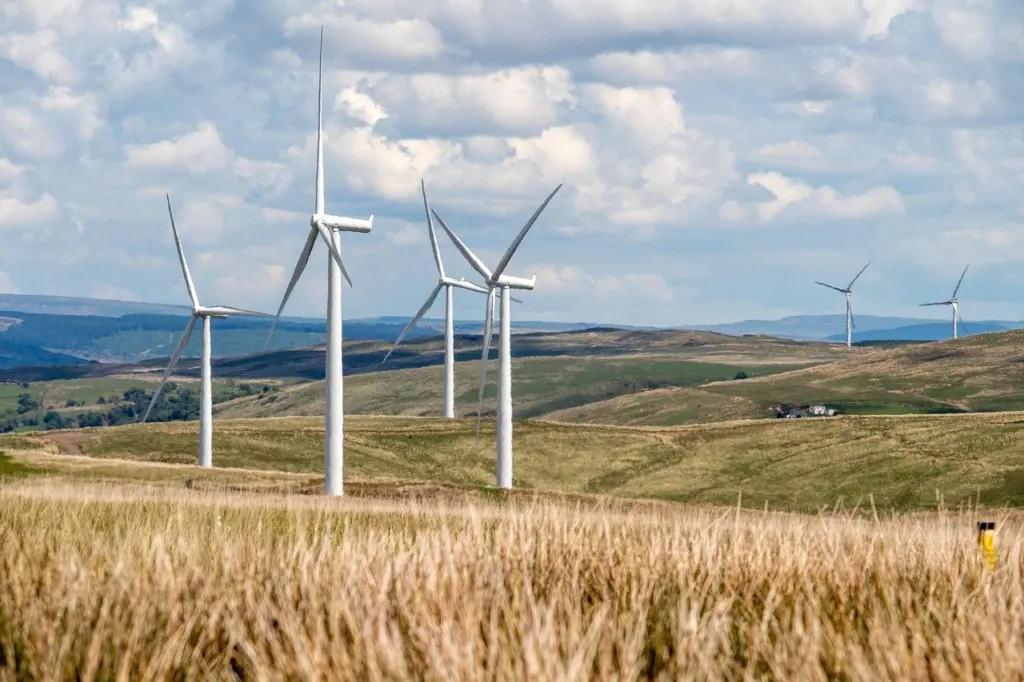
Land matters too. The Department of Energy says larger home turbines generally require 1 acre of property or more. If your lot is smaller, a tall tower with a safe fall zone is unlikely to fit, which is another reason to move on to solar.
Turbine size and design
Choose the size by the share of your bill you want to offset, then check whether the site can support it. EnergySage says a household needs between five and 15 kilowatts of generating capacity to see a significant bill reduction. A smaller turbine is cheaper but delivers a smaller share of your power, which is a poor trade given how much of the cost sits in the tower and installation.

When comparing models, ask each manufacturer for a power curve and a modelled output for your measured wind, and ask how maintenance and repairs are handled. A turbine has moving parts on a tall tower, so service access and installer support are part of the true cost of ownership.
When solar is the better choice
Solar is the better default for most homes, and wind wins only in specific conditions. The cost comparison above is the main reason. A 10-kilowatt solar system averages $27,300 before tax credits, while small wind runs $3,000 to $5,000 per kilowatt.
- Choose wind when: you have a rural parcel of 1 acre or more, measured average wind above 10-11 mph at hub height, and a local authority that will approve the tower height.
- Choose solar when: your lot is small, your wind is light or turbulent, or zoning caps height near 35 feet and you cannot get a variance.
- Wait and measure when: you suspect your site is windy but have no readings. Collecting data first costs far less than buying the wrong system.
- Consider both when: your site is strong and you want to cover a large load, since a 5-15 kW turbine is the range that cuts bills significantly.
Properties with commercial loads should compare ownership options too. Our breakdown of how much does commercial solar cost covers prices, incentives and payback for the solar side of that comparison.
Frequently asked questions
Do I need a permit for a home wind turbine?
Usually yes, in the form of zoning and building approval. Confirm with your local building inspector or planning board, as the Department of Energy advises, and expect a variance process if the tower exceeds local height limits.
How much wind speed do I need?
EnergySage’s guideline is an average wind speed above 10 or 11 mph, which is 4.5-5 m/s. Measure it at the planned tower height rather than relying on a regional average.
How much electricity can a home turbine produce?
EnergySage estimates roughly 14,892 kWh per year for a 10-kW turbine at the average capacity factor of 17%. Real output depends on the site, since capacity factors in its overview range from 2% to 36%.
Can a turbine cover my whole electricity bill?
Sometimes. The Department of Energy says small wind can lower a bill slightly or up to 100%, and the result depends on turbine size, site wind and your household’s consumption.