
| Hydropower feature | What the evidence says | Planning use |
|---|---|---|
| Overall role | Hydropower is energy in moving water; in 2025 it supplied 23.1% of US utility-scale renewable generation (a US figure, not a global one) | Treat it as a major renewable, then check which project type is being proposed |
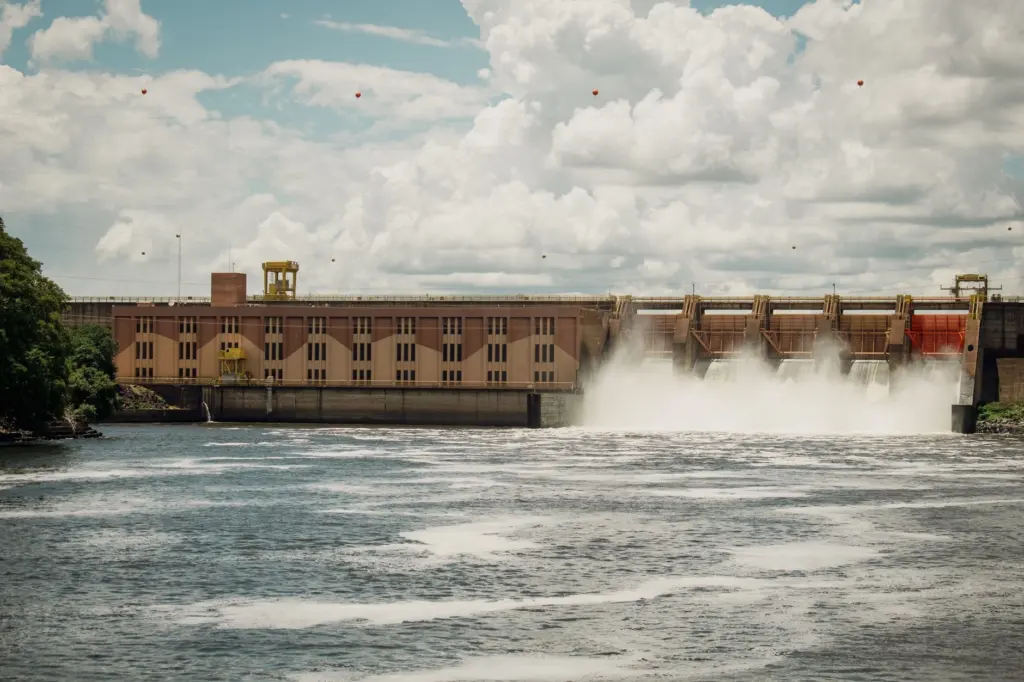
| Run-of-river | The force of the river’s current pushes a turbine, with no storage reservoir required | Suits sites where flooding land for a reservoir is the main objection |
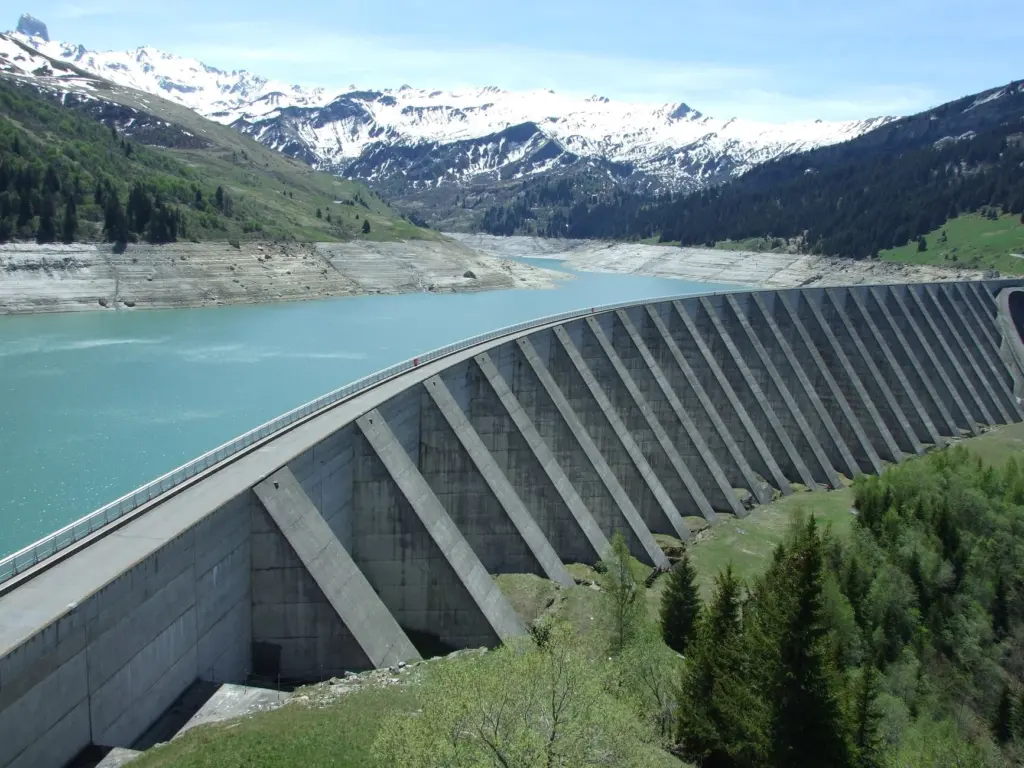
| Reservoir dam | Water accumulates in a reservoir behind a dam and is released through turbines as needed | Gives control over timing, but needs an emissions and land-use review |
| Reservoir emissions | Highest in the first 10 to 20 years after impoundment, then decrease; under other conditions a reservoir may act as a carbon sink | Ask for emissions data by reservoir age and site conditions, not one average figure |
| Pumped storage | Most facilities have net negative annual generation and release stored water at peak demand | Value it as storage for a grid, not as a source of new energy |
The figures come from the US Energy Information Administration’s hydropower overview and the HydroSelect climate-change guidance.
Is hydropower renewable? Yes. It is classed as a renewable, sustainable source because it runs on moving water. Whether a project is also low-impact depends on its type, size and site.
Businesses comparing power options can place hydropower alongside the other choices covered in clean energy for small business. The sections below start with the consequences that should drive a decision, then explain how each type works.
Climate effects of reservoirs
Reservoir dams are where hydropower’s climate record gets complicated. A reservoir releases greenhouse gases as flooded organic material decomposes, according to the HydroSelect guidance. That guidance also says emissions tend to be highest in the first 10 to 20 years after impoundment. Under other conditions, a reservoir may act as a carbon sink.
This timing has a practical consequence. A young reservoir and a mature one can have very different climate profiles, so a single headline figure can mislead. When comparing projects, ask how old the reservoir is and what was flooded to create it.
Methane makes the question worth asking. Climate Hero says plainly that hydropower facilities do release the potent greenhouse gas methane. It also qualifies the wider criticism as only partially correct.
Effects on rivers, fish and land
The most visible costs of a dam fall on the river and the people who use it. A university environmental science text notes that a reservoir may inundate natural areas, farms, cities and archaeological sites. These land losses come from creating a reservoir, not from the turbines.
Fish passage is the other recurring issue. The same text explains that dams can block fish moving upstream, and that fish ladders and similar measures only partially alleviate the problem. Fish travelling downstream can be killed or injured as water moves through turbines.
These effects shape what to ask a developer:
- Flooded footprint. Find out what land, farms or settlements a reservoir would cover before comparing carbon figures.
- Upstream passage. Check whether a fish ladder or similar structure is planned, and treat it as a partial remedy rather than a full fix.
- Downstream survival. Ask how fish moving downstream would avoid the turbines, since a ladder does not address that route.
Reliability and grid value
Hydropower’s strongest practical argument is control. Climate Hero notes that the source can be regulated, so electricity is produced when needed. A grid that relies heavily on weather-driven generation values that, and it is the reason storage-type hydropower is treated differently from run-of-river.
The benefit is not automatic. Control over timing comes from storage, and storage comes from a dam and reservoir, which brings back the land and emissions questions above. The decision is a trade between flexibility and footprint, and the right balance depends on what else is on the grid.
How the main types work
Run-of-river
A run-of-river system uses the force of the river’s current to push on a turbine, as the US Energy Information Administration describes it. No large storage reservoir is needed, so the flooding and decomposition effects of a big impoundment largely do not arise. The trade-off is that the plant has no stored water to release on demand.
Reservoir dams
Storage systems accumulate water in reservoirs created by dams on streams and rivers, then release it through turbines as needed. The US Energy Information Administration notes that most US hydropower facilities have dams and reservoirs. This design delivers the dispatchable output described above and carries the emission, land and fish effects.
Pumped storage
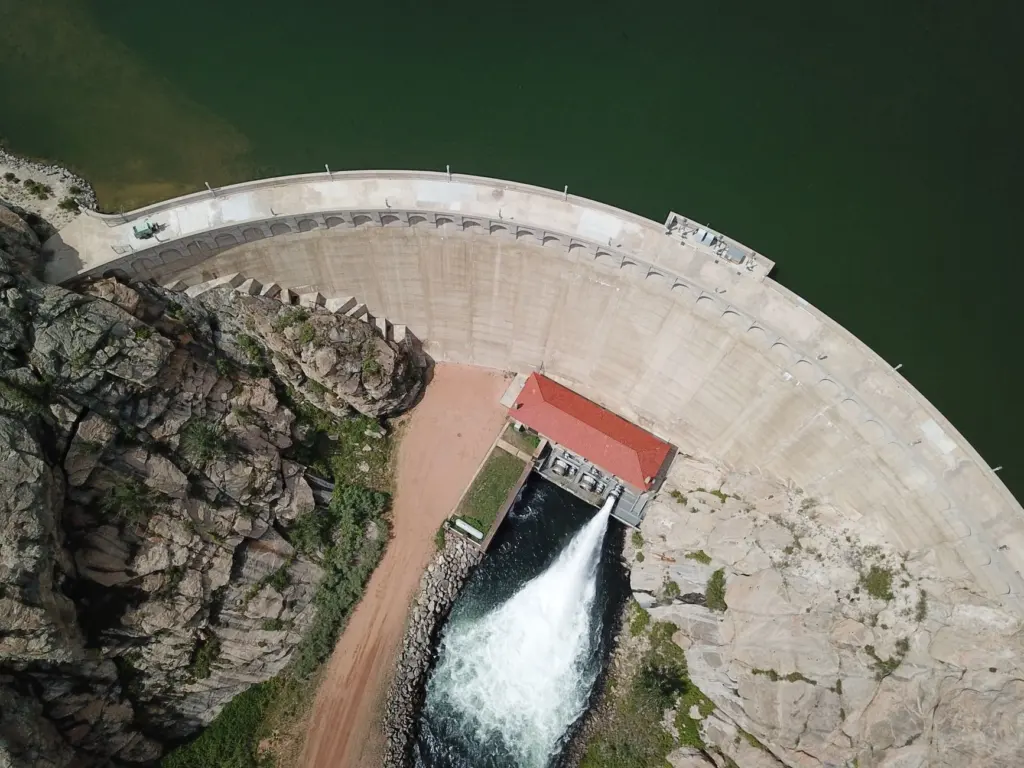
Pumped-storage plants move water to store energy and release it during peak electricity demand periods. The US Energy Information Administration reports that most pumped-storage facilities have net negative annual generation balances. They use more electricity than they produce. That makes them a tool for shifting power in time, not a source of new energy, so their climate value depends on the electricity used to pump.
Testing hydropower against the definition of renewable
A renewable source draws on a flow that nature replenishes. Hydropower passes that test because it runs on moving water. The university text also calls it clean, because it does not directly produce pollutants. Cleanliness is the weaker claim, and it is where dam type matters.
- Run-of-river. Passes the renewable test and avoids the largest reservoir effects, so it is the strongest candidate for the clean label. Fish passage and local river effects still need checking.
- Reservoir dam. Passes the renewable test. The clean label holds conditionally, depending on reservoir age, what was flooded and whether the reservoir behaves as a source or a sink.
- Pumped storage. Renewable status is the wrong question here. It stores energy, so its climate value follows the power used to fill the upper reservoir.
When hydropower makes sense
Hydropower makes sense when its type matches the need and its harms can be reduced to something the site can tolerate. These are the situations where it holds up best:
- Remote communities needing steady local power. The university text describes small hydropower projects as emissions-free power solutions for many remote communities. Treat this as a description of small-scale projects, not a guarantee for every site.
- Grids that need power at a chosen time. Storage-based hydropower can generate when demand is high, which suits a system with variable generation.
- Grids that need to shift surplus power. Pumped storage fits here, provided the pumping electricity is low-carbon.
- Sites where flooding is unacceptable. Choose run-of-river, or look at a different renewable entirely.
Hydropower is rarely the only option. For a firm-output alternative, see Geothermal Energy Pros and Cons: Benefits, Drawbacks, and When It Makes Sense (2026 Guide) – Greencrowding. For a variable source, How Much Power Does A Wind Turbine Produce Per Day? Real Numbers, Examples, And How To Estimate Yours – Greencrowding shows what to expect from wind.
Frequently asked questions
How much electricity does hydropower supply?
In 2025, hydroelectricity accounted for about 5.6% of total US utility-scale generation, according to the US Energy Information Administration. Climate Hero puts hydropower at about one-sixth of total global electricity supply. Neither figure is a share of global renewable generation.
Do fish ladders fully protect fish?
No. The university text says they only partially alleviate the upstream blockage, and it separately flags injury risk for fish passing downstream through turbines.
Can existing dams produce hydropower without a new reservoir?
Many already-built dams have no generating equipment. A 2012 US Department of Energy estimate, cited by the US Energy Information Administration, put the potential at existing non-powered US dams at 12,000 MW. Adding generation to a dam that already exists does not require creating a new reservoir.
How much pumped storage does the United States have?
In 2025 the United States had about 23,156 MW of pumped-storage generation capacity across 18 states, according to the US Energy Information Administration.