
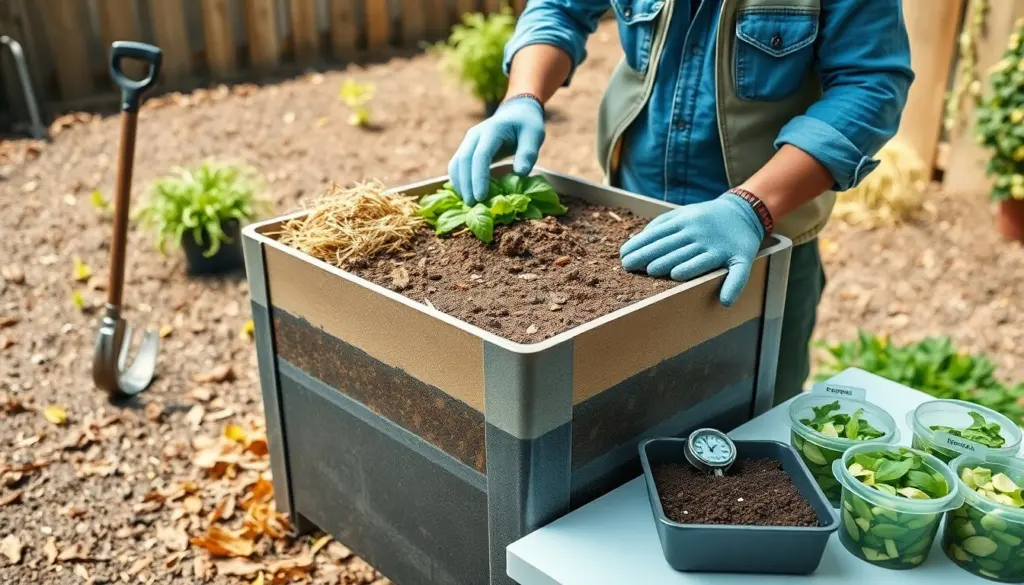
How to layer a compost bin matters for speed and smell control. This guide shows clear steps and practical tips. It uses common materials and simple actions. They will learn a repeatable routine that keeps compost active and odor-free. The instructions use short sentences and direct guidance for every step.
Key Takeaways
- Proper layering in a compost bin improves airflow and moisture balance, speeding up decomposition and preventing odors.
- Start with a base layer of coarse materials like twigs to ensure air circulation and prevent compaction.
- Alternate layers of green (nitrogen-rich) and brown (carbon-rich) materials, keeping moisture like a wrung-out sponge for optimal microbial activity.
- Turn the compost every one to two weeks to mix layers, add air, and maintain even temperature during active decomposition.
- Use a dry brown top layer to reduce fruit flies and rodents, and monitor temperature to know when to turn and harvest the compost.
- Troubleshoot common issues by adjusting moisture, adding browns or greens, turning the pile, or screening large pieces to maintain an effective compost bin.
Why Proper Layering Matters For Faster, Odor-Free Compost
Layering affects airflow, moisture, and microbial balance. Proper layering speeds decomposition. It reduces anaerobic pockets that cause odor. When people layer correctly, they get finished compost faster. When they layer poorly, food scraps attract flies and rot slowly. A balanced layer structure helps microbes work. It keeps temperatures stable and breaks down tough materials. People save time when they layer with intent. They also avoid common problems like bad smell and soggy mass.
What To Use — Browns, Greens, And Helpful Additives
People sort inputs into browns and greens. Browns provide carbon and structure. Examples include dry leaves, shredded paper, and straw. Greens add nitrogen and moisture. Examples include vegetable scraps, grass clippings, and coffee grounds. Add small amounts of soil to seed microbes. Add finished compost to jumpstart activity. Add coarse material like twigs to keep air channels. Avoid meat, dairy, and oily food. Avoid diseased plants and invasive weeds. Use garden lime sparingly if the mix gets too acidic. Use water only to reach damp-sponge moisture.
How To Layer A Compost Bin: Step-By-Step
This section gives a clear layering routine. Each step uses common materials and simple actions.
Start With A Base Layer
Begin with coarse material to form air space. Place twigs or straw three to four inches deep. This base prevents compaction at the bottom of the bin. Add a thin layer of browns over the coarse base. Scatter a handful of garden soil or finished compost. The soil adds microbes to start breakdown. This base helps water drain and air circulate.
Alternate Layers And Moisture Tips
Add a layer of greens two to three inches thick. Add a layer of browns three to four inches thick on top. Repeat this green-brown pattern until the bin fills. Keep the pile as moist as a wrung-out sponge. Add water if the pile feels dry. Add dry browns if the pile feels wet or smells sour. Chop large pieces small to speed breakdown. Turn the pile every one to two weeks to mix layers and add air. Turning lets microbes access new material and raises temperature evenly.
Top Layer, Turning Schedule, And When To Harvest
Finish each session with a dry brown top layer. The top layer reduces fruit flies and keeps rodents away. Check temperature with a simple thermometer or by touch. Turn the pile when the center cools or every two weeks during active months. The pile will darken and smell earthy when it finishes. Harvest compost when the material is crumbly and uniform. Let the last batch cure in a covered pile for two to four weeks. Store finished compost in a dry place until use.
Troubleshooting Common Layering Problems And Fixes
If the bin smells rotten, add several inches of dry browns and turn. If the pile is dry and slow, add greens and water, then turn. If the pile is compacted, add coarse material and turn thoroughly. If flies appear, cover food scraps with a brown layer and bury them. If rodents come, use a tight lid and avoid meat scraps. If the pile never heats up, reduce browns or add fresh greens and water. If large pieces persist, screen the finished compost and return the oversized pieces to a new pile for further breakdown. Adjust ratios and turning until the bin performs well.