
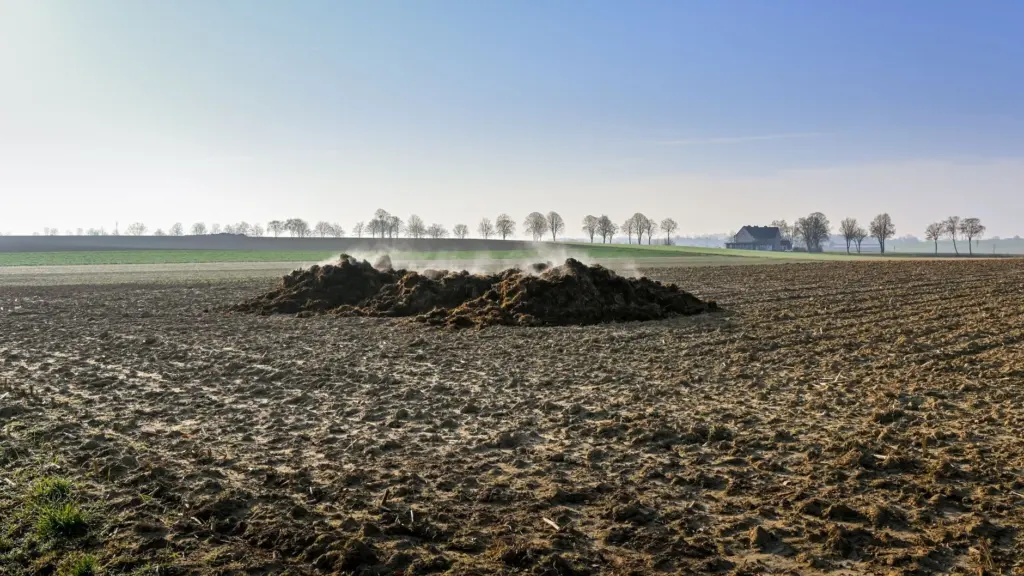
| Condition or finding | What it means | Planning use |
|---|---|---|
| Core heat above 40°C (104°F) for a minimum of two weeks | Kills strongyle larvae and ascarid eggs | Treat this as the minimum heat-and-time target when you track the pile with a thermometer. |
| Infective strongyle larvae survive a few weeks in hot weather and as many as six or nine months in colder weather | Raw manure stays a parasite risk for much longer in cold seasons | Do not assume a winter heap is safe because it has sat for a while. |
| Non-composted manure on pasture | Increases parasite contamination | Compost first; never spread raw manure on grazing land. |
| Fresh manure can be high enough in ammonia to damage leaves and roots | Raw or barely aged material harms the plants it is meant to feed | Keep fresh manure away from beds and vegetables. |
| Loose, yellow material | The manure has not rotted sufficiently | Return it to the heap rather than using it. |
| Weedkillers, perennial weed roots or weed seeds may be present | Contamination can arrive with the manure itself | Ask about the manure’s source and storage before you build the pile. |
The heat and parasite figures follow American Association of Equine Practitioners guidance quoted by SmartPak, and the plant-damage and contamination points come from Frustrated Gardener’s horse manure guide.
To learn how to compost horse manure safely, build a pile that stays above 40°C (104°F) for at least two weeks, then let it rot down fully before it goes near vegetables or pasture.
Composting is one small habit within a wider approach; our guide on how to live more sustainably places it alongside other practical choices at home.
Why heat matters more than anything else
Hot composting is what turns horse manure from a parasite and plant-damage problem into a usable soil amendment. Composting means combining organic matter with water and air in suitable ratios so that microorganisms decompose it and generate heat. That heat is the safety mechanism, and a pile that never warms up is just a stored heap of raw manure.
The parasite guidance sets the benchmark. Strongyle larvae and ascarid eggs are killed when the heat exceeds 40°C (104°F) for a minimum of two weeks. The target is a sustained temperature, not a brief spike, so a thermometer reading taken once tells you little. Record the temperature over several days and check that it holds.
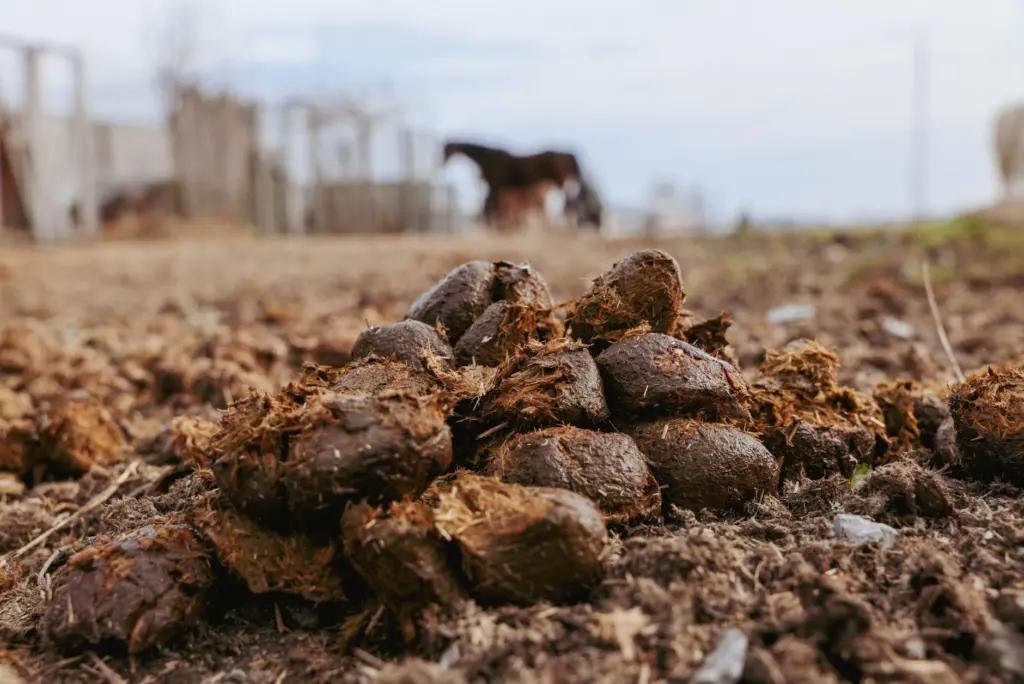
What happens if you skip the heat phase
Leaving manure to sit does not make it safe on its own terms. Infective strongyle larvae last only a few weeks in hot weather but can live as many as six or nine months in colder weather. The same guidance says non-composted horse manure should never be spread on pastures, because it increases the level of parasite contamination.
Fresh manure also harms the garden. It can be high enough in ammonia to damage the leaves and roots of plants, which is why raw material is a poor choice for beds even when parasites are not the concern.
Bedding, and what it changes
Bedding is part of the compost, not a nuisance to be removed. Much of the value of manure sits in the urine-soaked bedding, which is particularly high in nitrogen. If you muck out into a heap, the soiled bedding is the part worth keeping.
You do not need to worry about the appearance of straw, wood shavings or sawdust in the pile. Visible bedding is normal in manure and does not signal a problem by itself. These are the choices to weigh:
- Straw, shavings or sawdust: all are acceptable bedding for a manure heap, so use whichever your stable already uses rather than changing bedding for the compost’s sake.
- Heavily soiled bedding: keep it in, because it carries much of the nutrient value.
- Bedding from an unknown source: find out where it came from and how it was stored, since manure can occasionally carry weedkillers, roots of perennial weeds or weed seeds.
Building and running the pile
A workable heap needs manure, bedding, water and air, then regular checks on its temperature. The order below keeps those priorities straight.
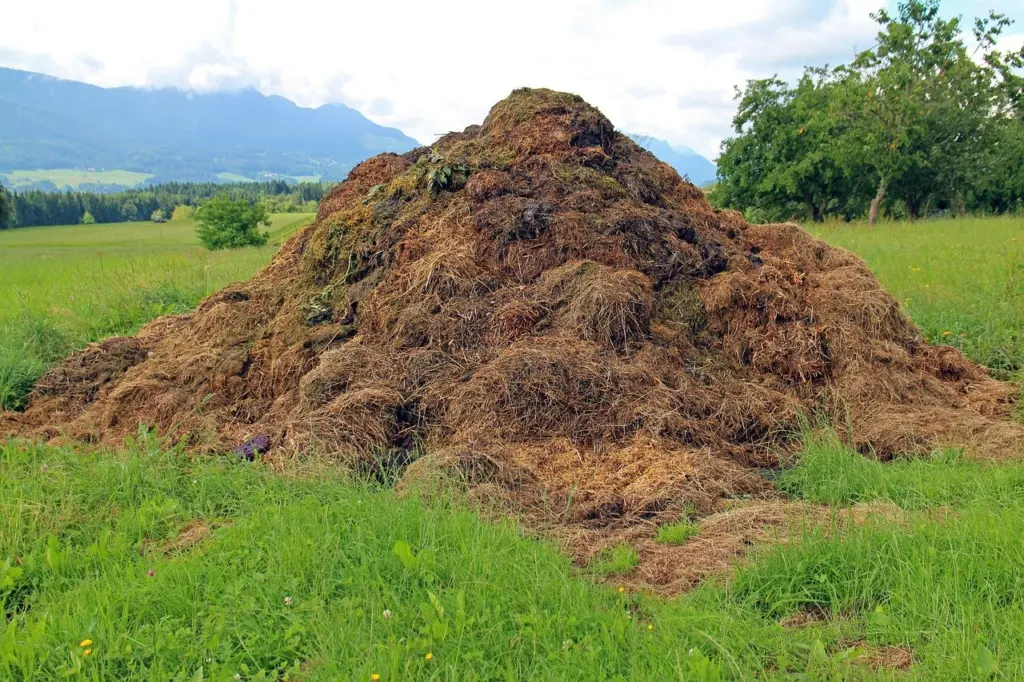
- Gather the material. Collect manure together with its soiled bedding, and ask where any imported manure or bedding came from.
- Combine and moisten. Mix manure and bedding so the heap has organic matter, water and air together, which is the definition of true composting. Add water if the material is dry.
- Fit a thermometer. Put a compost thermometer in the heart of the pile so you can see whether microbial activity is generating heat.
- Hold the heat. Aim to keep the pile above 40°C (104°F) for a minimum of two weeks, the level documented as killing strongyle larvae and ascarid eggs.
- Re-introduce air if it stalls. Because composting needs air as well as water, a pile that fails to warm may need mixing so oxygen reaches the material.
- Let it rot down. Keep it separate from fresh additions until it no longer looks loose and yellow.
Our guide on How To Layer A Compost Bin: A Simple Step-By-Step Guide For Faster, Odor-Free Composting – Greencrowding explains layering in a bin, which is useful if you want a tidier, contained alternative to an open heap.
Reading the pile
Your thermometer is the main decision tool. A pile that has gone above 40°C (104°F) and stayed there is doing its job. One that stays cold should be treated as raw manure, with the same restrictions on pasture and beds. Material that is loose and yellow has not rotted sufficiently, and it can draw nitrogen from the soil if you dig it in.
How long it takes
The heat phase has a clear floor, which is a minimum of two weeks above 40°C (104°F), but the full process is longer. Finished, ready-to-use material takes longer than the heat period because the manure also has to rot down properly. Some sources advise applying manure to the garden only 3–6 months after collection, and that range is a sensible planning window rather than a fixed rule.
Season changes the picture. Because parasite larvae last longer in cold weather, a pile started in the cold deserves more patience before you trust it. Warm weather helps the heat phase along but does not remove the need for the full time.
Using the finished compost safely
Use compost only once it has rotted down and no longer looks loose and yellow. Fresh manure can damage leaves and roots through ammonia, so the aging period protects the plants as well as the people handling them. For vegetable beds, the safe course is well-rotted material from a pile you monitored, with any imported manure checked for contamination first.
- Vegetable beds: use only fully rotted compost, and avoid any batch that still looks loose and yellow.
- Pasture: never spread non-composted manure on grazing land. Where guidance allows spreading in northern areas, it points to closed pastures during the hot, dry months of summer such as July and August.
- Unknown manure or bedding: weigh the risk of weedkillers, perennial weed roots or weed seeds before it goes into a bed you plan to crop.
Rules and recommendations vary by place, so your state’s extension office is the recommended local resource for manure management guidance. If you manage a stable as a small business or a shared site, the same office can help you match the plan to local conditions.
Low-waste habits tend to build on one another, and our practical guide to Zero Waste Toothpaste: A Practical Guide To Eco‑Friendly Oral Care In 2026 – Greencrowding is a simple next swap if composting has you thinking about waste elsewhere at home.
Frequently asked questions
Is composted horse manure safe for vegetables?
It is safe when it has been properly composted and fully rotted. Fresh manure can be high in ammonia and damage plants, and manure can occasionally carry weedkillers, perennial weed roots or weed seeds, so check the source.
How long does composting horse manure take?
The heat phase needs a minimum of two weeks above 40°C (104°F). Some sources suggest waiting 3–6 months after collection before using manure in the garden.
Can I spread fresh manure on my pasture?
No. Non-composted horse manure should never be spread on pastures because it increases parasite contamination.
Does the type of bedding matter?
Straw, wood shavings and sawdust are all acceptable, and their appearance in the pile is not a concern. Urine-soaked bedding is worth keeping because it is particularly high in nitrogen.