
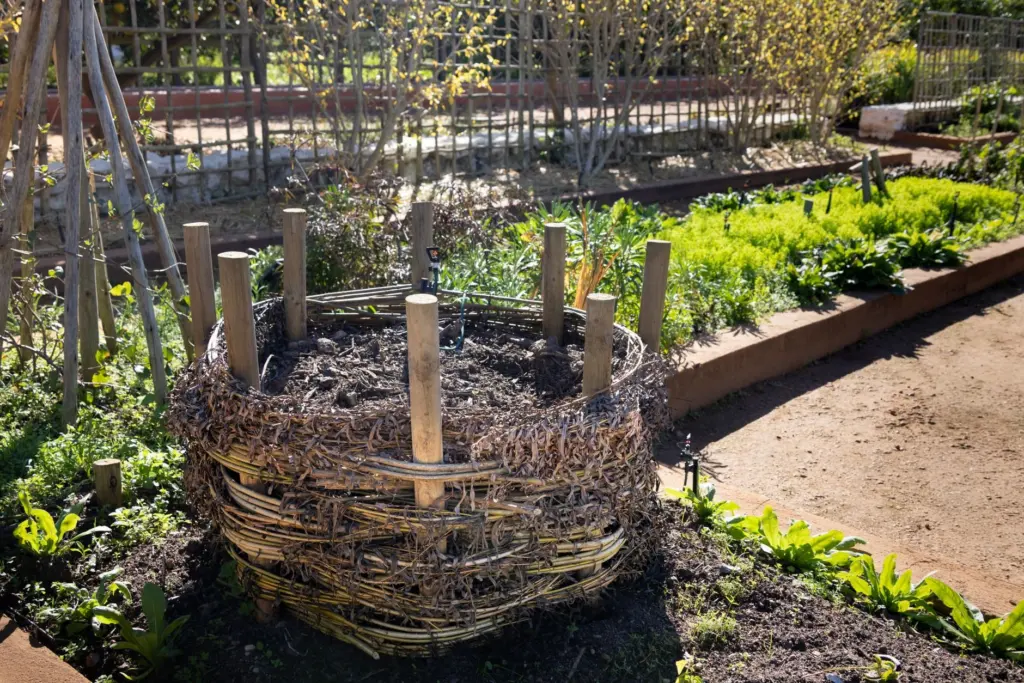
A bin that smells bad is usually too wet or short of air. How to layer a compost bin comes down to bulky browns first, then greens, each covered with dry browns, kept as moist as a wrung-out sponge.
Composting is one practical part of how to live more sustainably, and a steady layering routine is what keeps it low-effort. The sections below cover the materials, the layering routine, turning, and fixes for the problems that most often show up.
What layering actually does inside a compost bin
Composting is the managed, aerobic (oxygen-required) biological decomposition of organic materials, according to the US EPA’s home composting guidance. The bin needs four ingredients: carbon-rich browns, nitrogen-rich greens, water and air. Layering is simply a way to supply all four in the right proportions as the bin fills.
Browns and greens set the carbon to nitrogen ratio of the pile. You do not need to measure it for a backyard bin. Judge it by volume, with plenty of browns and a smaller amount of greens. Hot composting is a different goal. Addison County Recycles says it needs at least one cubic yard of material plus the right carbon to nitrogen ratio, and that most home piles are too small to generate much heat and take several months to finish. A home bin can still work well without ever running hot.
Layering myths and what works instead
Most layering problems come from a few widely repeated assumptions. The table sets each one against the supported practice.
| Common belief | What works instead | Why it matters |
|---|---|---|
| Browns and greens go in equal layers | Add at least two to three times the volume of browns to greens | Plenty of browns keeps the mix airy and absorbs excess moisture from scraps |
| Food scraps can sit on the surface | Cover scraps with four to eight inches of dry leaves or other browns | A brown cover controls odor and deters wildlife |
| More water speeds things up | Aim for the moisture of a wrung-out sponge | A wetter pile lets odor-producing microbes take over, while a dry one slows or stops activity |
| The pile must be turned on a strict timetable | Turn from time to time, and whenever the pile shows a problem | Turning adds air and speeds decomposition, but it is optional |
| Every compost bin heats up | Expect little heat from a small home pile; hot composting needs at least one cubic yard | A cool bin is not failing, only slower |
These points come from the EPA’s home composting page and Addison County Recycles’ composting guide.
Browns, greens and what to leave out
Sorting your material before it goes in makes layering quick. Browns and greens do different jobs, and a bin does best when you keep a stock of browns beside it.
- Browns (carbon-rich): The EPA names twigs and wood chips for the bulky base layer and dry leaves for covering food scraps. Addison County Recycles recommends browns of various sizes, because mixed sizes create air space.
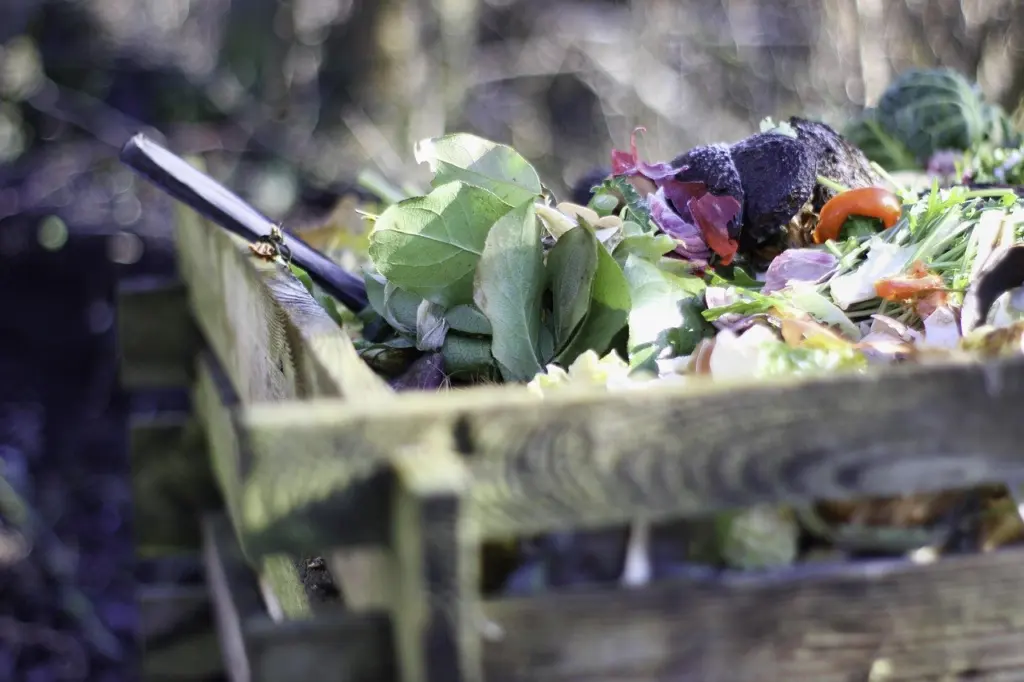
- Greens (nitrogen-rich): Fresh kitchen and plant trimmings supply nitrogen. Chop and break up tough pieces first, such as corn cobs and broccoli stalks, so they break down faster.
- Water and air: Moisture comes from the greens plus whatever you add. Air comes from bulky browns, the base layer and turning.
- Items to keep out: Meat, bones, fish, shellfish, fats, oils and grease, and large amounts of dairy cause odors and can attract animals.
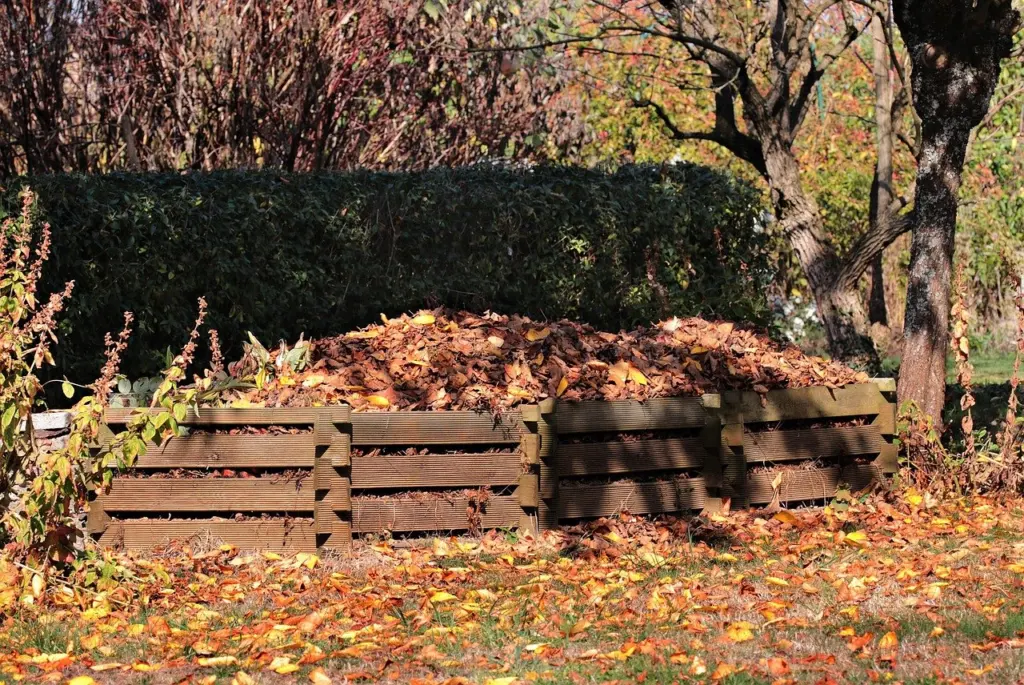
A reliable stock of browns matters most in the seasons when you have few of them. Dry leaves stored near the bin mean you can always cover fresh scraps straight away. Addison County Recycles notes that using plenty of browns makes composting more pleasant, speeds the process and deters wildlife.
Stable bedding and manure bring their own handling needs. For that material, follow the dedicated guide, Composting Horse Manure: A Simple 6-Step Guide To Safe, Nutrient‑Rich Compost In 2026 – Greencrowding, rather than treating it as an ordinary green.
A repeatable layering routine
The routine is the same every time you add material, which is why it works. Build the base once, then repeat the add, cover and check sequence as the bin fills.
Lay the base
Start the pile with a four- to six-inch layer of bulky browns such as twigs and wood chips. The EPA explains that this layer absorbs extra liquids, elevates the pile and lets air circulate at its base. Skipping it is the usual reason the bottom of a bin turns into a wet, airless mass.
Add greens, then cover them
Add your greens in a modest layer, chopped small. For every addition of greens, add at least two to three times that volume of browns, as the EPA advises. Cover food scraps with four to eight inches of dry leaves or other browns. Addison County Recycles gives the same rule in simpler form: every time you add greens, finish by covering with a layer of browns.
Check moisture before you close the lid
Aim for the consistency of a wrung-out sponge across the combined materials. If a handful feels dripping wet, add dry browns. If it feels dry, moisten it. Then repeat the add, cover and check sequence until the bin is full.
Turning and aeration
Turning mixes the layers and aerates the pile. The EPA says that turning and mixing from time to time helps speed up decomposition, and it gives no fixed interval. Use the pile’s condition to decide when. Turn it when it smells, when it is not heating or when it has dried out, and otherwise leave it.
To turn the pile, use a garden fork and work the outside of the pile inward, so that material from the cool edges moves toward the middle. Varied brown sizes also create air space between turns.
A well-maintained backyard pile can reach 130° to 160° F, according to the EPA. A pile that does not heat is still composting, only more slowly, as the FAQ below explains.
Fixing smells and other layering problems
A smell tells you which ingredient is out of balance. The EPA says a bad odor means the pile may be too wet or need more air circulation. Match the fix to the cause:
- Sour or rotten smell: Add more browns or dry material, then turn the pile. This is the EPA’s fix, and it works by absorbing moisture and opening air channels at the same time.
- Soggy pile: Water should not run out when you squeeze a handful. Addison County Recycles warns that a pile wetter than a wrung-out sponge lets odor-causing microbes take over, so stop adding wet scraps until the browns catch up.
- Dry, inactive pile: When a pile is too dry, activity slows or ceases. Moisten it to sponge level and turn it.
- Scraps showing on top: Add a deeper cover of browns. A covered surface controls both odor and pests.
- Smell that returns: Check what has gone in. Meat, bones, fish, fats, grease and large amounts of dairy cause odors, so remove them or stop adding them.
Most smell problems trace back to too few browns, so fixing the cover layer is the first thing to try before changing anything else.
Where to go next
Once the bin runs on its routine, it pairs well with other low-waste habits. A good one is buying secondhand, covered in Thrift Shopping Explained: How To Save Money, Find Unique Pieces, And Shop Sustainably In 2026 – Greencrowding.
Frequently asked questions
| Question | Answer |
|---|---|
| How long does a layered bin take to produce finished compost? | The EPA says compost in a well-maintained pile is finished and ready for use in about three to five months, while a neglected pile may take as long as a year. Addison County Recycles adds that most home piles take several months. |
| Why is my compost bin not heating up? | Many home piles are simply too small. Hot composting needs at least one cubic yard of material and the right carbon to nitrogen ratio. If you want more heat, the EPA advises mixing in greens and turning the pile. |
| Do I have to turn the pile at all? | No. Addison County Recycles describes turning as optional, though it speeds decomposition. You can move the pile into an empty bin, rotate it in a tumbler or stir it with a pitchfork. |