
| Decision area | Supported value | Planning use |
|---|---|---|
| Small compostable bag (6×8 inch) | $32.00 per case of 1000 bags, about $0.03 per bag | Baseline price for small, light items when comparing materials |
| Larger compostable bag (9×12 inch) | $69.00 regular, $55.20 sale price per case of 1000 bags | Budget repeat orders on the regular price; treat the sale price as a bonus |
| Custom-printed order | Minimum order of 5,000 units; lead time about 35-65 days | Order well before stock runs out, and only after a stock-size trial |
| Overall cost of switching | No fixed premium; it varies by scenario | Price your own mix of sizes and volumes rather than relying on a headline percentage |
Pricing for the compostable bags comes from Elevate Packaging’s fashion and apparel range, and the custom-order terms and the note on switching costs come from Ecopackables’ sustainable apparel packaging page.
Sustainable clothing packaging works best when the mailer suits the garment, the size suits the fold, and the cost is checked against your own order mix rather than a generic premium.
Packaging is one lever in the wider question of how to make a small business more sustainable, and for apparel it is the most visible one, because every customer receives the order in it.
Cost and ordering implications
The price of switching depends on the size of bag, the volume you buy and whether you customise. Ecopackables describes the cost premium for sustainable apparel packaging as a nuanced question that is specific to individual scenarios, so no single percentage applies to every brand.
Per-bag cost and what it tells you
Elevate Packaging lists its 6×8 inch compostable poly bags at $32.00 per case of 1000, which works out to about $0.03 per bag. Its 9×12 inch bags are $69.00 per case of 1000 at the regular price, and $55.20 when on sale.
- Budget on the regular price. A sale price can disappear between reorders, so a margin calculation built on it may not hold.
- Match bag size to product type. The smaller bag suits slim, light items; the larger one covers folded tops and similar garments. Buying the smaller size where it fits keeps the per-order cost down.
- Compare against paper and poly on the same basis. EcoEnclose’s apparel range notes that one of its alternatives is more expensive than kraft and poly mailers, so request the same quantity quotes for each material before drawing conclusions.
Custom orders and the supply chain
Custom printing changes the maths. Ecopackables states a 5,000-unit minimum for custom orders, with lead times of about 35-65 days depending on its production schedule. For a brand with low monthly shipping volume, that minimum can mean holding a large stock of one design for a long time.
- Start with stock sizes. Trial plain mailers first and move to custom print only once you know which size dominates your orders.
- Plan reorders early. A lead time measured in weeks means you should reorder while there is still comfortable stock, not when the last carton is opened.
- Keep the supplier list short. A single dependable supplier for mailers simplifies the supply chain, but keep one sampled alternative in reserve in case lead times stretch.
Choosing mailers for clothing
Clothing is a soft good, so the main choice is between recycled paper mailers, compostable mailers and conventional poly mailers. Each has a different cost and a different end-of-life requirement.
Recycled paper mailers
Recycled paper mailers are the option to price against compostable bags and poly. They suit brands whose customers are more likely to have paper recycling than a film drop-off point. Ask for samples at the sizes you ship and compare the unit price at your real volumes, not the price at the top of a catalogue range.
Compostable mailers
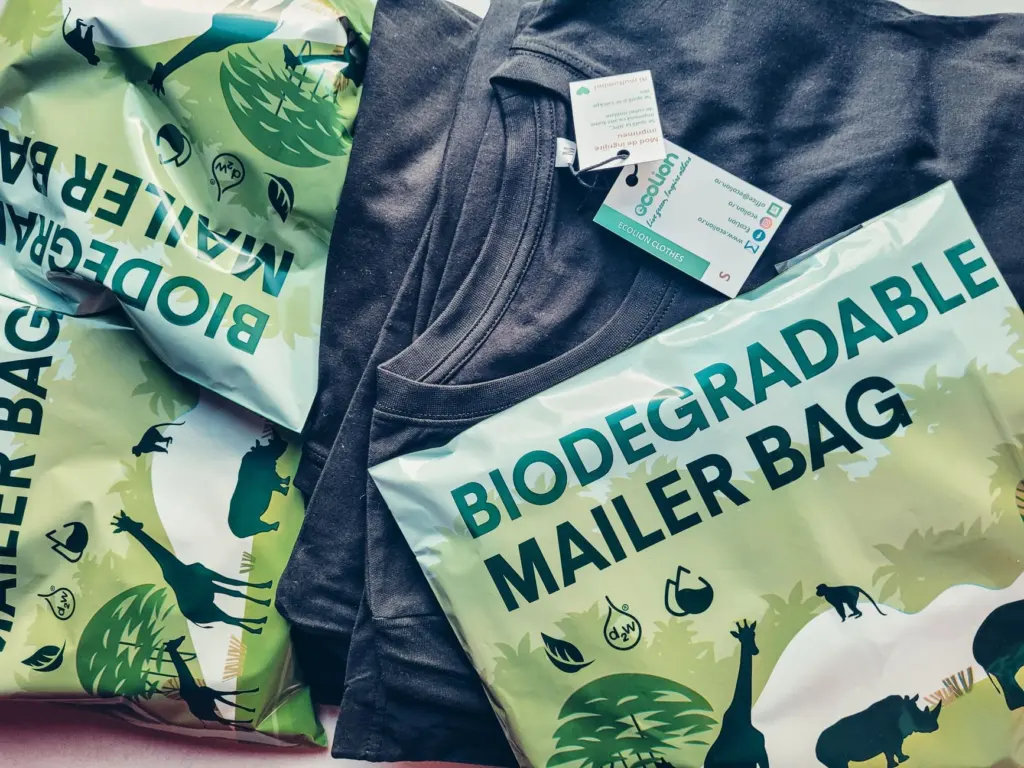
Compostable mailers are the lowest-priced sustainable option in the figures above, at about $0.03 per bag for the 6×8 inch size. They suit brands that want a bag format close to a poly mailer. Print simple disposal instructions on the bag or the packing slip so customers know what to do with it, and confirm the supplier’s compostability documentation before you make any claim on your site.
Poly mailers as the benchmark
EcoEnclose’s apparel comparison notes that poly mailers have to be recycled in a plastic film-specific bin. That condition matters. If you keep poly for some lines, say so plainly in your returns or care information, because the bag will not be accepted in ordinary mixed recycling.
Right-sizing soft goods
Right-sizing means choosing a mailer that fits the folded garment closely, so you use less material per order. For clothing it is the cheapest change to make because it needs no new supplier, only a better match between product and pack.
EcoEnclose strongly recommends ordering free samples when you are unsure what size you need. Follow that approach with your bulkiest and your slimmest products first, since those two extremes set the range of sizes you need to stock.
- Fold to a standard shape. A consistent fold makes it easier to settle on one or two mailer sizes and keeps packing quick.
- Trim the size range. Fewer sizes mean larger purchase quantities per size, which can help when you later move towards a custom order.
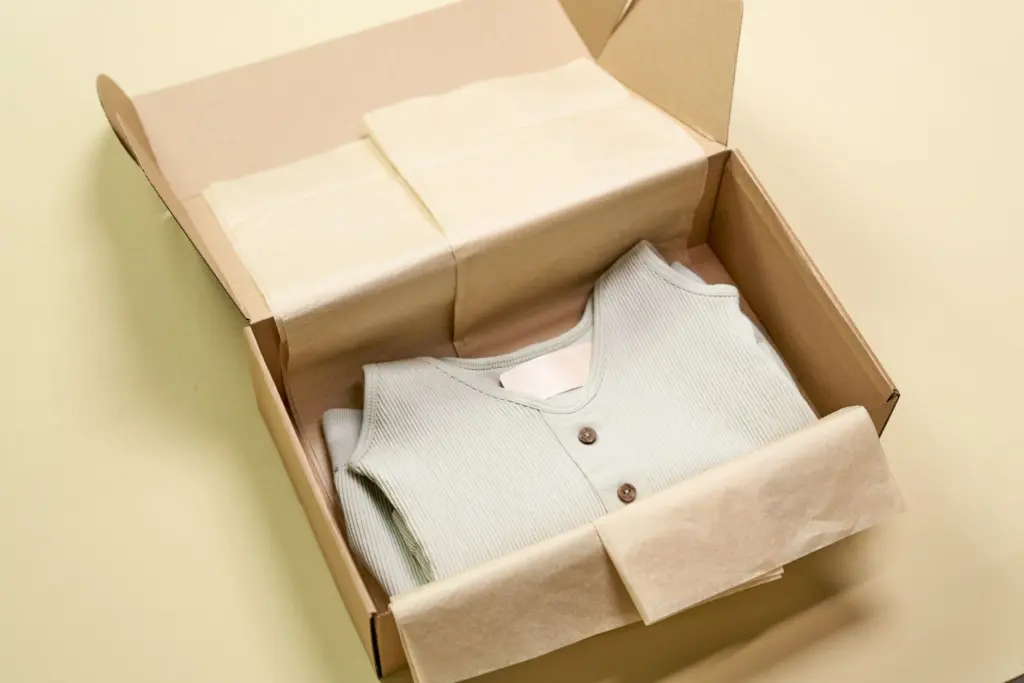
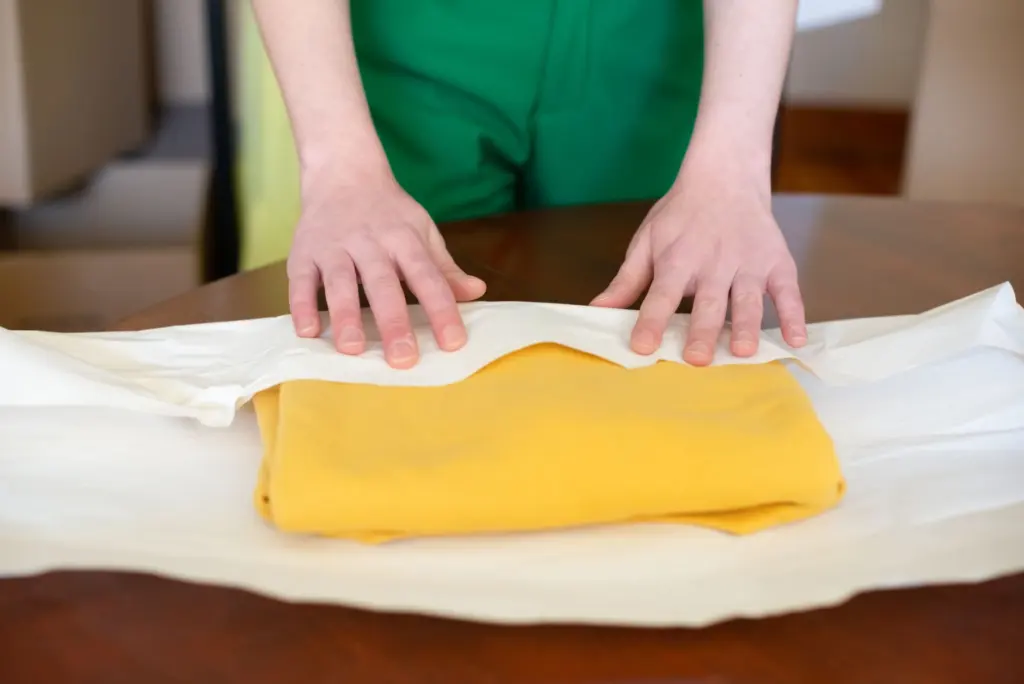
- Wrap rather than pad. Tissue paper around a folded garment protects the fabric and adds to the unboxing without bulky filler.
Rolling out the change
A small pilot lets you test the change without committing to a large order. Switch one product line, track what the new pack costs per order and whether customers or your packing team raise problems, then widen the change.
- Sample before you buy. Order samples of paper and compostable options in your two or three main sizes and pack real orders with them.
- Check the minimums. Stock items allow small trials; custom runs carry the 5,000-unit minimum and a long lead time.
- Tell customers what to do with the pack. One short disposal line on the packing slip is enough.
If you are still deciding which sustainability projects deserve your time, the ideas in 12 Profitable Eco‑Friendly Business Ideas That Work In 2026 (Low Cost + Fast To Start) – Greencrowding put packaging in the context of other low-cost starting points. For decisions that go beyond apparel, such as boxes and fillers for mixed catalogues, see Sustainable E‑Commerce Packaging: Practical Strategies To Cut Waste, Lower Costs, And Delight Customers In 2026 – Greencrowding.
Frequently asked questions
What packaging suits clothing shipments?
Lightweight mailers in recycled paper or compostable film suit most folded garments, with tissue paper for presentation. Pick the smallest size the folded item fits in, and check it with a free sample first.
How much does it cost to switch?
The premium varies by scenario. Stock compostable bags start at about $0.03 per bag for the 6×8 inch size, but custom orders carry a 5,000-unit minimum. Compare quotes for your own sizes and volumes.
Can poly mailers be recycled with other plastics?
EcoEnclose notes that poly mailers have to go in a plastic film-specific recycling bin. They should not be put in ordinary mixed recycling.
How long does a custom packaging order take?
Ecopackables quotes lead times of about 35-65 days for custom orders, depending on its production schedule.