
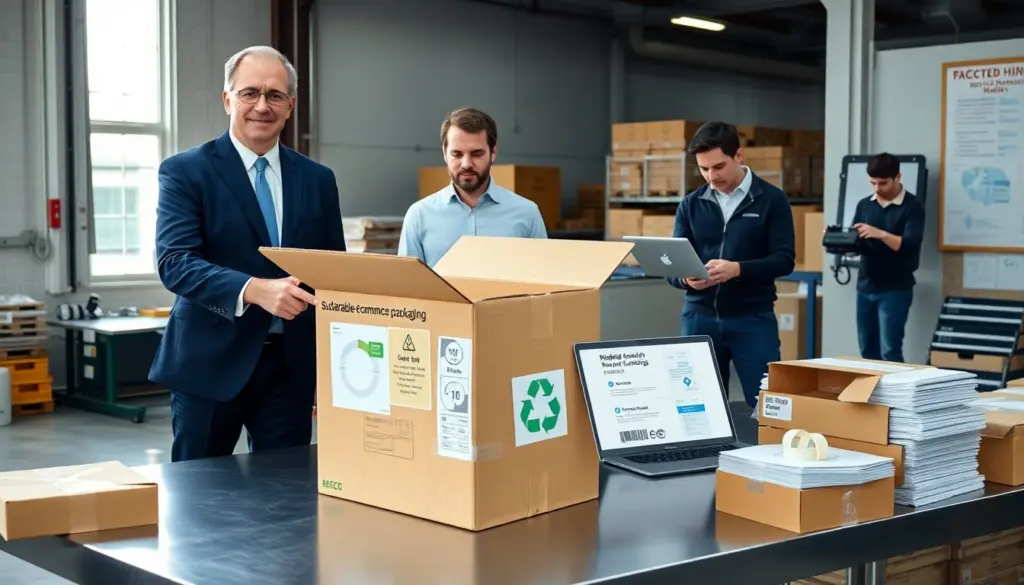
Sustainable ecommerce packaging guides companies to reduce waste and cut cost while keeping customers happy. Leaders choose sustainable ecommerce packaging to match consumer demand and to meet new regulations. This article shows clear steps to pick materials, change operations, and measure results. It gives specific actions that teams can apply this year and scale in 2026.
Key Takeaways
- Sustainable ecommerce packaging reduces material waste, cutting costs while enhancing customer satisfaction and brand reputation.
- Choosing the right materials like recycled cardboard and implementing right-sizing techniques lowers shipping fees and environmental impact.
- Operational success depends on clear goals, cross-team collaboration, pilot testing, and ongoing training to embed sustainable packaging practices.
- Measuring packaging weight, cost, and recycling rates alongside credible certifications ensures transparency and continuous improvement.
- Communicating clear recycling and composting instructions boosts customer trust and supports regulatory compliance.
Why Sustainable Packaging Matters For Your Business And The Planet
Sustainable ecommerce packaging lowers material use and reduces landfill volume. Consumers say they prefer brands that use sustainable ecommerce packaging, and regulators set higher waste standards. A company that adopts sustainable ecommerce packaging can cut shipping costs by lowering package weight and size. It can also improve brand perception when customers receive neat, easy-to-open boxes that use recycled or recyclable materials. Investors and partners often check packaging choices during audits and tend to favor sellers that use sustainable ecommerce packaging. Small changes in packaging design can reduce returns and lower damage rates, which saves money and reduces extra shipping. In short, sustainable ecommerce packaging offers clear business benefits and measurable environmental gains.
Materials, Design, And Right‑Sizing: Choosing Packaging That Performs
Teams should start by listing product sizes and fragility. They should then map materials that meet protection and recovery goals. Options include recycled cardboard, molded pulp, paper tape, and biodegradable void fill. Companies can replace single-use plastic with paper-based tape and starch-based packing peanuts. Design choices should focus on right-sizing. Right-sizing reduces air in the box and cuts dimensional weight fees. Designers should use internal supports that secure items without excess filler. Teams should prefer mono-materials that recyclers accept and avoid mixed laminates that complicate processing. When testing, they should run drop and compression tests and confirm products arrive undamaged. Suppliers that provide certified recycled content or clear end-of-life instructions help customers recycle correctly. Product teams should also test unboxing. Easy unboxing improves customer satisfaction and lowers support contacts. Finally, procurement should track cost per unit and life-cycle impact for each material choice to make balanced decisions.
Operational Steps To Implement Sustainable Packaging At Scale
Management should set a clear goal and a timeline for sustainable ecommerce packaging adoption. Teams should assign owners in procurement, operations, and customer experience. Procurement should secure samples and negotiate pilot pricing. Operations should trial new boxes on a single SKU group and log packing time, protection results, and cost. Warehouses should adjust packing stations to reduce waste and to install right-sizing equipment if volumes justify the spend. Training should focus on correct sealing, correct tape use, and correct labeling to avoid returns. IT should update product dimensions in the system and integrate packing rules to guide packers. Marketing should update product pages with recycling instructions and material claims to set customer expectations. Customer service should receive scripts that explain recycling steps and material benefits. Logistics teams should track carrier dimensional weight changes and adjust box portfolios to avoid sudden cost increases. After the pilot, teams should review metrics, expand to more SKUs, and renegotiate supplier terms as volumes rise. Repeatable audits help teams catch regressions and keep waste low.
Measuring Impact, Costs, And Credible Certifications
Teams should measure weight, volume, cost, and return rate to quantify gains from sustainable ecommerce packaging. They should track percentage of recycled content, percentage of mono-material packaging, and percentage of packages accepted by curbside recycling. Finance should model total landed cost that includes packing labor, materials, and carrier fees. ESG or operations should report carbon estimates using simple emission factors per kilogram shipped. Companies can use third-party tools to automate these calculations. For credibility, teams should pursue clear certifications like FSC for paper, Forest Stewardship Council claims, or certifications for recycled content such as recycled claim verification. Packaging that meets ASTM compostability standards can help when selling in markets that accept industrial composting. Labels must remain accurate: teams should avoid vague terms and instead state concrete facts: percent recycled content, how to recycle, and which parts are compostable. Auditors will ask for supplier declarations and chain-of-custody documents. Regular supplier checks help keep claims verifiable. Finally, teams should publish simple metrics on packaging performance to build trust with customers and with partners.