
What is green marketing? It is the practice of promoting products, services or business practices by their environmental benefits. It pays off only when every claim is backed by evidence you can show and a return you can measure.
The sections below follow the chain from operational change to claim, proof, price and return. Teams at the start of that chain can pair this with our guide on how to make a small business more sustainable, because a claim is only as strong as the operations behind it.
What green marketing covers
Green marketing refers to promoting products, services or business practices based on their environmental benefits. In practice that includes using sustainable materials and reducing carbon footprints, then telling customers about it. The marketing is the visible part. The substance sits in product design, sourcing, production and distribution.
That scope has a practical consequence. Any place a sustainability claim can appear is part of green marketing: product pages, packaging, advertising and in-store signs. Each of those statements needs an owner who can show what it rests on.
Green marketing has a counterpart. Greenwashing is communication that presents activities as sustainable while hiding their negative impact. The two can use the same words, and what separates them is whether the evidence exists. If you are still deciding what to sell, the 12 Profitable Eco‑Friendly Business Ideas That Work In 2026 (Low Cost + Fast To Start) – Greencrowding list shows which models start with a real environmental benefit to build on.
How green marketing works, in order
Green marketing works as a sequence in which each step depends on the one before it. Skipping a step is what produces weak or risky claims.
- Change something real. Sustainable materials and more environmentally conscious manufacturing can reduce a company’s overhead costs, so the change can pay for itself before any campaign runs.
- Write the claim narrowly. State exactly what improved, for which product, and compared with what.
- Attach proof. Test results, supplier records or a recognised ecolabel turn a statement into something a shopper or regulator can check.
- Put the proof where the decision happens. Shoppers weigh a claim at the shelf or on the product page, so the evidence belongs there.
- Measure the outcome. Compare results against a baseline so the next claim rests on data rather than enthusiasm.
The risk sits at the first and third steps. A brand that markets before it changes anything, or that claims without proof, moves from green marketing into greenwashing.
Avoiding greenwashing in sustainability claims
Honest sustainability claims are, in the words of one environmental consultancy’s guide, truthful, clear, substantiated, and mindful of the full life cycle impact of products. Use that as a four-part test before anything is published.
- Replace vague wording with specifics. Statements should be supported with evidence, and vagueness does not exhaustively support an activity. A bare “eco-friendly” says nothing a customer can check, whereas naming the material or the measured change does.
- Keep the claim inside its scope. If the evidence covers a product or a packaging component, do not let the wording imply the whole company or the whole life cycle.
- Look at the full life cycle. A gain at one stage, such as lighter packaging, does not excuse a worse result elsewhere, such as in production or disposal.
- Separate ambition from fact. A target for the future is not a present benefit, so label it as a goal.
Regulators are paying closer attention. In 2025 the UK’s Competition and Markets Authority gained significantly stronger powers to tackle greenwashing. A claims file that records the exact wording, the evidence behind it and the date of the last check is a sensible defence in any market. Large companies that also report formally should read Is ESG Reporting Mandatory? The 2026 Guide To What Companies Must Disclose – Greencrowding, since marketing statements and disclosures need to agree.

Ecolabels and third-party certification
An ecolabel from an independent body carries more weight than a self-declared badge because someone outside the company has checked the claim. One marketing guide recommends going for credible third-party certifications like Cradle to Cradle, FSC, Fair Trade or OEKO-TEX.
The choice should follow the claim, not the other way round. A forestry certification supports a statement about wood or paper, and a textile certification supports a statement about fabric. A label that does not cover the attribute you are advertising can mislead even when it is genuine, so read the scope of any scheme before printing its mark. Where no certification fits, a plainly worded and well-evidenced company statement is better than a borrowed logo.
Product, packaging and channel choices
The strongest green marketing starts in the product, because a real operational gain gives you something to say. Flat-pack or modular designs can reduce shipping volume by up to 40%, and that figure is a ceiling rather than a typical result. Cutting fuel and carbon emissions can also save brands money in production and distribution. Both gains can be stated once they are measured for your own products.
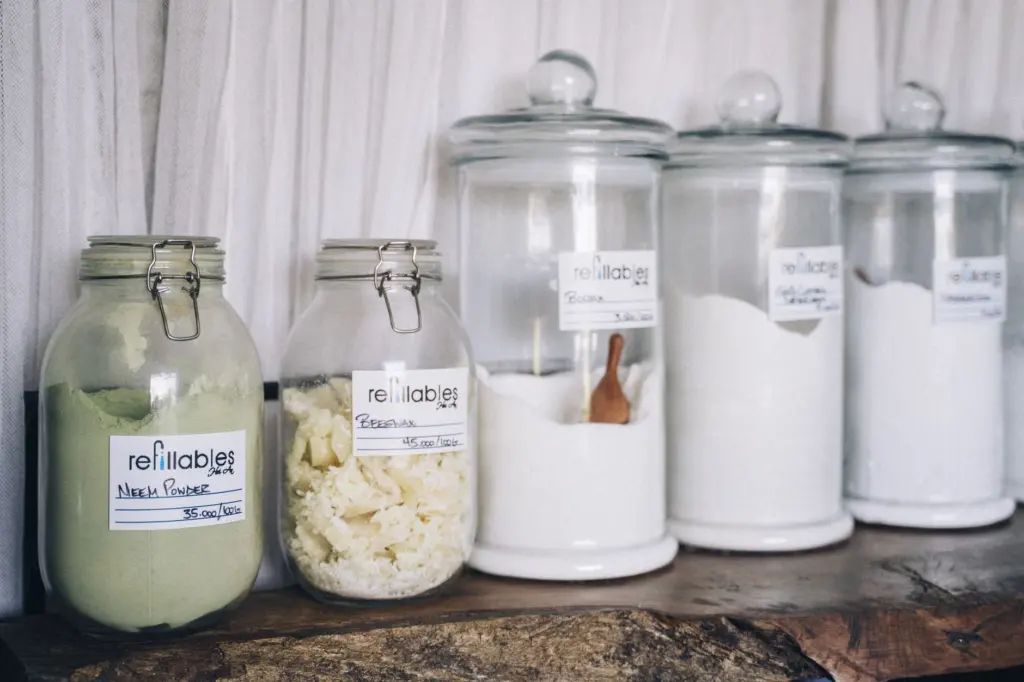
For positioning, give each campaign a single benefit that you can prove. A message built on one verifiable change is easier to defend than a bundle of broad promises. Retail formats that make the product itself the evidence, such as refill shelves with clearly labelled contents, suit brands whose benefit is reduced packaging.
Placement matters as much as wording. Put the supporting detail on the product page and the package, next to the claim, instead of in a distant report. Customer service teams should hold the same facts so that questions get consistent answers.

Consumer willingness to pay
Survey figures show that many shoppers say they will favour or pay more for sustainable products, but the size of the effect depends on how the question was asked.
| Finding | Figure | Planning use |
|---|---|---|
| Shoppers willing to pay a premium for sustainable products (PwC 2024 Voice of the Consumer) | 9.7% premium | A realistic upper reference for a price uplift, not a target to price against. |
| Consumers who would pick the sustainable option between two similar products priced at $10 or less (PDI Technologies 2024) | 71% | Suggests sustainability can tip a low-price choice, so test it on small items first. |
| Consumers willing to pay more for products from companies committed to sustainable practices (Nielsen) | 66% | Supports company-level commitment as a purchase driver, provided the commitment is credible. |
These figures are cited by Shopify for PwC and PDI Technologies, and by Up2You for Nielsen.
Regional evidence points the same way. Approximately 60% of Indian consumers are reported to be willing to pay a premium for sustainable products. Treat all of these as stated intentions rather than guaranteed sales. The sensible approach is to pilot a modest premium or a sustainable option at similar pricing, then read actual conversion data before changing prices across a range.
Measuring ROI
Measuring green marketing ROI means comparing the return from sustainability-led products and messages against what the change cost and what the product did before. The cost side and the revenue side both need a baseline.
- Cost savings. Sustainable materials and cleaner manufacturing can reduce overhead costs, and lower fuel use can cut production and distribution spending. Track these as line items rather than assuming them.
- Sales and loyalty. Companies seen as environmentally responsible can benefit from increased customer loyalty and a positive brand reputation. Look for these effects in repeat purchases and in review and complaint patterns, comparing claimed products with similar products that carry no claim.
- Environmental targets. Objectives must be measurable and realistic, for example cutting carbon dioxide emissions by 20% in five years. A dated, quantified target gives the marketing something honest to report against.
If a claimed product shows no uplift, investigate the message, the price and the distribution before concluding that customers do not care. The claim may be unclear, or buyers may never have seen the evidence.
Frequently asked questions
Is green marketing the same as greenwashing?
No. Green marketing promotes real environmental benefits, while greenwashing presents activities as sustainable to hide their negative impact. The same wording can be either, depending on the evidence behind it.
Can a sustainable product justify a higher price?
Sometimes. A PwC survey cited by Shopify found a 9.7% premium that shoppers are willing to pay, but that is a survey result rather than a guarantee. Pilot a price before rolling it out.
Does green marketing always cost more?
Not necessarily. The same changes that support a claim, such as sustainable materials and cleaner manufacturing, can lower overhead costs, though the size of the saving depends on the business.
Do regulators check environmental claims?
Increasingly, yes. Britain’s competition regulator has been handed significantly stronger powers against greenwashing in 2025. Check the rules in each market where you sell.