
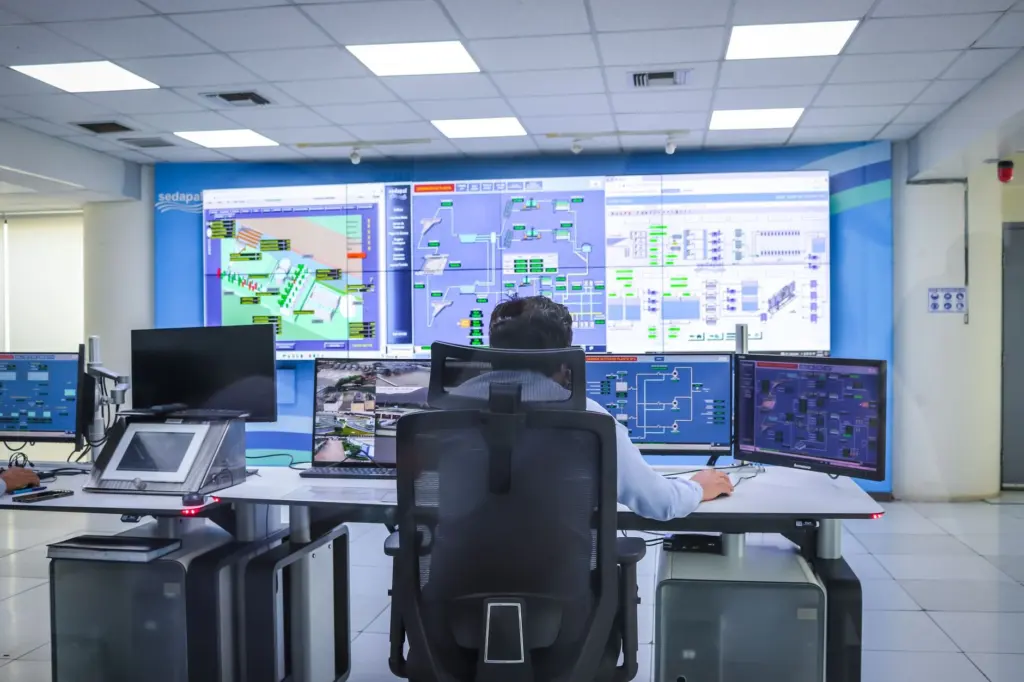
A tree limb lands on a power line and customers lose power. A smart power grid uses digital sensing and two-way communication to spot and fix such faults faster, but how much improves depends on which upgrades a utility has funded.
The sections below correct common misunderstandings and explain what the technology changes for utilities, cities and energy buyers. They also sit within our wider coverage of environmental technology for business.
What a smart power grid is
A smart power grid is an electricity network that uses digital technology to track, control and improve the flow of electricity from production to use, according to PVcase’s overview. The University of Washington’s Clean Energy Institute describes “smart grid” as a term for a collection of ideas, technologies, economic models and operating practices aimed at a more efficient, reliable grid. It is not a single product you can buy or switch on.
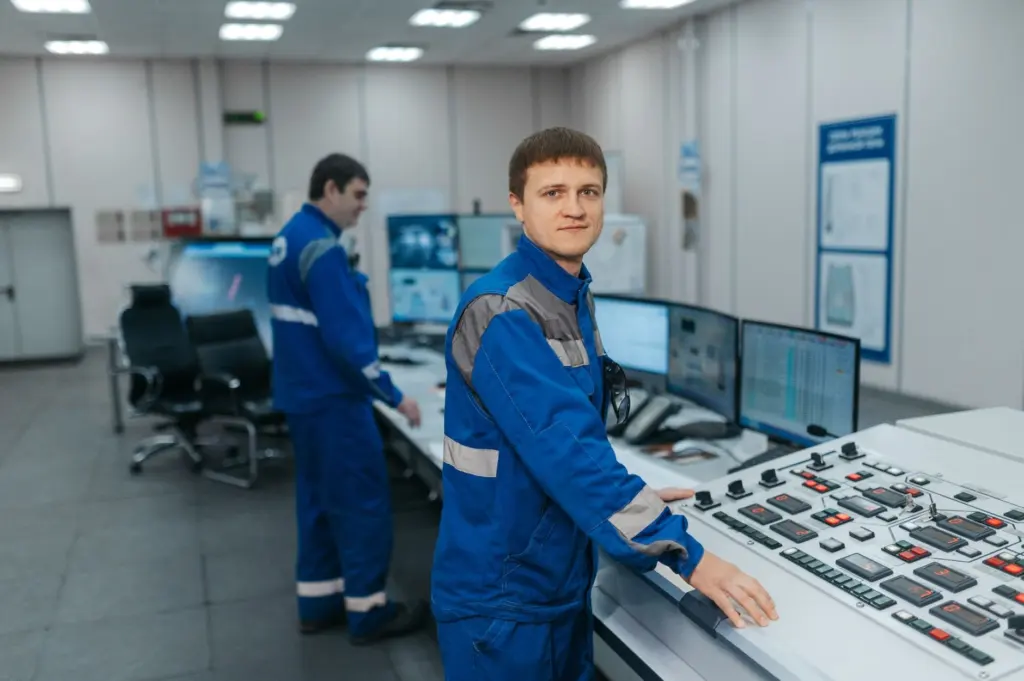
The IEEE definition, as reported by the UN Sustainable Development Solutions Network (SDSN), covers generation, transmission and distribution to end consumers using digital automation. It adds two-way communication between field equipment along the grid, the utility and customers. The US Department of Energy puts the need plainly: utilities need ways to learn about and respond to changing electricity demand in real time, and the Smart Grid makes that possible.
Common assumptions, corrected
| Common assumption | What is supported | Planning use |
|---|---|---|
| A smart grid is just smart meters | Advanced meter infrastructure is listed alongside wide-area monitoring and control, demand response and distributed energy integration | Judge a utility programme by the whole system, not by whether meters have been swapped |
| It ends outages | Smart grids help prevent extended outages by spotting and fixing issues quickly | Expect shorter and better-contained outages, not none |
| It only matters to utilities | Two-way communication reaches customers, and consumers can connect rooftop solar and small wind | Buyers can take part, so check which programmes your utility offers |
| It is a simple upgrade | Upgrading is expensive, especially where systems are older | Expect phased rollouts that start where need is greatest |
| Cyber risk stops at the meter | Attackers can target connected devices such as meters and sensors, and large-scale attacks can target the whole grid | Treat security as a system-wide requirement |
These points draw on PVcase’s technology overview and the component list in SDSN’s smart grid briefing.
Meters, demand response and the customer endpoint
Smart meters and advanced metering infrastructure
A smart meter is the visible end of a larger system. Smart grids use IoT sensors and smart meters to monitor energy flows constantly, and advanced metering infrastructure (AMI) combines the meters with data systems so consumers and utilities can communicate in both directions, as PVcase explains. The meter by itself only records; the value comes from what the utility does with the data.
Demand response
Demand response lets demand adjust to supply instead of supply always chasing demand. The University of Washington’s Clean Energy Institute describes two-way communication between utilities and smart devices or appliances as a demand response system. In a shortfall, a smart appliance could reduce its power temporarily until demand and supply stabilise. That matters because the same source notes the grid of the 2000s had little to no capacity for electricity storage, so generated power has to be used almost at once.
What changes for utilities
Utilities move from reacting to problems to seeing them as they develop. The Department of Energy states that this real-time awareness results in more reliable electricity for all grid users. Real-time data also brings an operating saving: PVcase says it cuts costs by reducing the need for manual inspections.
Reliability outcomes
The Department of Energy describes the reliability benefit in qualitative terms, and SDSN lists improved reliability for everyday operations among grid modernisation goals. The scale of the failures being targeted is clear from history. The 2003 northeast US blackout left an estimated 55 million people without power, according to the Clean Energy Institute. The same source notes that most outages are caused by tree limbs falling on equipment such as power lines and transformers. A February 2021 winter storm also caused a massive power shortage in Texas, which SDSN cites as a warning for grid reliability.
Losses
Efficiency is the other side of reliability. SDSN reports that transmission and distribution losses may reach 15-20% in some developing countries, compared to 5% in a mature power system. For a utility, that gap is a reason to prioritise monitoring where losses are highest. It is a comparison between systems, not a forecast of what any single smart grid project will save.
What changes for cities and energy buyers
Distributed energy resources (DERs) are the main change for cities and buyers. SDSN lists the integration of distributed energy resources and inverter-based resources as a core smart grid element, and notes that aggregated resources can act like a single power plant. For a city or a business with rooftop solar, that turns onsite generation from a private asset into something the wider grid can use. PVcase adds that smart grids let consumers connect rooftop solar and small wind and so use and generate renewable energy.
The emissions context raises the stakes. SDSN cites an EPA report that US electric power contributed up to 25% of greenhouse gas emissions in 2022. A grid that can absorb more distributed and renewable supply therefore addresses a large share of the problem. Energy buyers should treat this as a reason to ask about interconnection and programme access, not as a guarantee of lower bills.
Costs and limits
Upfront cost is the main practical limit. PVcase says upgrading is pricey, especially in areas with older systems. That favours phased deployment, with the strongest early case where outages or losses are worst. Costs are only part of the picture, because the benefits include avoided inspections, fewer extended outages and lower losses.
People are a limit too. SDSN’s smart grid briefing warns that a workforce skills gap could cost the US economy as much as $975 billion over the next 10 years. Hardware alone does not deliver a smart grid; utilities also need staff who can run it.
Cybersecurity risks
More connected devices mean more places to attack, and the risk operates at three levels.
- Device level: PVcase warns that hackers can target IoT devices such as smart meters and sensors to steal data or disrupt operations.
- System level: Large-scale attacks can target the entire grid, causing blackouts or ransom demands.
- Data level: Smart grids gather extensive user data that could be misused, which is why encryption and privacy rules are needed.
PVcase cites the NIST Framework for Improving Critical Infrastructure Cybersecurity as a reference for protecting smart grids. For buyers and cities, the practical judgement is to favour utilities that can explain how they handle device security and customer data, not just how many meters they have installed.
How consumers can prepare
Preparation starts with knowing what your utility offers. Smart meters and AMI enable two-way communication, so ask whether your utility runs demand response programmes and which appliances or devices can take part. If you are considering rooftop solar, ask about connecting it, since smart grids are designed to let consumers generate as well as use renewable energy.
Because attackers can target connected devices, keep home smart devices updated and protected with strong, unique passwords. Treat any new connected appliance as part of the grid’s exposure, not only as a household gadget. Neither step requires waiting for your utility’s rollout.
Related technology
Grid upgrades interact with other decarbonisation technologies. For industrial heat and materials, see Cement Carbon Capture: Practical Paths To Net‑Zero Cement In 2026 – Greencrowding. For clean fuels that depend on electricity supply, see Green Hydrogen Electrolyzers: The Practical Guide To Clean Hydrogen In 2026 – Greencrowding.
Frequently asked questions
| Question | Answer |
|---|---|
| What is a smart power grid? | It is an electricity network that adds digital monitoring, automation and two-way communication so utilities can track and respond to the flow of power from generation to customers. |
| What is a virtual power plant? | It is an aggregation of distributed resources, such as rooftop solar and batteries, coordinated so that together they can act like a single power plant. |
| Does a smart grid collect personal data? | Smart grids gather extensive user data. That data could be misused if it reached the wrong hands, which is why encryption and privacy rules are part of the design. |