
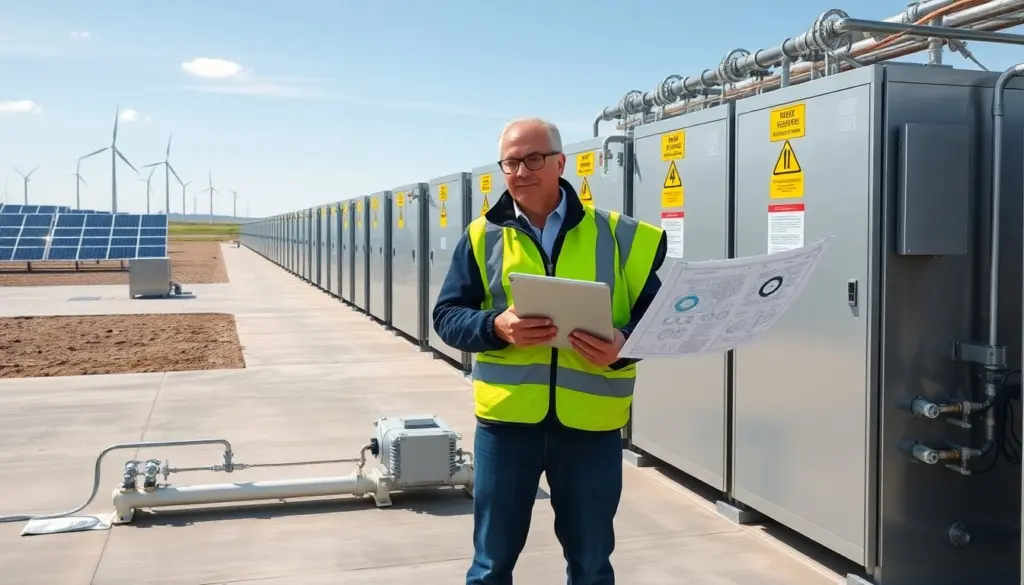
A green hydrogen electrolyzer splits water into hydrogen and oxygen using renewable electricity. This guide explains how a green hydrogen electrolyzer works, compares main technologies, and shows real use cases. The text uses clear terms and direct sentences. It aims to help readers assess options for clean hydrogen projects in 2026.
Key Takeaways
- A green hydrogen electrolyzer uses renewable electricity to split water into hydrogen and oxygen, enabling clean hydrogen production.
- Project planners choose electrolyzers based on capacity, efficiency, cost, and compatibility with renewable energy sources to optimize green hydrogen projects.
- PEM, alkaline, and anion exchange membrane electrolyzers each offer distinct advantages and tradeoffs in cost, efficiency, and operational flexibility.
- Electricity cost, electrolyzer capital expense, and balance-of-plant costs are primary factors affecting the levelized cost of hydrogen.
- Real-world applications of green hydrogen electrolyzers include fueling heavy transport, supplying industrial feedstocks, and storing seasonal renewable energy.
- Continued technological improvements, policy support, and scaling manufacturing are driving down costs and expanding green hydrogen electrolyzer adoption.
What Is A Green Hydrogen Electrolyzer And How It Works
A green hydrogen electrolyzer uses electricity from wind, solar, or other zero-emission sources to split water into hydrogen and oxygen. It forces an electric current through an electrochemical cell. The electrochemical cell contains an anode, a cathode, and an electrolyte or membrane. The cell drives the chemical reaction: water gives up electrons at the anode and absorbs electrons at the cathode. The process produces hydrogen gas at one electrode and oxygen gas at the other. Operators collect hydrogen for storage, transport, or use on site.
A green hydrogen electrolyzer converts electrical energy into chemical energy. It achieves high efficiency when electricity is steady and the cell runs near its design temperature and pressure. The system requires water input that meets quality standards. It requires power electronics to control current and voltage. It needs safety systems for gas handling and pressure control. It also needs hardware to dry, compress, and store hydrogen when necessary.
Project planners choose a green hydrogen electrolyzer based on capacity, ramp speed, efficiency, and cost. They compare system capital cost, operating cost, and maintenance needs. They assess grid or renewable integration and the availability of low-cost electricity. Developers size the electrolyzer to match renewable output or to serve a demand profile. They also plan for storage, transport, or pipeline injection. Policymakers and investors look at lifecycle emissions, incentives, and permitting time.
A green hydrogen electrolyzer can work in small modular units or in large industrial stacks. Smaller units help developers test sites with low upfront cost. Larger stacks lower per-unit cost through economies of scale. Manufacturers rate stacks in kilowatts to megawatts. Buyers check manufacturer warranties, expected stack life, and replacement costs. They expect improvements in cost and efficiency as manufacturing ramps and as supply chains mature.
Key Electrolyzer Technologies: PEM, Alkaline, Anion Exchange — Strengths And Tradeoffs
Proton exchange membrane (PEM), alkaline, and anion exchange membrane (AEM) represent the main electrolyzer types today. Each type offers a different mix of cost, efficiency, and operational behavior. Buyers evaluate the three types against site needs and budget.
PEM electrolyzers use a proton-conducting membrane. They deliver fast response to changes in power. They operate at higher current density and at compact size. PEM systems cost more today because they use precious metal catalysts and specialized membranes. They require less water treatment and handle variable renewable power well. Many industrial users choose PEM when they need quick ramping and limited footprint.
Alkaline electrolyzers use a liquid alkaline electrolyte, such as potassium hydroxide. They use non-precious metal electrodes and have a long commercial track record. Alkaline systems cost less per kilowatt today on mature production lines. They show lower sensitivity to impurities in water than PEM. They respond slower to rapid power swings and they need larger balance-of-plant equipment. Utilities and heavy industry pick alkaline systems when they want proven durability and lower capital cost.
Anion exchange membrane electrolyzers sit between PEM and alkaline in many metrics. AEM uses a polymer that carries hydroxide ions. It can use lower-cost catalysts than PEM and might run at higher efficiency than alkaline. AEM remains less mature at scale, and developers evaluate pilot results closely. AEM offers promise for lower costs, but buyers factor in technology risk and supplier experience.
Project teams quantify tradeoffs by modeling levelized cost of hydrogen (LCOH). They include capital expense, electricity cost, efficiency, stack life, and maintenance. They test sensitivity to electricity price and capacity factor. They also consider system lifetime and replacement intervals. The model highlights which type yields the best price per kilogram of hydrogen for a given site and power profile.
Costs, Deployment Challenges, And Real-World Applications
Developers track three main cost drivers: electricity, electrolyzer capital cost, and balance-of-plant. Electricity often dominates operating cost. A green hydrogen electrolyzer lowers emissions only if it uses low-carbon power. Project teams secure cheap renewables or time-of-use agreements to lower cost.
Manufacturing scale reduces the capital cost of a green hydrogen electrolyzer. Mass production of cells and stacks lowers per-unit price. Supply chains for catalysts, membranes, and power electronics also affect price. Developers watch commodity prices and factory expansions to forecast future costs.
Deployment challenges include permitting, water supply, grid connections, and trained technicians. Sites need water that meets purity standards. They need safe areas for hydrogen storage and transport. Local rules and zoning can add time and cost. Training technicians for operation and maintenance reduces risk and improves uptime.
Real-world applications span mobility, industry, and energy storage. A green hydrogen electrolyzer supplies fuel for heavy trucks and buses where batteries prove heavy. It supplies feedstock for steel, ammonia, and methanol plants that need hydrogen. It stores seasonal energy by converting surplus renewables into hydrogen for later use or export.
Project examples in 2026 show utilities pairing large wind farms with multi-megawatt electrolyzers to produce hydrogen for pipelines and shipping. Industrial clusters use on-site electrolyzers to reduce scope 1 emissions. Ports use electrolyzers to supply hydrogen for fuel-cell trucks and ships. These examples show the green hydrogen electrolyzer supports decarbonization across sectors.
Buyers balance cost, risk, and operational benefits when they select electrolyzer type. They monitor technology improvements and policy incentives. They plan capacity to match demand and to optimize electricity costs. They expect continued cost decline and wider adoption as the market grows.