
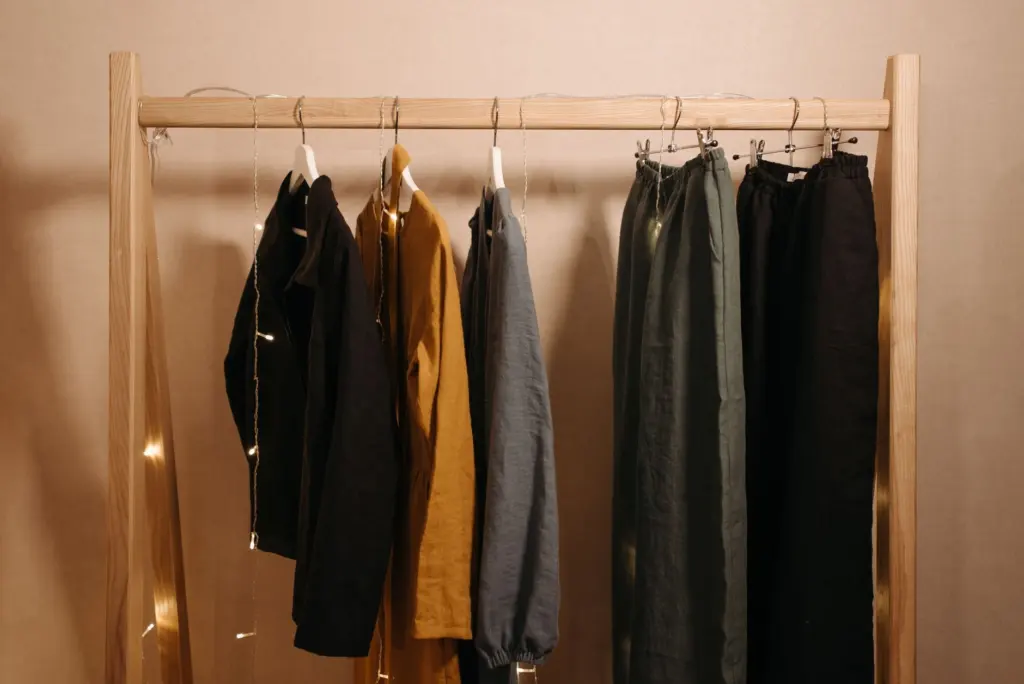
| Decision | What the evidence supports | Planning use |
|---|---|---|
| Fiber choice | Natural fibers generally have a much lower environmental cost than synthetics | Start with natural-fiber basics and treat synthetic blends as a trade-off to question |
| Factory disclosure | A well-rated brand is transparent about its suppliers and publishes lists of the factories where its clothing is made | Pass over labels that will not say where garments are made |
| Fabric mix | Clear annual disclosure of total fabric mix is a rating criterion | Prefer brands that report their fiber use every year |
| Certification | Fair Trade Certified, GOTS and OEKO-TEX are all third-party certifications | Use them as an independent check, then confirm what each one covers |
| Very low prices | New clothing is often cheap because it uses poor-quality, unsustainable materials | Treat a bargain price as a prompt to ask questions, not as a reward |
Figures and criteria in this table come from Ethical Consumer’s ethical clothing guide and Fair Trade Certified’s clothing guide.
The most sustainable fashion brands pair lower-impact fibers with published factory lists and third-party certification, and they are rarely the cheapest option. Judge a label on materials, labor and transparency together, not on one green claim.
This guide is part of a wider look at how to live more sustainably, where clothing is one of several everyday choices.
How to judge a fashion brand
A brand earns trust when it shows its work on three fronts at once: what the clothes are made of, who makes them, and how openly the company reports on both. Strength on one front does not cover silence on another, so the practical rule is to ask the brand directly whenever one of the three is missing.
- Materials first, then proof. Natural fibers generally have a much lower environmental cost than synthetics, according to Ethical Consumer. A product page that names the fiber and the certificate behind it beats one that says only “eco” or “conscious”.
- Labor disclosure. Look for suppliers named and factory lists published. A brand that is open about where garments are sewn gives you something you can check. A brand that is vague gives you only a claim.
- Annual reporting. Ethical Consumer asks whether a brand clearly discloses its total fabric mix every year. Yearly disclosure shows whether a brand’s material choices are actually shifting.
- Independent verification. Third-party certification carries more weight than a brand’s own description of itself. The certification section below explains which labels to look for.
Used together, these checks also tell you when to wait. If a brand fails all three, a lower price is not a reason to buy; it is a reason to look elsewhere.
Brands that publish their criteria
No single list settles which fashion brands are most sustainable, and the labels below are examples that meet stated criteria in the cited guides rather than a definitive ranking. Each one is useful for a different shopper.
Classic T-Shirt Company
According to Earth.Org’s brand guide, this T-shirt specialist sources only 100% organic cotton and holds GOTS Certified Organic Cotton, with a price range marked $$. It suits shoppers who want a certified everyday basic and are happy to pay above the cheapest tier.
Mighty Good Basics
Good On You reports that the brand uses GOTS certified cotton and renewable energy throughout its supply chain. It appears in that guide’s selection of affordable brands, which have a $-$$ price range in the Good On You directory and a rating of Good or Great. It suits a tighter budget without dropping certification altogether.
Sense Organics
Good On You also covers Sense Organics, rated on criteria including ensuring suppliers pay a living wage. Choose it when fair pay is your priority over fiber type.
Where to find more
For a wider shortlist, Ethical Consumer’s guide explores 31 ethical clothing companies against mainstream brands, with transparency and fabric disclosure among its criteria. Use it to compare labels in the category you actually buy.
Price: is sustainable fashion more expensive?
Usually yes at the point of purchase, but not always per wear. Good On You explains that taking care of workers and the planet means brands need to price their products higher. It also argues that when you account for cost per wear, higher-quality items you wear again and again end up costing less.
That reasoning favors a few durable pieces over a larger number of cheap ones. It does not favor any expensive label automatically: price alone proves nothing, and a high tag with no disclosure is still a weak buy. Shoppers who need to stay cheap can use the $-$$ bracket in the Good On You directory, where brands rated Good or Great sit. If a purchase is something you will wear rarely, wait, because the cost-per-wear argument only works for clothes that get used.
Certifications that matter
Certifications are useful because someone other than the brand checks the claim. Fair Trade Certified recommends looking for third-party certifications such as Fair Trade Certified, GOTS (Global Organic Textile Standard) and OEKO-TEX.
- Fair Trade certification. This focuses on factory workers. The additional money employees earn with each sale funds the Fair Trade Community Development Fund, so it is the label to look for when labor is your main concern.
- GOTS. The Global Organic Textile Standard applies to organic fiber products. It is the certificate behind the organic cotton at Classic T-Shirt Company and Mighty Good Basics, so it matters most when you are buying cotton basics.
- OEKO-TEX. It is named alongside the other two as a third-party certification to look for. Treat it as one more independent check rather than a complete measure of a brand’s labor or material record.
No one label covers everything. A garment with GOTS cotton can still come from a brand that publishes no factory list, so pair a material certificate with the disclosure checks above.
Materials: what the fibers mean for impact
A peer-reviewed study lists organic cotton, recycled polyester, linen and wool as common sustainable fashion materials. They are not equal in every respect. Ethical Consumer says natural fibers generally have a much lower environmental cost than synthetics, and Earth.Org notes that more than 60% of fabric fibers are fossil-derived synthetics, which cause microplastic pollution on land and in the ocean.
For you, that means natural fibers such as organic cotton, linen and wool are the default to look for. Recycled polyester has a place on the list of common sustainable materials, but weigh it as a trade-off: it makes sense for items where a synthetic is hard to avoid, not as a reason to prefer synthetics everywhere.
Supply chain transparency
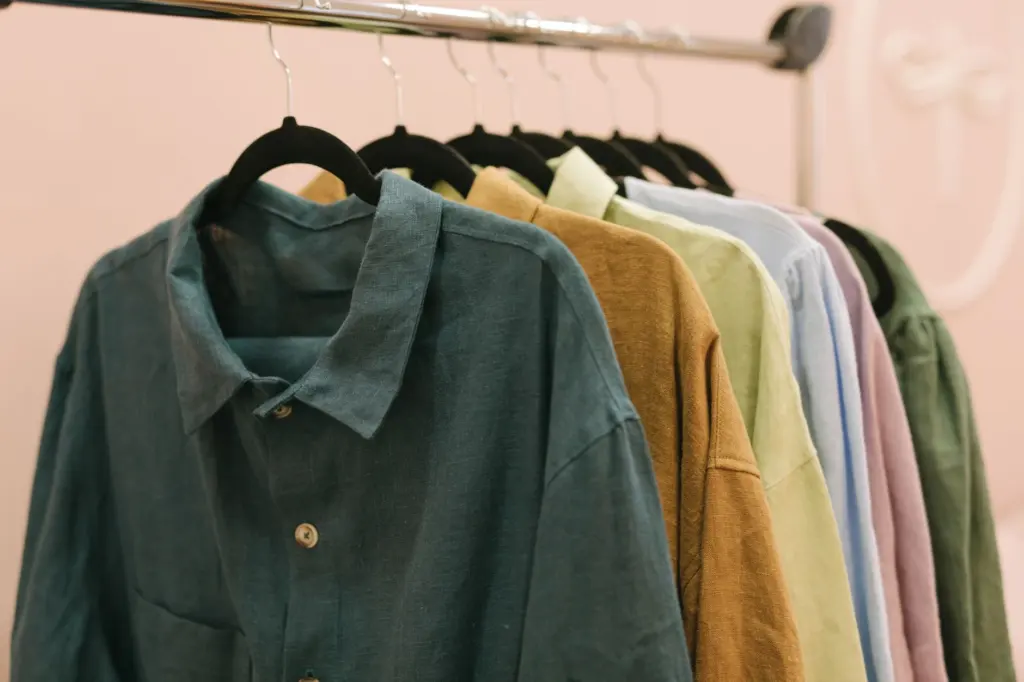
Supply chain transparency is what lets you test a brand’s claims. The strongest signal in Ethical Consumer’s criteria is a brand that is open about its suppliers and publishes lists of the factories where its clothing is made. Disclosure on energy is another useful marker: Mighty Good Basics, for example, is credited by Good On You with using renewable energy throughout its supply chain.
The practical consequence is that you should prefer brands that give you names and places over brands that give you slogans. A shopper can email a brand and ask where a garment was made and what the fabric mix is. Brands that answer plainly are easier to trust, and a refusal tells you something as well.
Related habits at home
Clothing is one part of a lower-waste routine. For the kitchen side of it, see How Long Does It Take to Make Compost? Real Timelines & Tips for Faster Results (2026) – Greencrowding and Apartment Composting Made Simple: How To Turn Kitchen Scraps Into Nutrient-Rich Soil In 2026 – Greencrowding.
Frequently asked questions
Is buying secondhand more sustainable than buying from an eco brand?
Often it is. Fair Trade Certified describes buying secondhand as one of the most sustainable options because it keeps clothes out of landfills. Choose a certified new piece only when you cannot find what you need used.
Are the conscious lines from big fast-fashion brands a safe shortcut?
No. Good On You cites H&M’s conscious lines as an example of fast-fashion giants launching sustainable-sounding ranges. Check the fiber, factory and certification details for the specific item rather than trusting the line name.
How can I tell if I will actually get value from a pricier piece?
Ask yourself whether you will wear it at least 30 times, a test suggested by Fair Trade Certified. If the answer is yes, a higher price is easier to justify; if not, skip it or buy it used.