
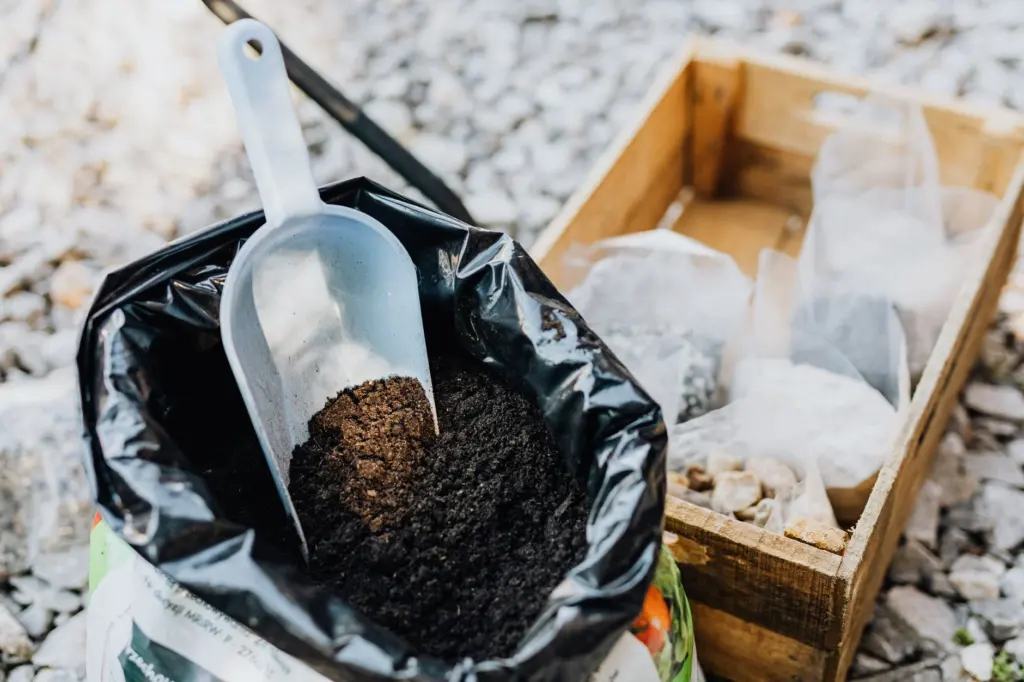
How long does it take to make compost depends mainly on the method: a well-managed hot pile can be ready within several weeks to a few months, while cold composting often takes a year or more. Materials, moisture, airflow and turning decide where you land.
Composting is one practical habit within how to live more sustainably, and the timelines below help you match a method to your space, your patience and the effort you can give it.
What sets the pace
Compost speed is controlled by five things: the materials, temperature, moisture, airflow and how often the pile is turned, according to the Almanac’s composting guide. Every slow pile traces back to one of them, which makes slow batches fixable once you know which factor is off.
Particle size and surface area
Compost decomposes faster when materials are chopped or shredded, because smaller pieces expose more surface area to the microorganisms doing the work. Chopping kitchen scraps and shredding leaves before they go in is the cheapest speed-up available, and it costs nothing but a few minutes.
Carbon-to-nitrogen balance and moisture
The carbon to nitrogen ratio is the balance between browns (carbon-rich) and greens (nitrogen-rich). The Almanac suggests aiming for an overall balance of about 30:1. For home composting, a practical rule is roughly 2 to 3 parts browns to 1 part greens by volume. Treat the 30:1 figure as a target to steer toward, and the volume rule as the way to approximate it without weighing anything.
Both extremes cost you time. Too many greens at once, especially fresh grass clippings, can create a wet, compacted pile that smells unpleasant. Too many browns slow decomposition. Moisture matters just as much: the pile should feel about as damp as a wrung-out sponge.
Timeframes by composting method
Each method has a different kind of timeline. Hot composting and cold composting are measured in weeks to years, while a worm bin is better judged by how much food the worms can process.
| Method | Typical pace | Key conditions | Planning use |
|---|---|---|---|
| Hot composting | Several weeks to a few months under good conditions; may begin heating within a few days | Pile at least about 3 feet wide and 3 feet high; heats to about 130 to 160°F (54 to 71°C) | Choose it when you want finished compost within a season and can turn the pile |
| Cold composting | Often a year or more | Easier to maintain, but decomposition takes substantially longer | Suits low-effort yard waste recycling where waiting is acceptable |
| Vermicomposting | Set by worm numbers: 1 pound of worms (about 1,000) breaks down about 3.5 pounds of food per week | Red wigglers tolerate 40 to 90°F; ideal range is 65 to 70°F | Suits small spaces and steady kitchen scraps |
Figures come from the Almanac’s composting guide and an eXtension answer on red wigglers.
The practical split is simple. If you need compost this season, hot composting is the realistic route. If you would rather add material and leave it alone, plan on the longer cold timeline and do not judge the pile against hot-pile expectations.
Hot composting step by step
Hot composting is the fastest outdoor approach because heat produced by microorganisms drives the breakdown. A well-managed pile can heat to about 130 to 160°F (54 to 71°C), and temperatures between about 110 and 160°F (43 to 71°C) indicate active decomposition.
- Build a large enough pile. A hot pile should be at least about 3 feet wide and 3 feet high. Smaller heaps have less mass to hold heat in.
- Mix chopped browns and greens. Aim for the ratios above and keep the pile as damp as a wrung-out sponge.
- Watch for heating. A properly built pile may begin heating within a few days. If it stays cold, the usual suspects are size, dryness or too few greens.
- Turn when the center cools. Move materials from the outside toward the middle so the cooler outer layers get their turn in the hot core.
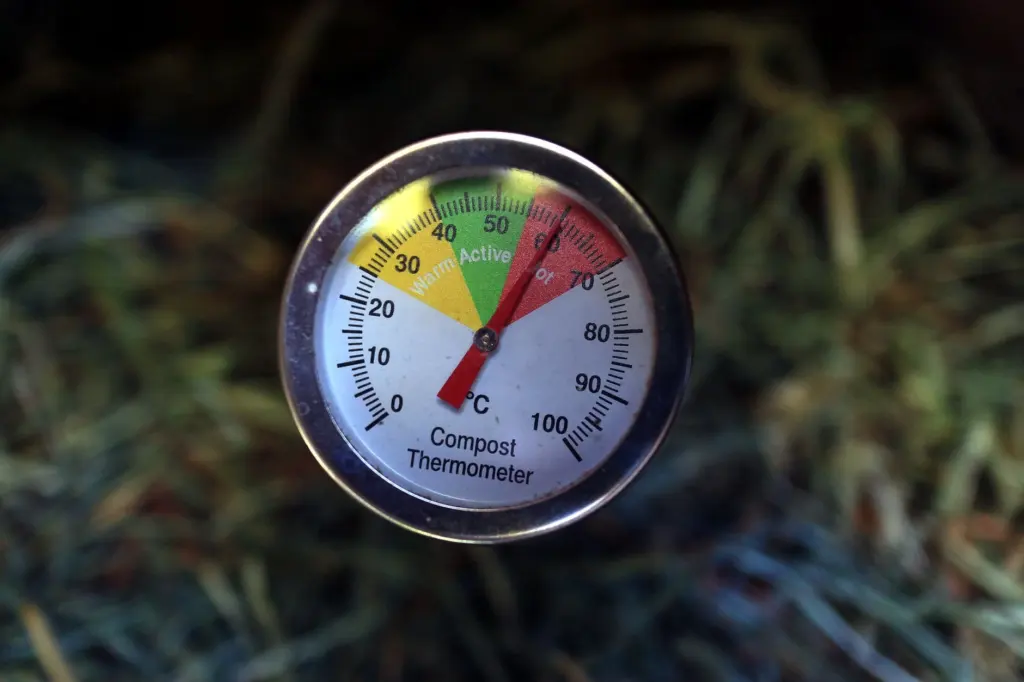
A thermometer turns guesswork into a decision. A reading inside the active range means the pile is still working, so do not treat it as finished. A reading that has dropped after the pile has been working points to the turn described in step four.
Vermicomposting
Vermicomposting uses worms in a bin and is a good fit when outdoor space is limited. The University of California, Santa Barbara guide notes that it works well for people who do not have outdoor space for an aerobic compost bin, but that it requires a little more care and attention than other types of composting.
Temperature is the main thing to manage. The Colorado Farm to Table guide says an indoor worm bin needs to stay between 55 and 85°F. Within that band, the eXtension ideal in the table above is the better target; the outer limits are for avoiding harm, not for fast processing.
Because the pace is set by worm numbers rather than a calendar, size the bin to your scraps. A bin with too few worms for the food you add will fall behind, which is why the feeding rate in the table matters more than any quoted number of months.
Cold composting and tumblers
Cold composting is easier to maintain, but decomposition takes substantially longer, often a year or more. It is the right choice for gardeners who want to recycle yard waste without a schedule and who are not waiting on a particular planting date. The trade-off is time, not quality, so accept the slow clock instead of turning an unmanaged heap into a chore.
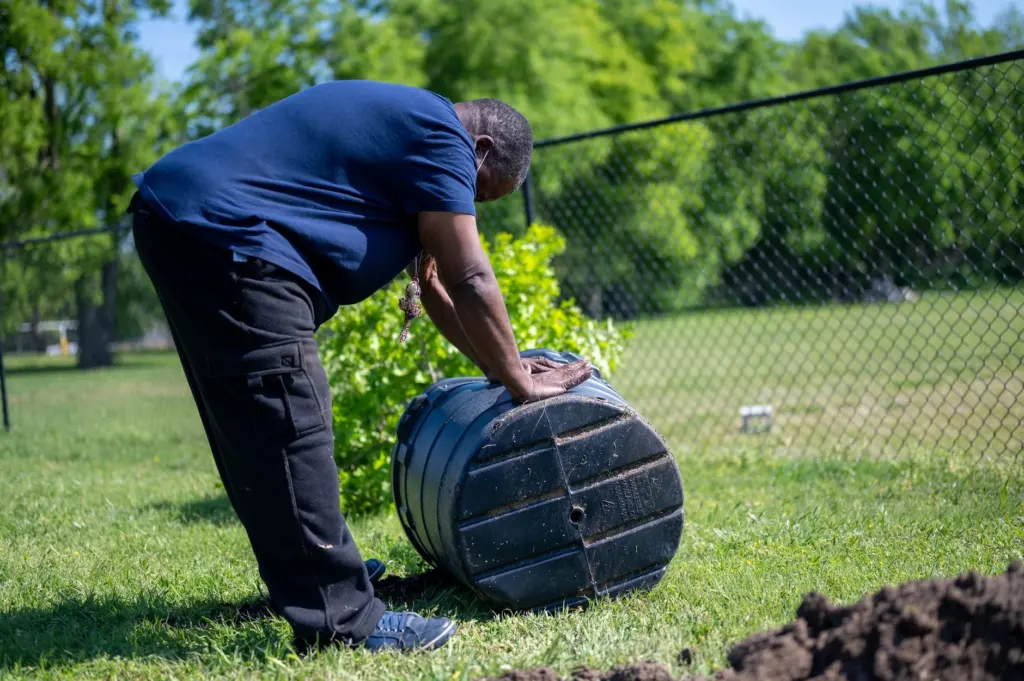
A middle path is a contained bin you can turn easily. Turning is one of the five pace factors, and a closed drum makes it less messy; the guide How To Use A Compost Tumbler: Fast, Low-Mess Composting For Every Backyard (2026) – Greencrowding walks through that approach.
Fixing a slow pile
A slow pile is rarely mysterious. Check these causes in order, since the first two are the most common and the quickest to correct.
- Compaction. Compacted materials are more likely to become wet, oxygen-starved and smelly. Turn the pile and mix in coarse material to open it up.
- Too many greens. A heavy load of fresh grass clippings makes a wet, compacted pile. Add browns to restore the 2 to 3 parts browns to 1 part greens balance.
- Too many browns. A pile that is mostly dry browns decomposes slowly. Add greens and moisten it until it feels like a wrung-out sponge.
- Large pieces. Whole scraps and long stalks give microorganisms little surface to work on. Chop or shred them.
- A pile that is too small to heat. If you want hot-composting speed, build to at least about 3 feet wide and 3 feet high; otherwise accept the cold-compost clock.
Change one factor at a time and recheck the pile after turning. That makes it clear which fix worked, instead of stacking several changes and not knowing what helped.
Checking that compost is finished
Finished compost is a nutrient-rich, soil-like material made from decomposed organic matter. If you can still pick out recognizable scraps, the pile has more work to do.
In a hot pile, temperature is the extra check. Readings still in the active range of about 110 to 160°F (43 to 71°C) mean decomposition is ongoing, so keep turning and waiting. A bin that has been sitting cold for a long stretch is judged by texture alone, which is why cold piles are best harvested when the material looks and feels like soil.
Composting is one change among many in a low-waste household. If you are extending the same thinking to your wardrobe, The Most Sustainable Fashion Brands In 2026: Eco-Conscious Labels Worth Your Wardrobe – Greencrowding profiles labels worth considering.
Frequently asked questions
Can I make compost without a garden?
Yes. Vermicomposting can be done in a relatively small container, and the Almanac calls it one of the most space-efficient composting methods.
How fast do worm populations grow?
In a healthy bin, the Colorado Farm to Table guide says worm populations grow over time, so a bin that starts small can scale up with your scraps over time. See the vermicomposting guide.
How often should I feed a new worm bin?
Feed every 3 to 4 days for the first couple weeks to see how fast the worms digest the food, according to the Colorado Farm to Table guide. Adjust the amount to match how quickly it disappears.