
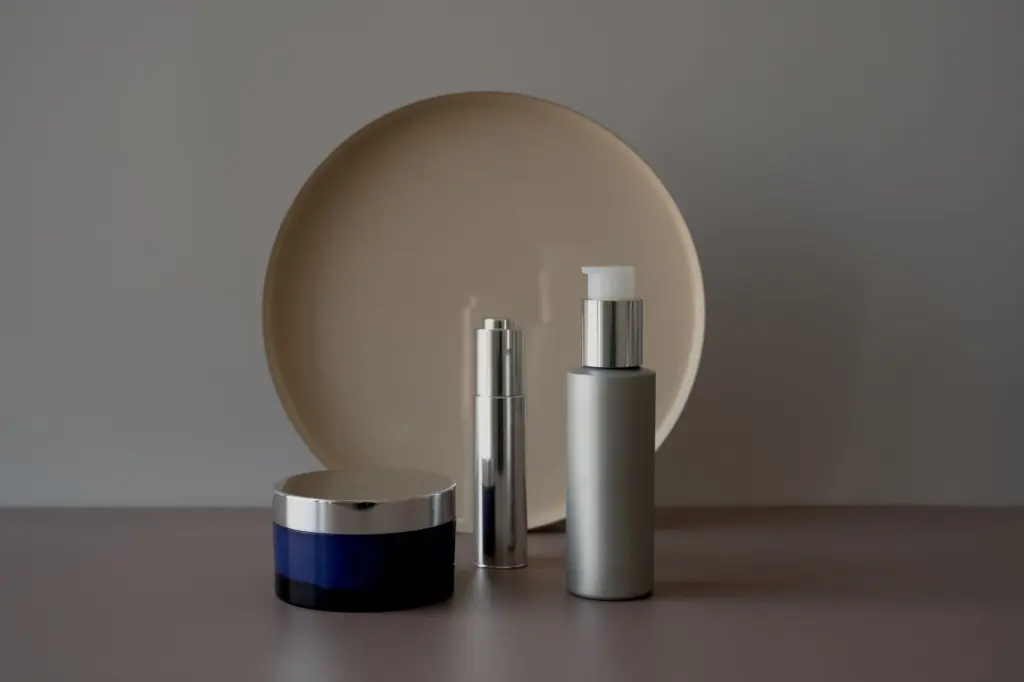
Sustainable cosmetic packaging works when the material, pump or closure and end-of-life route are chosen together. Glass, mono-material plastics and recycled-content resins are the main options; the deciding test is whether the formula stays protected and the finished pack can still be recycled.
Packaging is one part of a wider programme, and the broader picture of how to make a small business more sustainable shows where it sits alongside other changes. This guide covers the constraints specific to cosmetics, then materials, refill and take-back models, costs and a sequence for making the switch.
Why cosmetic packaging resists simple fixes
Cosmetic packs are hard to recycle because they combine several materials in one small container. A review of skincare packaging names coatings, pumps and caps as the combination that makes many skincare containers difficult to recycle, and adds that intricate patterns or combined components often make a container unrecyclable in practice.
These mixed-material components are the first thing to audit. A jar that is recyclable on paper loses that value once a pump, a coated liner and a cap of a different material are attached to it. The practical rule is to judge the whole assembled pack, not the headline material of the body.
The second constraint is the formula itself. The pack has to hold its contents without reacting with them, and water-based products are the demanding case. Sulapac, a biobased materials supplier, states that a patented barrier solution allows its packaging to be used in direct contact with water-based bulks. The point for buyers is that contact compatibility is a design requirement to confirm for any alternative material, not something to assume.
The third constraint is the route a pack takes after use. A pack that is technically recyclable, but that no local stream accepts or that customers never return, delivers none of the benefit. That is why materials, refill and take-back are best decided together, starting with the materials.
Materials compared
No single material suits every cosmetic product, and each option trades one problem for another. The table sets glass, recycled-content plastic and a biobased composite against the limits that matter most for cosmetics.
| Material | What is reported | Main limit | Planning use |
|---|---|---|---|
| Glass | Described as strong, non-toxic and completely recyclable | Weight and breakability can raise product waste and transport emissions | Weigh recyclability against shipping weight and breakage before committing; best where the container will be kept or reused |
| Post-consumer recycled (PCR) plastic | One brand is reported to use up to 100% recycled plastic for some products | That figure is a ceiling for some products, not a norm for a whole range | Set recycled-content targets product by product |
| Biobased composite | Supplier states up to 100% biobased content, up to over 70% lower carbon footprint than conventional plastic, and a barrier for water-based contents | Supplier claims; no method is given for the footprint comparison | Ask for lifecycle data and run formula compatibility tests before switching |
Figures are drawn from a review of sustainable skincare packaging and from Sulapac’s cosmetics page.
Glass suits products that customers will keep and refill, because its recyclability and non-toxic character are strongest when the container stays in circulation. It is a weaker choice for items that ship far or are carried daily, where weight and breakage work against it.
Recycled-content plastic
Post-consumer recycled content means plastic made from previously used plastic material, as the same review explains. A packaging supplier’s catalogue lists solutions in PCR-PET, PCR HDPE and biobased HDPE, so recycled and biobased resins are available in familiar formats.
Keep the difference between a ceiling and a target clear. The Body Shop’s reported use of up to 100% recycled plastic describes some products, whereas Estée Lauder is reported to be aiming for 25% or more PCR plastic in its packaging. A range-wide target is a more realistic benchmark for a smaller brand than the best single product.
Mono-material airless formats
Airless dispensers address the pump problem directly when the pump itself is made of one plastic. One supplier describes recyclable plastic airless bottles with a pump engine made from polypropylene. Its sustainable collection lists 28 products, of which 14 are mono-material, 14 are PCR, 12 are refillable and 16 are airless, so the formats overlap and can be combined in one pack.
For a cream or serum that needs a pump, a polypropylene-only airless bottle is a sensible first candidate. Check that the supplier’s recyclability description matches the collection stream your customers actually use.
How refill systems work for cosmetics
Refill systems work by keeping the durable outer container and replacing only the contents or an inner part. Refillable packaging is generally available as one of four types, and the formats differ sharply in how much waste they actually avoid.
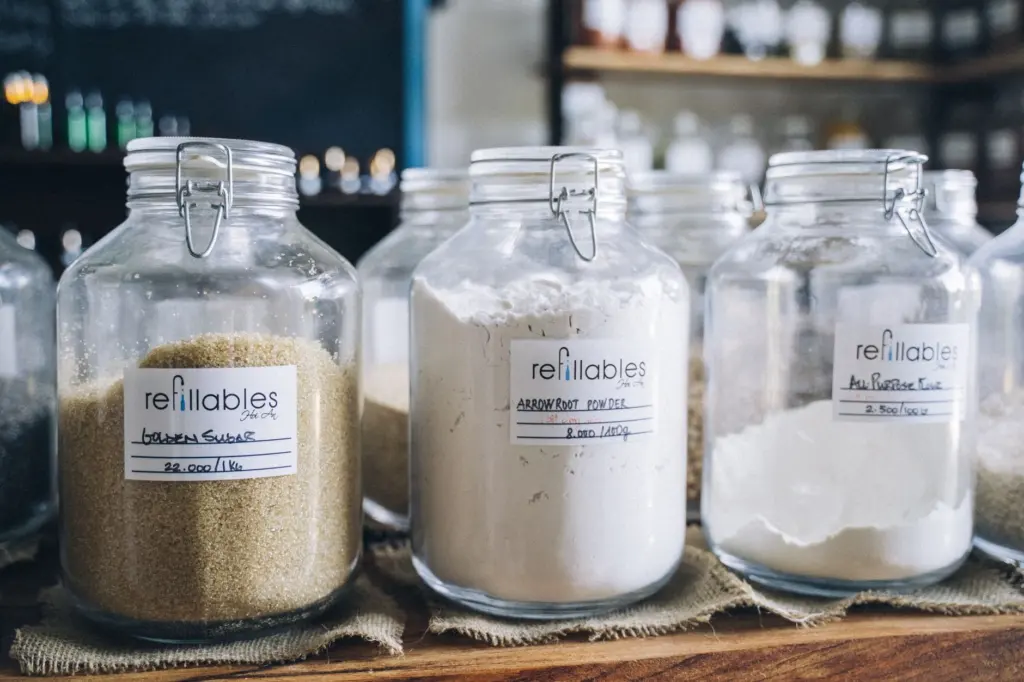
- Refill pouches. L’Occitane is reported to offer refill pouches for lotions, creams and shower gels. Customers decant the contents into the container they already own.
- Bottle-in-a-bottle. An inner container sits inside a reusable shell. The same smartsolve review warns that this design can exacerbate single-use waste by creating two separate containers.
- In-store refill. Customers refill at a counter or station. The review calls this not very common and logistically challenging for stores and brands to scale.
Pouches have a hard limit: many cosmetics, such as loose powders, mascaras and concealers, cannot be replenished through a pouch because of their composition. Refill suits liquids and creams with a simple dispensing action first, and it is the wrong lead strategy for precision-applied or powder products.
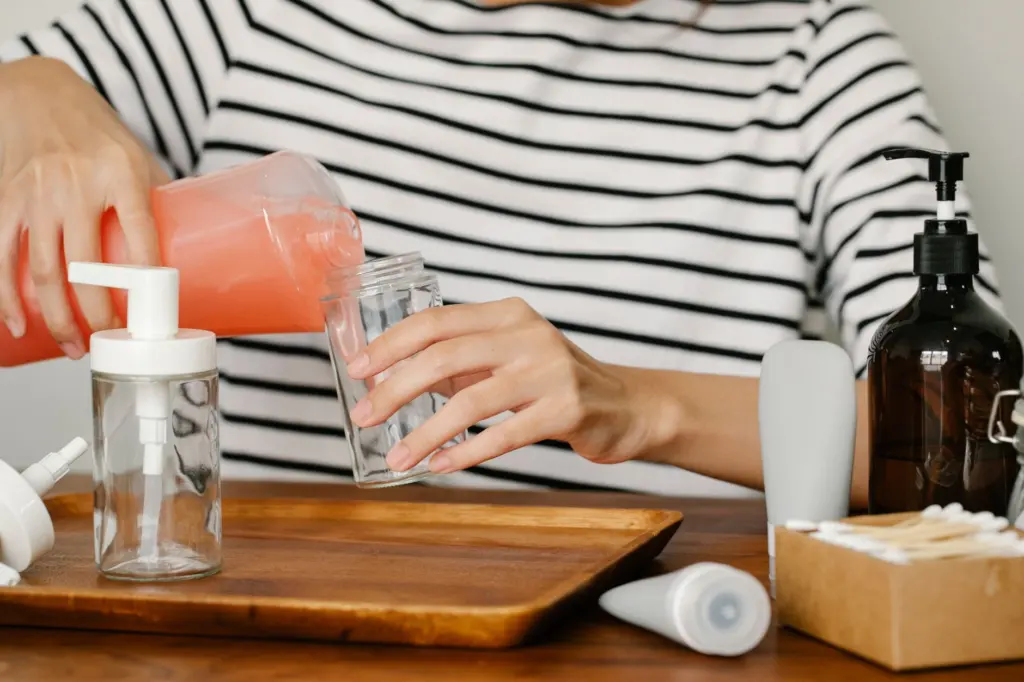
The test for any refill format is whether the refill unit is lighter and simpler than the pack it replaces. If it adds a second container, it moves waste rather than removing it.
Take-back schemes
A take-back scheme closes the loop by collecting empty or unused packs so they can be recycled or refilled. Kiehl’s is reported to let consumers return unused packaging to be recycled or refilled, and Lush offers a closed-loop recycling programme for its containers.
The cost sits in what happens after collection. Where returned packs are refilled rather than recycled, the same source notes that cleaning and sterilisation can be costly to implement and scale. That cost is a particular issue for cosmetics, since a reused container must be clean enough to hold skin products safely.
Take-back is therefore a better fit for a pack that is simple to clean or to sort into one material stream. A multi-component pump pack is the hardest return to process, which brings the design question back to the components.
What switching costs
The visible cost of switching is the per-unit price of the new pack, and the hidden costs are tooling, testing and return logistics. Listed prices from supplier catalogues give a rough sense of the first.
- Recycled-content bottle. A 50 ml PCR-PET bottle is listed as low as $0.34 per unit on a tiered price, and a 50 ml biobased HDPE jar from $0.53 per unit, shown with a 30% promotion off a $0.72 price.
- Airless bottle. A 50 ml polypropylene airless bottle with frosted cap is listed at a sale price of $2.05, falling to $1.37 at the lowest tier.
These listings come from different suppliers for different formats, so treat them as orientation, not a like-for-like comparison. Quantity tiers move the price, and a pump format is a different product from a plain bottle. Request quotes at your own order volume before building a budget.
Two other factors can change the picture. Sulapac states that its materials can be processed with existing plastic converting machinery, which, if it holds for your line, reduces one source of switching cost. And any scheme that returns packs for reuse carries the cleaning and sterilisation cost described above. Neither is a reason to delay a pilot, but both belong in the business case.
Making the transition
Move in a sequence that limits risk to the formula and to your claims.
- List every component. Record the body, pump, cap and any coating on each product, and mark where mixed materials block recycling.
- Simplify before substituting. Where a mono-material pack can do the same job, such as an airless polypropylene bottle, change the design first.
- Test the formula in the new pack. Confirm compatibility with the actual product, especially water-based formulas, and do not treat a supplier’s general compliance statement as a substitute.
- Pilot refill or take-back on suitable lines. Start with liquids and creams, and leave powders, mascaras and concealers out of pouch trials.
- Set recycled-content targets per product. Use realistic range-wide figures, not the highest figure achieved on one item.
- Ask for evidence before claiming. Request lifecycle data for any footprint claim you intend to repeat to customers.
Resin choices that apply beyond cosmetics are covered in Sustainable Plastic Packaging: Practical Strategies For 2026 To Cut Waste, Costs, And Carbon – Greencrowding. If your packaging figures will feed company reporting, Is ESG Reporting Mandatory? The 2026 Guide To What Companies Must Disclose – Greencrowding explains what companies must disclose.
Frequently asked questions
Are biobased cosmetic materials automatically recyclable?
No. Sulapac says its biobased materials are recyclable by design and that mechanical and chemical recyclability has been demonstrated by third parties, but that is a statement about its own materials. Ask for evidence for the finished pack, including any pump or cap.
Is a food-contact compliance claim enough for a cosmetic pack?
It is a useful starting point, not a finish line. Sulapac describes its packaging as FDA and/or EU food contact compliant, but compatibility with your own formula still needs to be tested in the finished pack.
Do waterless formulas change packaging choices?
They can. A packaging trends review notes that waterless formulations require fewer preservatives, which can ease the demands placed on a pack that would otherwise hold a water-based product.