
| Decision | Effect | Planning use |
|---|---|---|
| Carry a reusable bottle or thermos | Replaces disposable bottles and cartons | The easiest first swap; one purchase covers every day |
| Bring your own bag | Cuts the bags picked up with each purchase | Keep it where you leave the house so it is never forgotten |
| Decline plastic utensils | Avoids items that can rarely be recycled | Ask yourself at the takeout counter whether you need them |
| Use a reusable cup | Almost all coffee outlets will refill it; some give a discount | Worth doing if you buy hot drinks regularly |
| Use a local refill shop | Refills containers with wet and dry goods | Suits households with a refill shop nearby |
| Check local recycling rules | Acceptance of plastics varies by community program | Check before assuming an item can go in the bin |
The advice in this table draws on EPA’s guidance on reducing plastic waste and WWF’s plastic footprint tips.
The 10 ways to reduce plastic pollution below start with swaps that need one purchase and no new habits, then move to shopping, microplastics and community action. Avoiding waste in the first place beats managing it afterwards.
The actions run roughly from simplest to most involved, so you can stop at the point that suits your household. If you want the wider picture of how to live more sustainably, the Sustainable Living hub connects this topic with food, home and everyday choices.
What cutting plastic at the source changes
EPA states that the most effective way to reduce waste is to not create it in the first place. In practice, an item you refuse never has to be collected, sorted or cleaned up, whereas an item you recycle still depends on a local program being able to take it. That is why the early actions here are refusals and reusable swaps, and why recycling comes near the end.
Three decisions shape how well the rest of the list works:
- Target single-use items first. Bottles, cartons, bags and utensils are used briefly and discarded, so replacing them removes waste at its starting point.
- Pick swaps you will repeat. A reusable item that stays in a drawer prevents nothing. Choose the two or three replacements that fit your day, and add more once they are routine.
- Treat recycling as the backup. It handles what you could not avoid, and EPA’s guidance on its limits is covered further down.
Daily carry swaps: the simplest actions
These five actions cost little effort and replace the plastic most people meet every day. They also make the best starting point because each one is a single, repeatable decision.
Bottle, bag and lunch container
- Reusable bottle or thermos. EPA advises carrying drinks in a water bottle or thermos instead of disposable bottles or cartons. For many people this is the single most useful swap, because drinks are bought so often.
- Reusable bag. EPA recommends bringing your own reusable bag for purchases. A bag kept by the door or packed with your keys does more than a better bag you forget.
- Reusable food containers or cloth sacks. National Geographic Kids suggests packing sandwiches and snacks in reusable containers or cloth sacks instead of plastic bags. This suits anyone who packs lunches regularly.
Takeout and coffee
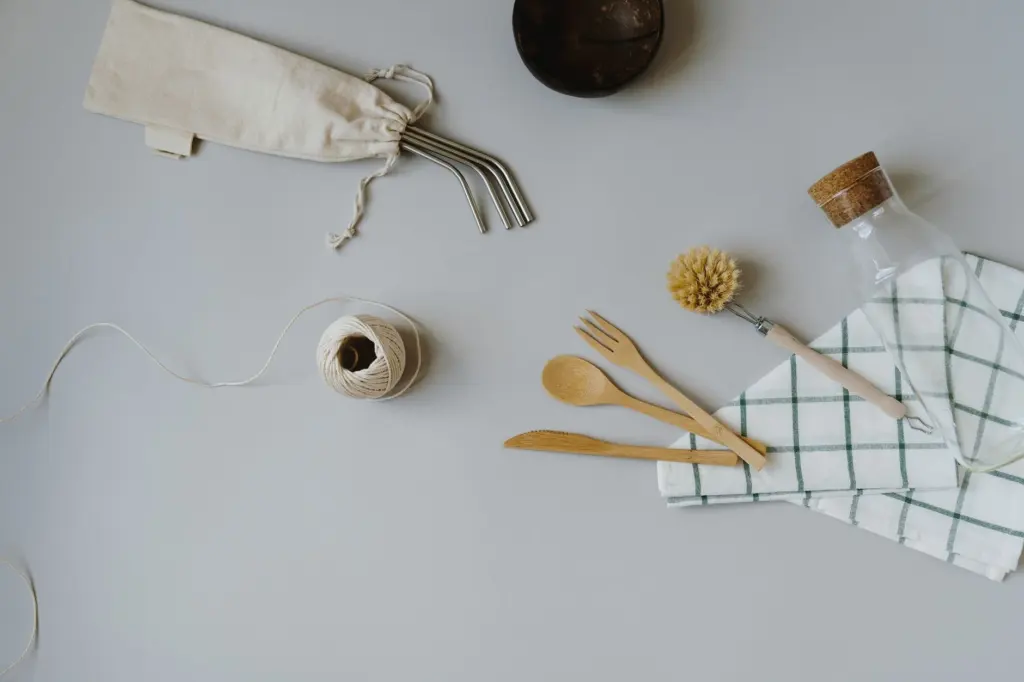
- Decline plastic utensils. EPA notes that plastic utensils can rarely be recycled, and suggests thinking about whether you need them before picking up takeout. If you eat at home or work, the answer is usually no, and a set of ordinary cutlery or a compact reusable set covers the rest.
- Bring a reusable cup. WWF says almost all coffee outlets will refill reusable cups. Regular hot-drink buyers gain the most from this, and some outlets also reward it with a discount.
Home and shopping choices
These actions take a little more planning than the daily carry swaps, because they depend on what is sold near you and how you shop. They repay that effort by cutting plastic that arrives in the house, not just plastic you handle on the go.
- Filter tap water. EPA suggests putting a filter on your water tap and refilling bottles with the filtered water instead of buying bottled water. It pairs naturally with the reusable bottle above and suits households that currently buy bottled water.
- Choose minimal packaging and refills. EPA advises trying to buy items with minimal packaging, and WWF suggests using a local refill shop to refill containers with wet and dry goods. EPA also recommends buying drink mixes in bulk and filling your reusable bottles. If no refill shop is nearby, start with bulk drink mixes and whichever staples you can buy loose.
- Buy used, and pass things on. EPA recommends buying used plastic items to reduce plastic waste, and selling or donating the ones you no longer want. This works well for durable plastic goods that you would otherwise buy new.
Cutting microplastics
Microplastics are best tackled through the products you choose, since the sources include some everyday items that are not obviously plastic. The aim is to avoid adding tiny plastic particles that are hard to remove once they reach drains and waterways.
- Read labels and rethink small items. National Geographic Kids explains that if an ingredients label lists polyethylene or polypropylene, the item likely contains microbeads. Those tiny plastic beads go down the drain, eventually flowing to rivers, lakes and the ocean, where wildlife can eat them. WWF adds that conventional chewing gum is made from plastic, and that glitter is plastic too; for biodegradable glitter there is no legal limit on how long it takes to decompose, so the label alone is not a guarantee.
Teabags are another small source worth checking. WWF warns that not all teabags can go into garden compost, as they won’t break down or may break down into microplastics. Loose-leaf tea avoids the question entirely, and food scraps that do belong in a compost bin are covered in Apartment Composting Made Simple: How To Turn Kitchen Scraps Into Nutrient-Rich Soil In 2026 – Greencrowding.
Laundry is the other everyday route for plastic particles into water, so your wash routine belongs in the same conversation. Zero-Waste Laundry Detergent: The Practical Guide To Clean Clothes With Less Waste (2026) – Greencrowding looks at the packaging side of that routine.
Recycling and community action
Recycling does not solve plastic pollution on its own, and EPA’s guidance shows why. Some types of plastic are not accepted in community recycling programs, so what counts depends on where you live. A resin code symbol on a product does not necessarily mean it can be collected for recycling in your community.
Several specific pitfalls follow from that guidance:
- Bags, wrap and film. EPA says these items are recyclable but cannot go in your household recycling bin, so they need a store or drop-off collection point instead.
- Compostable plastics. EPA says these are not intended for recycling and can contaminate and disrupt the recycling stream. Keep them out of the recycling bin.
- Utensils. They can rarely be recycled, which is why declining them matters more than disposing of them well.
The final action moves from household to neighborhood.
- Recycle by local rules, and organize a drive. Check what your own program accepts before filling the bin, rather than trusting symbols. EPA also suggests organizing a recycling drive in your neighborhood or at school, which suits people who want to make collection easier for others and not only for themselves.
Costs and discounts
Most of these swaps involve a one-off purchase in place of repeated disposable ones, and some come with a small reward. WWF notes that some outlets give a discount for refilling a reusable cup and that some businesses reward customers for bringing their own reusable lunch container. Buying used plastic items, as EPA suggests, and buying drink mixes in bulk are other ways to keep spending down.
A tap filter or a refill shop trip is the closest thing to a real outlay, so those are the ones to weigh against what you currently spend on bottled water or packaged goods. Start with the swaps that cost nothing extra, such as declining utensils and carrying a bag you already own.
Frequently asked questions
How can I reduce plastic pollution at home?
Start by refusing and replacing single-use items: carry a reusable bottle and bag, filter tap water instead of buying bottled water, and choose products with minimal packaging. EPA’s advice is that avoiding waste in the first place is the most effective approach.
Which plastic swaps matter most?
Replace what you use briefly and often. A reusable bottle or thermos in place of disposable bottles and cartons, a reusable bag, and declining plastic utensils that can rarely be recycled are the strongest places to begin.
How do I cut microplastics?
Check ingredient labels for polyethylene or polypropylene, which suggest microbeads, and avoid conventional chewing gum and glitter, both plastic. Be cautious with teabags, since some may break down into microplastics and should not go in garden compost.
Does recycling solve the problem?
No. Community programs do not accept every plastic, a resin symbol does not guarantee local collection, and bags and film need a store or drop-off point. Use recycling for what you cannot avoid.
Do reusable swaps cost more?
Many replace repeated purchases, and some businesses offer discounts for bringing your own cup or lunch container. The main outlay is something like a tap filter, so weigh that against what you spend on bottled water now.