
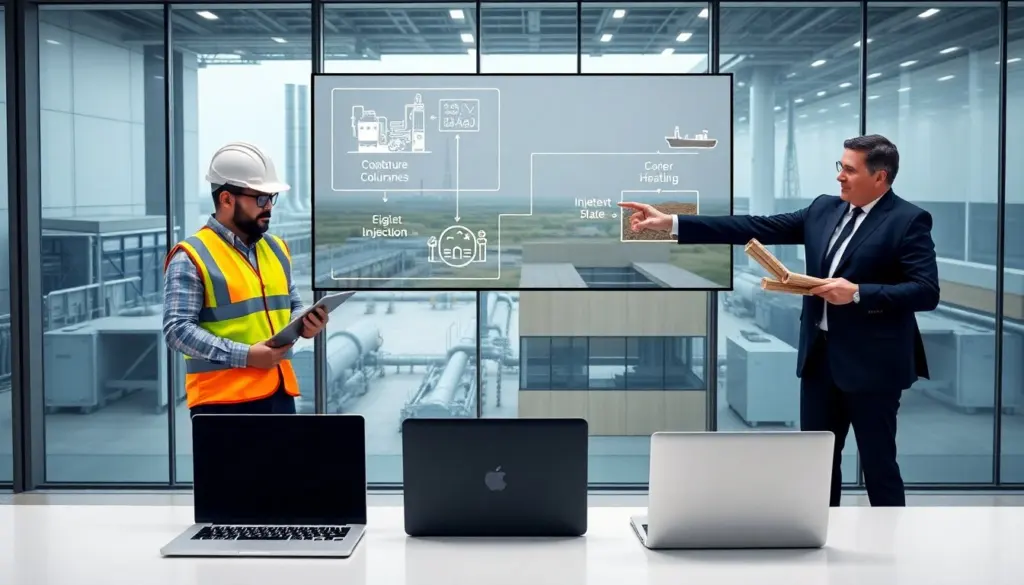
How carbon capture works guides readers through the main steps of removing CO₂ from emissions. The guide explains capture, transport, storage, and costs. It shows practical choices for power plants, factories, and direct air systems. Readers will learn the common methods, the logistics of moving CO₂, and the monitoring used to keep stored carbon safe.
Key Takeaways
- Carbon capture works by removing CO₂ at emission sources, compressing it, transporting it, and then storing it safely in geological formations or using it industrially.
- There are three main capture methods: post-combustion, pre-combustion, and oxy-fuel combustion, each chosen based on plant type, fuel, and cost considerations.
- Post-combustion capture retrofits existing plants with solvent or sorbent units, allowing CO₂ removal without altering the original combustion process.
- Transporting captured CO₂ typically involves pipelines for large volumes, with trucks and ships used for smaller or remote projects, followed by dense-phase injection into suitable underground formations.
- Long-term monitoring includes pressure sensors, seismic surveys, and regular testing to ensure stored carbon remains secure and leak-free.
- Carbon capture plays a critical role in climate policy by reducing emissions from difficult sectors, supported by policies like carbon pricing and subsidies despite challenges such as costs and technical complexity.
The Basic Process: From Emissions Source To Stored Carbon
The basic flow shows how carbon moves from a source to a storage site. First, a capture unit removes CO₂ at an emissions source. Then, the system compresses the CO₂ and conditions it for transport. Next, operators move the CO₂ by pipeline, truck, or ship to a storage site. Finally, technicians inject the CO₂ into geological formations or use it for industrial products. Each step has checks that verify purity, pressure, and leak prevention. Project teams design monitoring plans that include pressure sensors, seismic surveys, and periodic well testing. Regulators require reporting and safety plans before injection begins.
Main Capture Methods: How CO₂ Is Separated At The Source
Facilities use three main capture methods to separate CO₂ from exhaust or process streams. Engineers choose a method based on fuel type, plant age, and cost. The methods differ in where they capture CO₂ relative to combustion and in the equipment they add to a plant. Each method changes plant operations and requires different energy inputs and retrofit work. Operators study capture efficiency, energy penalty, and space needs when they select a method.
Post-Combustion Capture — Retrofitting Existing Plants
Post-combustion capture installs solvent or solid sorbent units on flue gas streams. The system cools and cleans the flue gas and then contacts it with a chemical solvent or sorbent that binds CO₂. Operators heat the solvent to release concentrated CO₂ and recycle the solvent. Plants can add these units to coal or natural gas boilers without changing the combustion system. The main trade-offs include a higher energy use for solvent regeneration and added capital cost. Many existing plants favor post-combustion because it allows continued operation during retrofit.
Pre-Combustion Capture — Capturing CO₂ Before Combustion
Pre-combustion capture shifts fuels to a hydrogen-rich stream and a CO₂-rich stream before burning. The plant gasifies fuel or reforms natural gas. The process produces syngas, which the system converts into hydrogen and CO₂ via a shift reaction. Operators separate the CO₂ from the hydrogen and then burn the hydrogen or use it industrially. Pre-combustion gives a concentrated CO₂ stream that is easier to compress and store. The method suits new plants and integrated gasification units but needs larger capital investment and different plant design.
Oxy-Fuel Combustion — Producing A CO₂-Rich Flue Stream
Oxy-fuel combustion replaces air with nearly pure oxygen for burning fuel. The system produces a flue stream that contains mostly CO₂ and water vapor. Operators condense the water and compress the remaining CO₂ for storage. Oxy-fuel reduces the volume of flue gas that the capture unit must treat. The approach requires air separation units to supply oxygen and so increases energy use. Projects test oxy-fuel in boilers and industrial furnaces because it produces a high-purity CO₂ stream that lowers capture cost per ton in some cases.
Transport, Storage, And Long-Term Monitoring Of Captured CO₂
Operators select transport methods by distance, volume, and terrain. Pipelines carry the largest volumes for onshore projects. Trucks and ships serve smaller or remote projects. Before injection, teams compress CO₂ to a dense phase to reduce volume. Engineers inject CO₂ into saline aquifers, depleted oil and gas reservoirs, or basalt formations. Storage teams model pressure, temperature, and rock response to prevent leaks. After injection, specialists monitor using pressure gauges, distributed fiber optics, and periodic seismic surveys. They record results in public registries and perform corrective action if sensors show unexpected changes.
Costs, Technical Challenges, And The Role Of Carbon Capture In Climate Policy
Project costs depend on capture method, plant size, and distance to storage. Capture adds the largest share of cost, followed by transport and injection. Operators face technical challenges such as energy penalties, material corrosion, and integration with existing plants. The industry also needs skilled technicians and clear permitting timelines. Policymakers use carbon pricing, tax credits, and direct subsidies to make projects viable. Many countries include carbon capture in national strategies to reduce industrial and power-sector emissions. Critics point to cost and scale limits, while proponents note that capture can lower emissions from hard-to-abate industries and support hydrogen production.