
Sustainable food packaging helps companies cut waste and lower costs. It reduces landfill use and lowers material expenses. Consumers prefer products with clear environmental claims. Businesses can save money by choosing better materials and smarter designs. This article shows practical steps companies can take in 2026. It gives clear actions for materials, design, supplier changes, and measurement.
Key Takeaways
- Sustainable food packaging cuts costs and waste while improving brand reputation and regulatory compliance in 2026.
- Choosing the right materials—compostable, recyclable, or reusable—depends on product needs, local waste systems, and cost goals.
- Design packaging for minimal materials, easy recyclability, and clear disposal instructions to boost environmental benefits.
- Conduct packaging audits to identify quick wins and guide supplier changes, pilot tests, and impact measurement.
- Follow a step-by-step roadmap from goal setting to scaling pilots to effectively implement sustainable food packaging.
- Regularly track KPIs and update strategies to continuously reduce packaging waste and enhance savings.
Why Sustainable Packaging Matters Now
Sustainable food packaging affects costs, brand reputation, and regulation. Cities and states update rules on single-use plastics. Retailers demand higher sustainability from suppliers. Consumers check labels and choose greener options. Companies face fines for noncompliant packaging. They can cut costs by reducing material weight and switching to recyclable or reusable options. Investors also reward firms that reduce packaging waste. The market now values packaging that lowers environmental and financial risk.
Beyond compliance and consumer preference, sustainable packaging influences operational resilience. Materials that are abundant, easily sourced, and compatible with existing production lines reduce supply disruptions. Conversely, niche or poorly supported materials can create new risks—longer lead times, higher scrap rates, or compatibility issues with filling and sealing equipment. Addressing sustainability therefore requires coordinated action across procurement, operations, marketing, and legal teams.
Finally, clear disposal pathways matter: a packaging choice that looks sustainable but ends up in landfill because local systems cannot process it will deliver little environmental benefit and may harm brand trust. Companies must consider end-of-life realities alongside marketing claims to avoid greenwashing and build durable value.
Materials: Comparing Compostable, Recyclable, And Reusable Options
Compostable materials break down in industrial composting sites. They work for organic waste and some ready-to-eat foods. They fail when mixed with regular recycling streams. Recyclable materials such as certain plastics, glass, and aluminum return to production when sorted correctly. Recycling rates vary by region. Reusable packaging involves durable containers that return to the seller or a service. Reusable systems cut single-use demand but need logistics for collection and cleaning. Businesses should match material choice to product shelf life, local waste systems, and cost targets. They should test materials for food safety, barrier properties, and real-world handling.
When evaluating materials, consider the full lifecycle: raw material extraction, manufacturing impacts, transportation weight, in-use performance, and end-of-life processing. For example, a heavier glass jar may be infinitely recyclable but increases transport emissions and breakage risk compared with a lightweight refill pouch. Similarly, biobased or compostable polymers can reduce fossil inputs but may require separate collection infrastructure to realize benefits. Use simple decision matrices that weigh barrier needs, shelf life, consumer convenience, and local recovery systems to guide material selection.
Practical evaluation steps include requesting material safety and compliance documentation from suppliers, running shelf-life and abuse tests, and conducting small-scale consumer trials to assess handling and disposal behavior. Engage with local waste managers early to confirm whether compostable streams exist, which recyclable resins are accepted, and what common contamination risks are. This avoids selecting materials that cannot be processed where the product sells.
Design And Supply Chain Practices That Reduce Environmental Impact
Design choices impact material use and recyclability. Companies can remove unnecessary layers, avoid mixed materials, and use single-material formats when possible. They can design for easy disassembly so consumers can recycle parts correctly. Supply chains influence packaging footprints. Local sourcing cuts transport emissions. Bulk delivery and concentrated forms lower package volume. Suppliers can provide returnable pallets and crates to lower single-use packing. Labels should include clear recycling or composting instructions. Clear marks reduce contamination and improve recovery rates.
Design for recyclability includes decisions on adhesives, inks, and labels—selecting water-soluble or easily separable components helps recycling facilities recover primary materials. Consider modular designs where protective elements (e.g., trays or liners) are separable from the primary container. Light-weighting—reducing thickness without sacrificing performance—can deliver material and cost savings but must be validated for drop, shelf, and barrier performance.
On the supply chain side, collaborate with logistics and procurement to shift from one-way packaging to reusable transport packaging, optimize palletization for fewer shipments, and favor suppliers that report environmental data. Introduce packaging performance specifications into supplier contracts and include continuous improvement clauses so suppliers are incentivized to reduce material use and improve recyclability over time.
How To Audit Packaging, Switch Suppliers, And Measure Impact
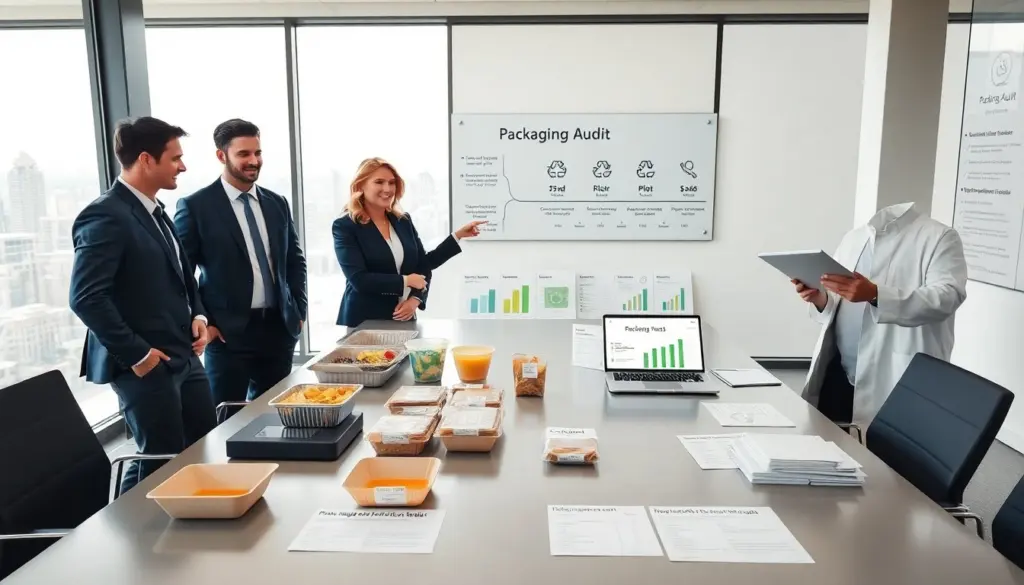
Businesses can audit packaging with a simple step list. First, they collect samples and record weights, materials, and costs. Second, they map where each package moves and how waste is handled. Third, they score items for recyclability, compostability, and reusability. The audit reveals quick wins like light-weighting or removing an inner bag. When switching suppliers, companies should ask for certified material data, sample runs, and lead time details. They should pilot new packaging in one region first. For measurement, firms track material use, recycling rates, returns of reusables, and total packaging cost per unit. They can use simple KPIs: packaging weight per unit, percent recyclable, and cost per sold item. Regular reviews keep improvements on schedule.
A practical audit template covers product SKU, packaging components, gross and net weights, supplier, material code, end-of-life route, and current cost. Add observations on fit-for-purpose performance—does the package protect the product, stack well, and fit existing production lines? From this data, prioritize items with high volume or poor end-of-life outcomes for rapid action.
When switching suppliers, include a pilot scope that specifies sample sizes, acceptance criteria, quality metrics, and timelines for escalation. Use pilot feedback to refine specifications before full rollout. For measuring impact, complement operational KPIs with qualitative metrics such as customer feedback on packaging usability and returns or complaints related to packaging failures. Share results internally to build cross-functional buy-in and allocate budget for scaling successful changes.
Implementing Sustainable Packaging For Your Business — A Step‑By‑Step Roadmap
Step 1: Set clear goals. The team should name targets for weight, recyclability, and cost savings. Step 2: Audit current packaging. The audit should list materials, suppliers, and end-of-life routes. Step 3: Prioritize quick wins. They should remove excess material, switch to mono-materials, and add clear disposal labels. Step 4: Run material trials. They should test compostable, recyclable, and reusable options under real conditions. Step 5: Engage suppliers. They should request environmental data, minimum order quantities, and pilot pricing. Step 6: Adjust design. They should change dimensions, seals, and inks to improve recovery. Step 7: Launch pilots. They should test in limited stores or regions and collect feedback from staff and customers. Step 8: Measure impact. They should track KPIs monthly and compare them to baselines. Step 9: Scale successful pilots. They should phase changes across SKUs and update procurement contracts. Step 10: Communicate results. They should share outcomes with customers, partners, and regulators.
Assign clear roles and timelines for each step: who will own the audit, who approves supplier changes, who runs the pilot, and who tracks KPIs. Create a simple project plan with milestones and decision gates to avoid scope creep. Include finance early to model cost implications and legal to vet labeling claims and compliance risks.
Anticipate common barriers—supplier resistance, capital for new tooling, or customer pushback on format changes—and plan mitigation actions such as phased rollouts, co-funded pilot tooling, or customer education materials explaining the benefits and disposal instructions. Maintain a learning log from pilots to capture what worked, what did not, and why, then apply those lessons to future rounds.
Teams should keep the process iterative. They should document lessons, update targets, and re-audit annually. Small changes add up. Over time, they will cut waste and lower packaging costs while meeting customer and regulator expectations. Sustainable food packaging can deliver measurable savings and clearer brand value when firms follow this roadmap.