
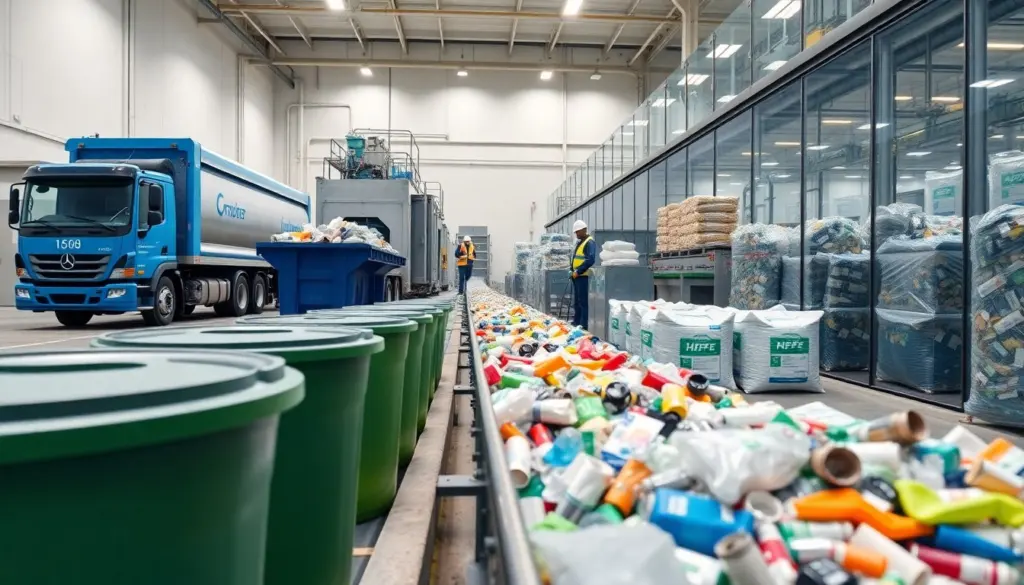
The plastic recycling process starts at the curb and ends when new material enters a supply chain. The article explains each step. It shows how municipalities, sorters, and processors handle plastic. It highlights common failure points and current fixes. The text uses clear examples and current practices to help readers understand what happens after they set out a bin.
Key Takeaways
- The plastic recycling process starts with clean, sorted curbside collection to ensure high-quality input material.
- Sorting facilities use advanced technologies like optical sorters and near-infrared sensors to separate plastics by resin type and remove contaminants.
- Material preparation involves washing, shredding, and density-based separation to produce clean plastic flakes ready for recycling.
- Mechanical recycling melts and remolds plastics for products like bottles and containers but can degrade material quality over cycles.
- Chemical recycling breaks down plastics into monomers, allowing processing of mixed or contaminated streams into near-virgin feedstock.
- Emerging technologies such as enzymatic and catalytic processes aim to enhance the yield and quality of recycled plastics to meet market and regulatory demands.
From Curbside To Facility: Collection, Sorting, And Contamination Control
Collection crews pick up bins on scheduled days. They move plastic to transfer stations or directly to material recovery facilities. Trucks deliver mixed recyclables to sorting centers. Workers and machines separate paper, metal, glass, and plastic. The center uses conveyor belts, magnets, and optical sorters to group materials by type.
The plastic recycling process depends on clean input. Contamination harms downstream steps. Food residue, liquids, and tangled materials reduce value. Facilities reject heavily contaminated loads. Municipal programs reduce contamination with clear rules and outreach. Residents receive lists of accepted items and simple cleaning steps.
At the facility, sorters separate plastics by resin code when possible. Optical sorters read polymer color and type. Many facilities use near-infrared sensors to identify HDPE, PET, and PP. The system ejects wrong items with air jets. Staff remove hazardous items by hand.
Facilities grade incoming plastic into batches. They keep PET bottles in one stream and mixed rigid plastics in another. This separation helps processors match material to their equipment. The plastic recycling process also includes baling for transport. Clean, baled loads travel to preparers or recyclers. The better the sort, the higher the material value and the greater the chance the plastic becomes new products.
Material Preparation: Washing, Shredding, And Resin Identification
Recyclers receive baled plastic at preparation plants. They unload and inspect each bale. The plant opens bales and feeds material into washers. Washing removes labels, adhesives, and residues. Clean plastic delivers better product and fewer processing stops.
After washing, machines shred plastic into flakes or pellets. Shredders reduce size and expose contaminants. Workers monitor shredder output for color and consistency. The plant then separates flakes by density and sink-float methods. Denser polymers sink while lighter ones float. This step helps separate PET from PP and PE.
The plant uses further identification to confirm resin types. They sample flakes and run quick tests for polymer composition. Some plants use Fourier-transform infrared sensors for precise identification. The facility also removes metal pieces, zippers, and other non-plastic items at this stage.
Processors dry the flakes and add stabilizers if needed. They store prepared material in silos or bags. The plant documents the batch with weight, composition, and contamination levels. This paper trail helps buyers choose the right feedstock. The plastic recycling process needs consistent, labeled material to run economically and safely.
Reprocessing Methods And End Uses: Mechanical, Chemical, And Emerging Technologies
Mechanical recycling melts and remolds plastic. Processors feed cleaned flakes into extruders. Extruders melt the plastic and form pellets. Recycled pellets serve as feedstock for injection molding, film, and fiber. Mechanical recycling works well for PET bottles and HDPE containers. The process lowers material quality after each cycle. Companies blend recycled pellets with virgin resin to meet performance needs.
Chemical recycling breaks polymer chains and returns material to monomers or oils. Plants use depolymerization, pyrolysis, or solvolysis techniques. Chemical recycling handles mixed or contaminated streams that mechanical methods cannot. The output re-enters polymer production as near-virgin feedstock. Chemical recycling plants require strict controls and energy management. They also need clear product specifications to sell outputs to polymer makers.
Advanced and emerging methods include enzymatic and catalytic processes. Researchers test enzymes that break PET at moderate temperatures. Catalysts can speed depolymerization with lower energy. Pilot plants operate in multiple regions. These methods aim to increase the yield of high-quality recycled material.
End uses vary by material quality. High-quality recycled PET returns to beverage bottles and food trays when it meets safety rules. Lower-grade PET moves to fiber for clothing and insulation. Recycled HDPE appears in crates, piping, and household goods. Mixed plastics often become composite lumber, landscaping products, and lower-grade items.
Markets drive technology choice. Brand owners demand recycled content and certification. Regulators set recycling targets and collection rules. Processors respond by investing in sorting upgrades and new reprocessing lines. The plastic recycling process moves from collection to final product through many hands. Each hand influences material quality and the economic fate of the plastic.