
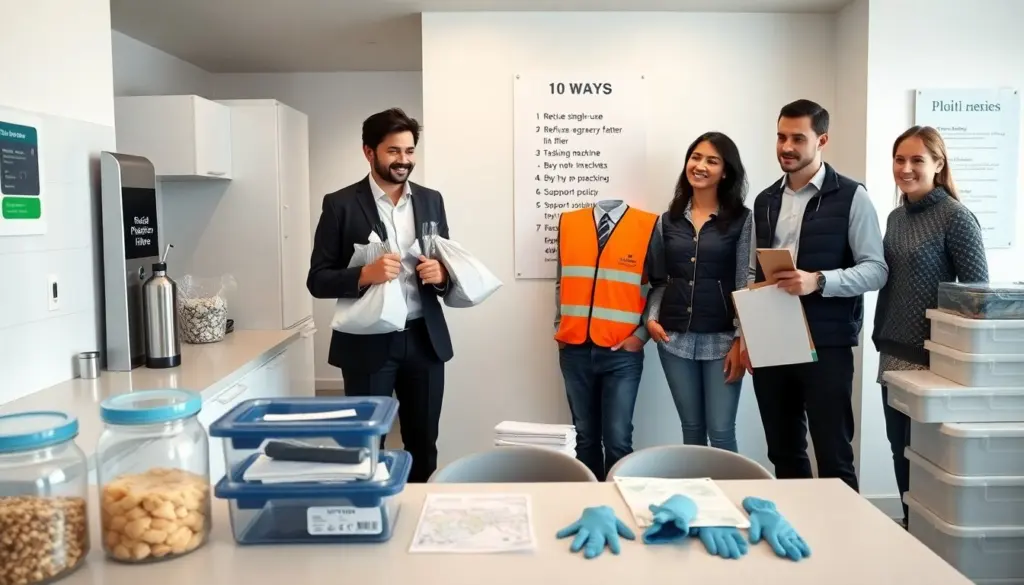
They can reduce plastic pollution by changing daily choices. 10 ways to reduce plastic pollution appear in this guide. The list gives clear, small actions people can take at home, at work, and in their communities. Each step focuses on reducing plastic use, preventing waste, and protecting wildlife and climate. The recommendations combine straightforward behavior changes, product choices, and community actions so readers can pick the ideas that fit their circumstances and scale up over time. Practical examples and implementation tips are included to help turn intention into consistent habits.
Key Takeaways
- Reducing plastic pollution protects human health, wildlife, and combats climate change by lowering greenhouse gas emissions associated with plastic production and disposal.
- Avoiding single-use plastics like straws, cutlery, and cups significantly cuts plastic waste and litter and reduces the volume entering oceans and waterways.
- Using reusable bags, bottles, and food containers reduces demand for disposable plastic and supports sustainable habits that save money over time.
- Choosing products with low packaging, refillable options, and recyclable materials helps minimize plastic waste and encourages manufacturers and retailers to redesign products.
- Implementing household habits like meal planning, bulk buying, and proper recycling enhances plastic waste reduction and improves the effectiveness of local recycling systems.
- Reducing microplastics—from laundry fibers to personal care products—requires simple tech fixes (lint filters) and smarter purchases (natural fibers, microbead-free products).
- Supporting policies and community cleanups accelerates plastic pollution reduction through collective action and advocacy, and helps create infrastructure that makes low-waste choices easier for everyone.
Why Reducing Plastic Pollution Matters For People, Wildlife, And Climate
People face health and economic harms from plastic pollution. Plastic breaks into microplastics that people ingest through food and water, and some chemicals used in plastics can interfere with human hormones and development. Wildlife ingest or get entangled in plastic and suffer injury or death; seabirds, turtles, and marine mammals are commonly affected. Plastic production and waste management emit greenhouse gases that add to climate warming and use energy and water during manufacturing. Cities and tourism areas also pay cleanup costs and sometimes lose revenue when littered beaches or parks deter visitors. Reducing plastic pollution cuts health risks, protects animals, and lowers emissions while often saving households money and creating opportunities for local circular-economy businesses. Because plastics persist for decades to centuries, small actions repeated across communities compound into measurable benefits over time.
Switch Away From Single-Use Plastics
They can avoid single-use plastics to cut waste quickly. People can refuse plastic straws, cutlery, and single-use cups when ordering food and request alternatives or bring their own. Businesses can offer incentives for customers who bring reusable items—discounts for bringing a mug or refillable container reduce friction. At events, organizers can set rules to use compostable serviceware or provide water refill stations so attendees don’t need bottled water. Public places can set clear signage and staff training to reduce single-use distribution, and employers can switch office kitchens to reusable dishware. Each refusal reduces the number of plastic items that become litter or landfill and sends a market signal that demand for disposables is falling.
Use Reusable Bags, Bottles, And Food Containers
They can carry reusable bags for shopping to avoid plastic bags; foldable bags in a pocket or car make this easy. People can drink from reusable bottles to avoid single-use bottles and choose insulated bottles that keep drinks cold or hot for longer. They can pack meals in reusable containers to avoid disposable food boxes or single-serve plastic packaging. Reusable items last for years and lower the demand for new plastic, and many are dishwasher-safe for simple cleaning. To make reusables part of routine, keep a set by the door, in a work bag, or in the car; for families, assign color-coded containers to children. Businesses can sell durable, easy-to-clean reusables and offer refills or discounts to customers who bring containers, supporting customers who change habits.
Buy Smart: Choose Low‑Packaging, Refillable, And Recyclable Options
They can buy products with less plastic packaging to reduce waste. People can prefer refill stations for cleaners, soaps, and pantry items where available, or choose concentrated products that use less packaging per use. They can choose products in glass, metal, or fully recyclable plastics and check local recycling rules to confirm what will actually be processed. Comparing labels and picking brands that use clear recycling codes, minimal secondary packaging, or standardized containers makes recycling simpler. Retailers can create refill and return programs to lower packaging demand and provide clear signage that explains how to reuse or return containers. Consumers can bring containers to refill stations, buy loose produce, and support brands that reduce single-use packaging, which in turn encourages broader industry shifts.
Make Simple Household Habits That Cut Plastic Waste
They can set household rules that reduce plastic use every day. People can plan meals to avoid excess food packaging, prepare shopping lists to resist impulse buys in plastic wrappers, and buy in bulk for staples to lower small-package waste. Families can institute a “reuse first” drawer for containers and bags to make it easy to pack lunches. People can separate recyclables, rinse containers to reduce contamination, and follow local guidelines so materials actually get recycled. They can repair plastic items or donate them instead of discarding them, and participate in swap groups for toys, clothes, and household goods. Composting organics reduces the need for plastic bags for food waste and lowers the volume of waste that might otherwise go to landfill. Over time, these daily habits cut both the amount of plastic a household uses and the resources spent managing it.
Reduce Microplastics: Laundry Filters, Personal Care Choices, And Safer Textiles
They can stop microplastic release by filtering laundry water and choosing different fabrics. People can install lint filters on washing machines or use washing bags designed to catch microfibers, and choose gentler wash cycles to reduce shedding. Buying garments made from natural fibers such as cotton, wool, or linen and avoiding low-cost synthetic blends where possible reduces the source of microfibers. People can check personal care labels and avoid products with microbeads and unnecessary, non-biodegradable exfoliants. Additionally, extending garment life through repairs, mending, and secondhand purchases reduces the turnover of textiles and the amount of microplastic released over a garment’s lifetime. Each change reduces microplastics that reach waterways and food and supports cleaner local and marine environments.
Advocate, Support Policy Changes, And Join Community Cleanup Efforts
They can support policies that limit plastic production and improve waste collection. People can contact local leaders to ask for bans on some single-use plastics, improved curbside recycling, and better public waste infrastructure such as more bins and bottle return schemes. They can join or organize community cleanups to remove litter from rivers, shores, and parks and to document hotspots that need long-term fixes. Volunteering with or donating to local groups that teach plastic reduction, run refill or swap events, or pilot collection programs helps build systems that scale. Public pressure and community action push businesses and officials to adopt stronger rules and services, and trackable local wins—such as a retailer switching to refillable dispensers or a city adopting plastic limits—provide models others can follow.